
Construction and demolition waste is the largest waste stream in Estonia. But what if we didn’t just throw it away? What if we turned it into products, furniture, modular spaces or entirely new solutions?
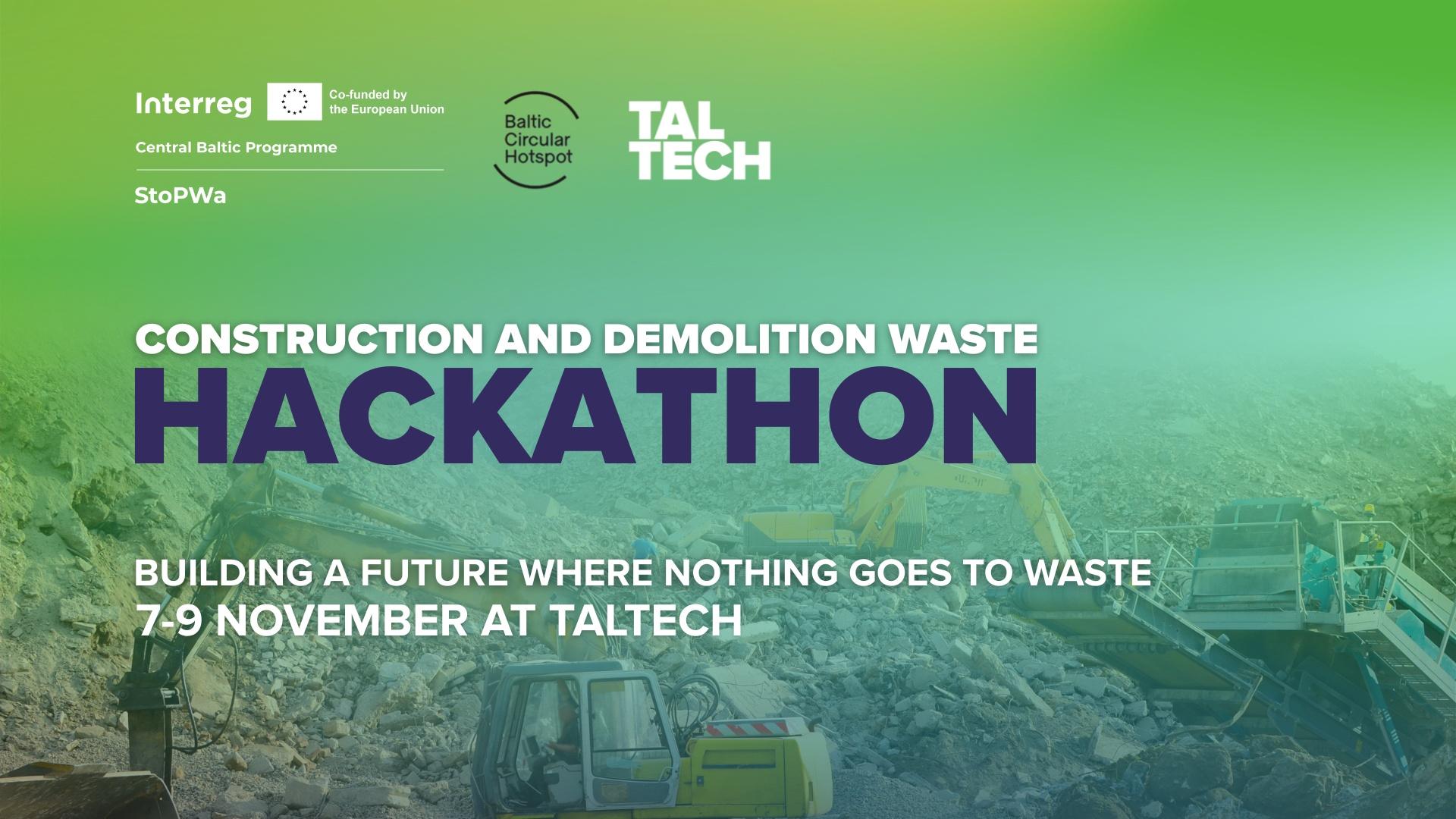
CDW Hack 2025 is a 48-hour design and engineering hackathon focused on circular economy and creative reuse of construction and demolition materials. We’re building a future where nothing goes to waste and everything has potential.
WHAT ARE WE LOOKING FOR?
♻️ Smart second lives for discarded materials
🔧 Open mind to find concrete solutions
🏗 Modular, creative, system-level ideas
🧠 Circular solutions ready for testing or scaling
WHO IS IT FOR? For construction and environmental engineering students, designers, architects, product developers, circular economy enthusiasts, and young inventors and makers.
WHAT WILL YOU GET?
💡 Experience solving a real-world circular challenge
👨🏫 Mentorship from industry experts
🏆 Prizes for the top ideas
🌍 The chance to turn waste into value
Limited spots are available. Register early!
📅 November 7–9
📍 TalTech Student House
If you have any questions, please contact: [email protected]
CHALLENGES
1️⃣ 𝙋𝙧𝙚𝙙𝙤𝙢𝙞𝙣𝙖𝙣𝙘𝙚 𝙤𝙛 𝙡𝙤𝙬-𝙫𝙖𝙡𝙪𝙚 𝙧𝙚𝙘𝙮𝙘𝙡𝙞𝙣𝙜
A large share of CDW is still used for low-grade purposes such as backfilling or road construction rather than being recycled into high-quality materials for new buildings. This limits true circularity and resource efficiency.
2️⃣ 𝙇𝙖𝙘𝙠 𝙤𝙛 𝙧𝙚𝙡𝙞𝙖𝙗𝙡𝙚 𝙙𝙖𝙩𝙖 𝙖𝙣𝙙 𝙩𝙧𝙖𝙘𝙚𝙖𝙗𝙞𝙡𝙞𝙩𝙮
Both in Estonia and across Europe, there is insufficient information on the quantity, composition, and quality of CDW. The absence of digital tools and material passports makes it difficult to track waste flows and plan reuse effectively.
3️⃣ 𝙒𝙚𝙖𝙠 𝙢𝙖𝙧𝙠𝙚𝙩 𝙙𝙚𝙢𝙖𝙣𝙙 𝙛𝙤𝙧 𝙨𝙚𝙘𝙤𝙣𝙙𝙖𝙧𝙮 𝙢𝙖𝙩𝙚𝙧𝙞𝙖𝙡𝙨
The market for recycled construction materials remains underdeveloped. Contractors and clients often prefer virgin materials due to concerns about quality, standards, and price competitiveness.
4️⃣ 𝙇𝙞𝙢𝙞𝙩𝙚𝙙 𝙨𝙚𝙡𝙚𝙘𝙩𝙞𝙫𝙚 𝙙𝙚𝙢𝙤𝙡𝙞𝙩𝙞𝙤𝙣 𝙖𝙣𝙙 𝙨𝙤𝙧𝙩𝙞𝙣𝙜 𝙥𝙧𝙖𝙘𝙩𝙞𝙘𝙚𝙨
Selective demolition is not yet widely implemented, and sorting at the source is inconsistent. This reduces the purity of recovered materials and increases recycling costs.
5️⃣ 𝙍𝙚𝙜𝙪𝙡𝙖𝙩𝙤𝙧𝙮 𝙖𝙣𝙙 𝙨𝙩𝙖𝙣𝙙𝙖𝙧𝙙𝙞𝙯𝙖𝙩𝙞𝙤𝙣 𝙜𝙖𝙥𝙨
While the EU Waste Framework Directive sets clear targets, differences in national regulations and a lack of harmonized quality standards hinder wider use of secondary raw materials.
6️⃣ 𝙀𝙘𝙤𝙣𝙤𝙢𝙞𝙘 𝙖𝙣𝙙 𝙡𝙤𝙜𝙞𝙨𝙩𝙞𝙘𝙖𝙡 𝙗𝙖𝙧𝙧𝙞𝙚𝙧𝙨
The costs of transport, treatment, and quality assurance for CDW are often higher than the use of virgin materials. In smaller markets like Estonia, limited volumes and long transport distances further reduce cost-efficiency.
7️⃣ 𝘼𝙬𝙖𝙧𝙚𝙣𝙚𝙨𝙨 𝙖𝙣𝙙 𝙗𝙚𝙝𝙖𝙫𝙞𝙤𝙧𝙖𝙡 𝙘𝙝𝙖𝙡𝙡𝙚𝙣𝙜𝙚𝙨
There is still a low level of awareness and motivation among stakeholders to adopt circular construction practices. Better education, incentives, and collaboration between public and private sectors are needed.