
Low-dose exposure to antibiotics may fail to kill bacteria but encourage them to cooperate instead. Researchers from the Department of Chemistry and Biotechnology in Tallinn University of Technology have now developed a novel method to study bacterial cooperation.
The number of antibiotic-resistant infections is climbing upward worldwide and poses a serious threat to effective treatment. Under unfavourable conditions, bacteria tend to form dense clusters that help them shield one another from the harmful effects of antibiotics and exchange genetic information that promotes drug resistance at the individual cell level. As a result, standard antibiotic doses may no longer be effective.
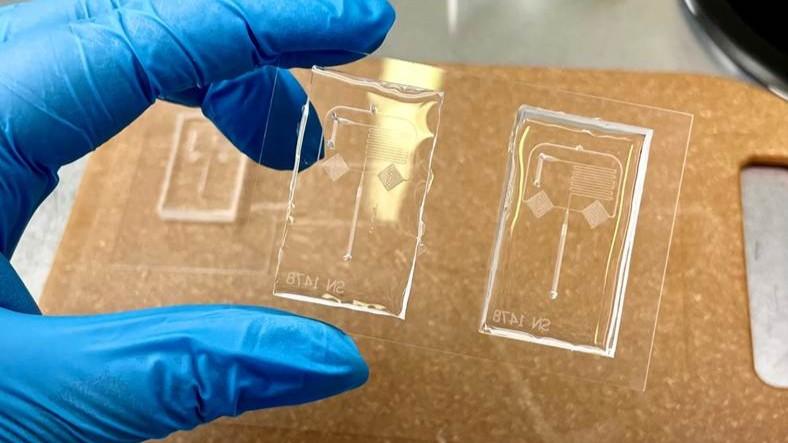
To ensure effective antibiotic treatment and prevent the spread of drug-resistant bacteria, it is essential to understand why bacterial clusters form. In the Microfluidics laboratory led by Associate Professor Ott Scheler and Senior Researcher Simona Bartkova, scientists investigated how environmental factors influence bacterial cooperation by testing the effects of antibiotics, microplastics, and metals. Droplet microfluidics is a modern technique, where microscopic water droplets suspended in oil are created. A single droplet is approximately a million times smaller than a typical 1.5 mL laboratory test tube (comparable to the difference between an Olympic swimming pool and a tabletop water pitcher), allowing experiments to be conducted with extremely small amounts of material. Each droplet acts as its own miniature world, where researchers can precisely control environmental conditions and study how bacterial “social life” responds to these factors. Hundreds of such experiments can be created within seconds.
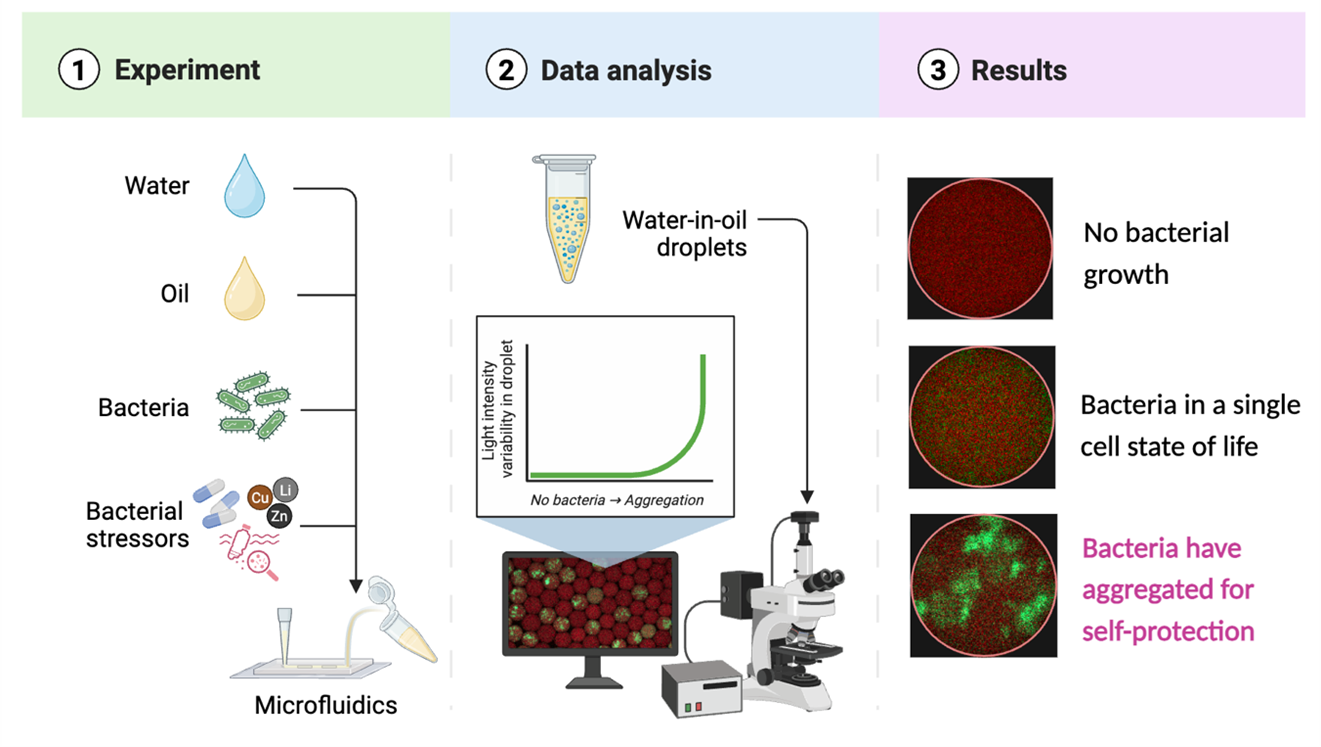
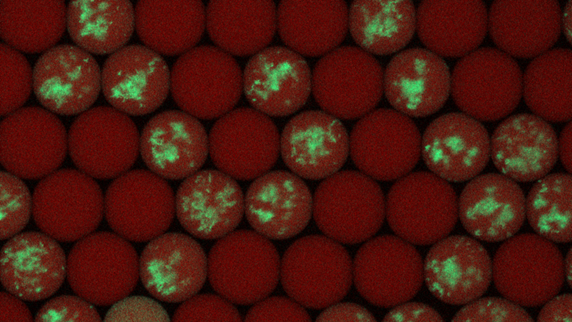
The researchers developed a new method using an open-source image analysis software that automatically measures the light signal emitted by bacteria and analyses their spatial distribution within the droplet. When bacteria grow individually, the light signal is evenly distributed. In bacterial clusters, the signal pattern changes: aggregated bacteria produce regions of bright, concentrated light in one part of the droplet, while other parts of the droplet demonstrate a much weaker or even an absent light signal.
The study’s lead author, Merili Saar-Abroi, explains: “Until now, a major bottleneck has been data analysis, and the lack of robust methodologies has limited the broader use of droplet-based systems in research. Our automated approach provides both high accuracy and significant time savings. By comparing signal intensity, the software can analyse around 30 droplet images in one minute. Manually, this would take a researcher several hours and the result would be less precise.”
The experiments demonstrated that low, non-lethal doses of antibiotics encourage bacteria to cluster together. This suggests that insufficient antibiotic concentrations may not kill bacteria but instead nudge them to cooperate and form complex aggregated communities to improve their chances of survival. In contrast, certain metals and microplastics inhibited cluster formation and reduced bacterial viability.
These findings may help develop new ways to guide bacterial behaviour and reduce the spread of microbes in environments such as hospitals and water systems, which are common sites for horizontal gene transfer.
Researchers believe that in the future, this type of bacterial growth assessment could become widely used in medicine. “Bacterial clustering at infection sites is common in conditions like cystic fibrosis or chronic wounds. Current analytical methods allow bacteria to be examined only in their single-cell form. Clustering increases bacterial drug resistance and as a result, standard antibiotic doses may not always be effective,” notes Saar-Abroi.
The results were published in the journal Scientific Reports.