
While some people throw almost all waste together—perhaps separating only deposit containers and batteries—others collect packaging, biodegradable waste, and paper separately at home, so their mixed waste bin stays nearly empty. Birgy Lorenz belongs to the latter group. She shares her thoughts and experiences on household waste management to encourage and inspire university community members to adopt more sustainable everyday habits.
How have you organized waste sorting at home?
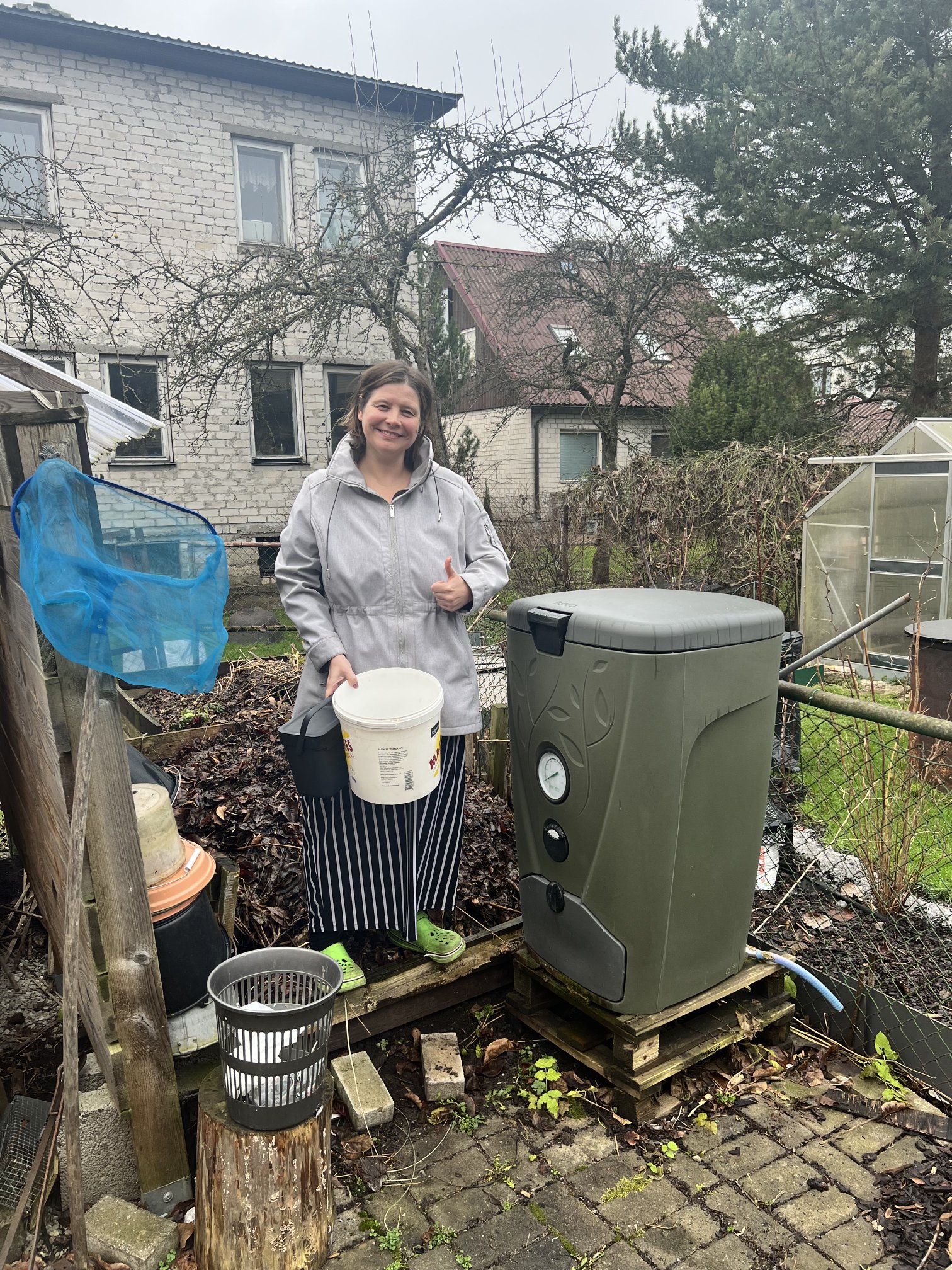
I live in a private house, and we generate various kinds of waste. I have four compost bins, one packaging bag, one deposit return bag, a general waste bin, and a garage area for items to be taken to the waste station or reused (electronics, hazardous waste, bulky waste, clothes, etc.). In the summer, we also collect Lusitanian slugs and take them to a separate slug container.
The biggest question is actually what should go into general waste. We've figured out that we can put bones, broken small items, light bulbs, and baking paper there, but everything else can generally be sorted properly. We’ve agreed with the city that they collect our general waste quarterly, though once a year would really be enough. Before the SMS/email notification that waste collection is coming, we search the whole house for anything to throw away. Sometimes it's hard to find anything—we might have to start begging our neighbors for some trash.
What motivates you to sort waste into multiple categories?
Even during Soviet times, people collected deposit bottles and paper in one place, took unnecessary items to the waste station, or gave them away to acquaintances, and of course, things were reused again and again. When the opportunity arose to reduce the weekly cost of general waste by separating packaging and biowaste, it seemed like a smart move to save money as well. If the monthly waste bill used to be €24, now it’s €4—a €240 yearly saving. Prices will probably rise soon, and the savings will be even greater.
People often say that sorting is hard, there’s no space for multiple bins, and everything ends up in the same truck anyway - how do you deal with that?
Since our house has many nooks, we have waste collection bins/baskets in three places—for packaging and general waste, and a small biocontainer in the kitchen. Sorting is very easy when everything is convenient and within reach. We use 9L mayonnaise buckets (which we also use for mushroom picking in the fall) and paper bins near our desks, making it easy to grab one on the way out to work. It doesn’t take extra time. We take out the kitchen waste once a week when we’re doing a cleaning round with the vacuum and broom.
In Tallinn, waste sorting has been made very convenient—one company collects packaging once a month for a small fee, and another collects general waste quarterly. There’s a separate local compost bin for biowaste. We visit the waste station every two months when we want to clear out items accumulated in the garage or yard.
Give one good tip for those who still throw everything into one bin.
I actually have several tips:
Use two bins instead of one. If you feel you need three, add a third!
If you care about aesthetics, get a beautiful trash bin or decorate an existing one to make it cooler. Kids love bins that look like big-toothed animals, birds, or fish that “eat” the trash. If the bin made a sound like “nom-nom,” Estonia might catch a recycling craze.
Emptying the bin should be part of a routine—if you’re already heading to the collection point, take the trash with you.
If you find items in the waste or packaging that can be reused creatively, definitely do so—there’s always a need for cups and boxes, used coffee grounds make good fertilizer, and some old clothes can be turned into unique shopping bags or picnic blankets.
If needed, reward yourself with something nice—like listening to your favorite song when taking out the trash. This helps build pleasant associations with the task, making it feel less like a chore.
Also, I keep my home clutter-free
We live in a world where shops whisper, ads shout, and beautiful things blink at us, making our hands reach for our wallets. But when life and living spaces are full of stuff, it’s hard to make room for new experiences, things, or people—there’s simply no space. I’ve solved this in the spirit of Marie Kondo:
I gather all similar items in one place at home. Turns out, I might have three meat grinders, ten identical pairs of jeans, or twenty dress shirts—only three of which I wear. Knowing what I already have, I avoid buying duplicates.
I pick up each item and decide whether it brings me joy or will be needed in the next few months. Joy-bringers and essentials stay, the rest go to a new home—friends, reuse centers, or the waste station. If it’s hard to let go, I take a selfie with the item before parting.
That’s how I freed myself from at least 50% of my belongings. The fewer things you have, the less cleaning and worry. And I really don’t like cleaning!
To avoid accumulating too much, I try to be smarter when acquiring new things. In a store, I pick up an item and visualize: do I have space for this at home, and does it truly bring me joy? If not, I leave it on the shelf. When I do make a purchase, I always leave the packaging with the seller—why bring home boxes that will go straight in the trash?
It helps if those close to you can, at the right moment, say in the store that the item you’re holding probably isn’t on the shopping list. A good rule is to allow only one extra item from the store, costing less than €10, for example. And if you don’t have a habit of making a shopping list, now’s the time to start!