
Chemists have developed a method for constructing complex molecular scaffolds that could help accelerate the discovery of new medicines in the future.

The researchers have succeeded in controlling a higher-order cycloaddition reaction, a transformation long considered too difficult to apply reliably. Figuratively speaking, the reaction can be compared to joining two complex LEGO bricks: the more possible connection points they have, the greater the number of possible outcomes.
"Because of their complexity, these reactions are rarely used in practice," said Mikk Kaasik, Senior Researcher at the Department of Chemistry and Biotechnology at Tallinn University of Technology. Together with his colleague Aleksandra Murre and researchers from Aarhus University, the team found a way to overcome this challenge.
How was this achieved?
Many naturally occurring bioactive compounds possess unique and highly complex three-dimensional structures that enable them to bind selectively to biological targets and exert specific biological effects, such as regulating cellular processes or inhibiting disease progression.
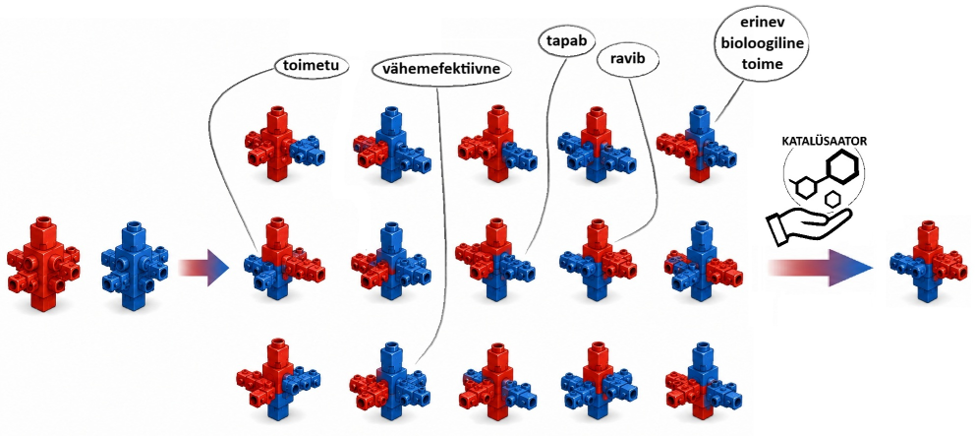
"Preparing such complex molecules is often slow and resource-intensive because it typically requires a long sequence of reactions, with intermediates being isolated and purified after each step. This is why chemists are constantly searching for reactions that can form several new chemical bonds simultaneously – the fewer synthetic steps required, the faster and more resource-efficient the synthesis becomes," Kaasik explained.
Cycloaddition reactions are considered one of the most powerful ways of forming multiple chemical bonds in a single step, enabling the rapid construction of complex molecular scaffolds while generating little waste and incorporating most of the atoms from the starting materials into the final product.
Their broader application, however, is limited by the difficulty of controlling the formation of larger ring systems. When two complex molecules react, they can produce numerous different isomers—compounds composed of the same atoms but differing in their structure or three-dimensional arrangement. Since these isomers may exhibit very different biological activities, precise control over the reaction is essential.
In their latest study, researchers from Tallinn University of Technology and Aarhus University combined light, organocatalysis and a one-pot process into a single reaction sequence that directs the reaction toward the formation of one desired product.
To achieve this, they employed a higher-order cycloaddition, in which five reaction centres participate simultaneously instead of the two or three typically involved. This greatly increases the number of possible reaction pathways, making it considerably more challenging to obtain only the desired product.
To control the reaction, the researchers used organocatalysis based on small organic molecules. The catalytic system enables the selective formation of a molecular scaffold with a defined three-dimensional structure.
The newly developed cycloaddition requires ketene, a highly reactive but extremely short-lived intermediate. The key to controlling the reaction was the use of light, which allowed the ketene to be generated precisely when it was needed.
The method is also environmentally friendly because the photochemical reaction proceeds under mild conditions without the need for elevated temperatures or pressures. The challenge posed by the instability of ketenes was overcome through a one-pot process, in which the ketene is generated and consumed in the same reaction vessel, avoiding its isolation, which would reduce the efficiency of the reaction.
A platform for developing new compounds
"The study produced a complex polycyclic molecular scaffold belonging to a family of structures found in many naturally occurring bioactive compounds with anti-inflammatory, anticancer and antibacterial properties," said Kaasik.
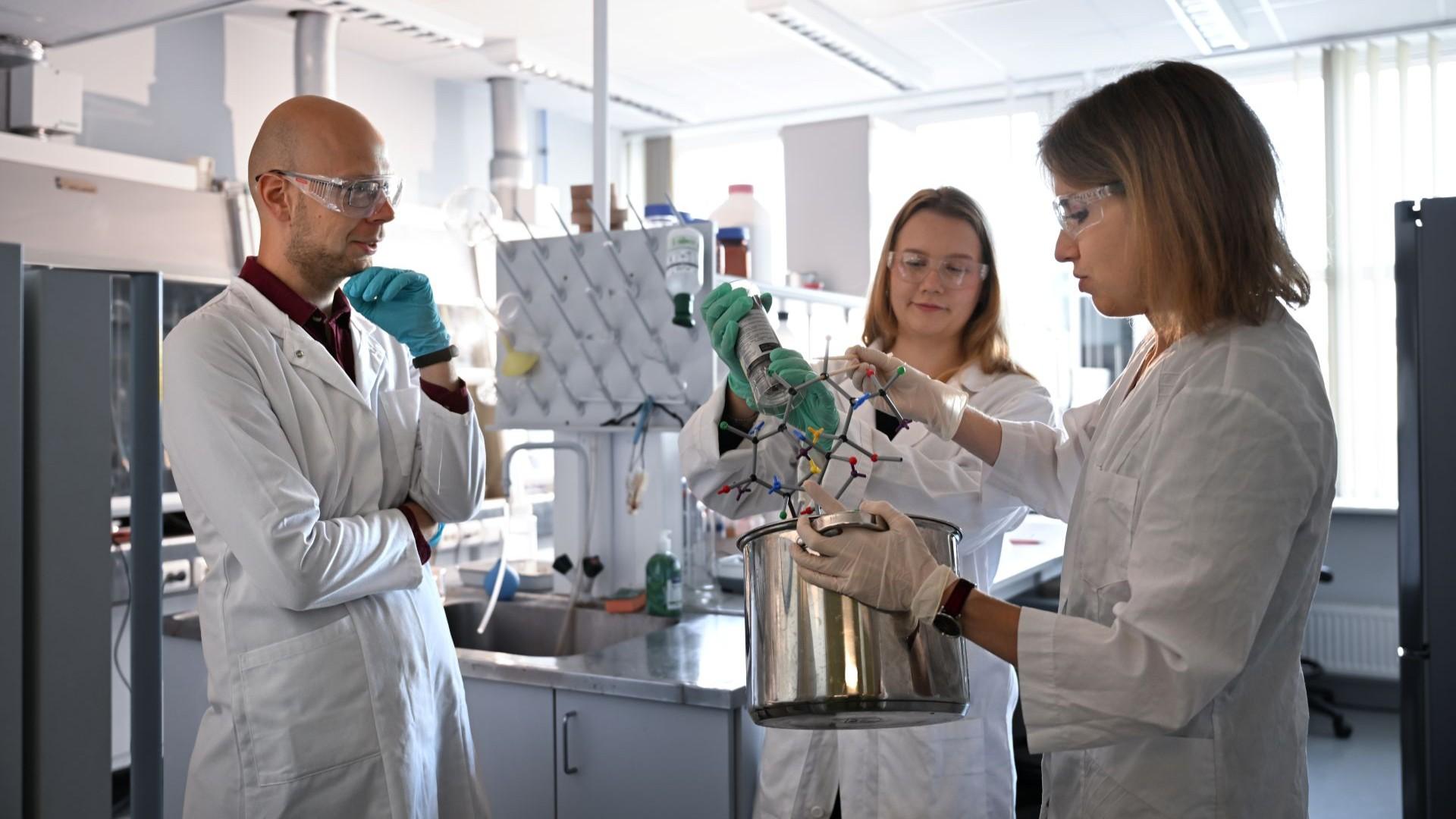
Chemists refer to such molecular frameworks as privileged scaffolds because they provide an excellent foundation for developing new bioactive molecules.
The new method makes it possible to rapidly prepare and further modify an entire series of structurally related complex molecules. This provides a versatile platform for drug discovery, where large libraries of closely related compounds must be evaluated to identify candidates with the desired biological activity.
The study was published in Organic Letters.
The Cocatalysis Research Group is part of the TalTech Health and Food Technologies Focus Centre.