
On 21–23 October, TalTech brought together three initiatives in its main building: the European research project RAW, the Estonian project PUUSTER and the Tallinn Architecture Biennale. An exhibition of RAW project prototypes, “RAW – Designing Beyond Standardisation: The Costs of Circularity”, opened in TalTech lobby, and on 22 October the RAW × PUUSTER symposium took place. At the heart of both was the question of how to build circularly without creating unnecessary waste, and what costs we are willing to bear for change.
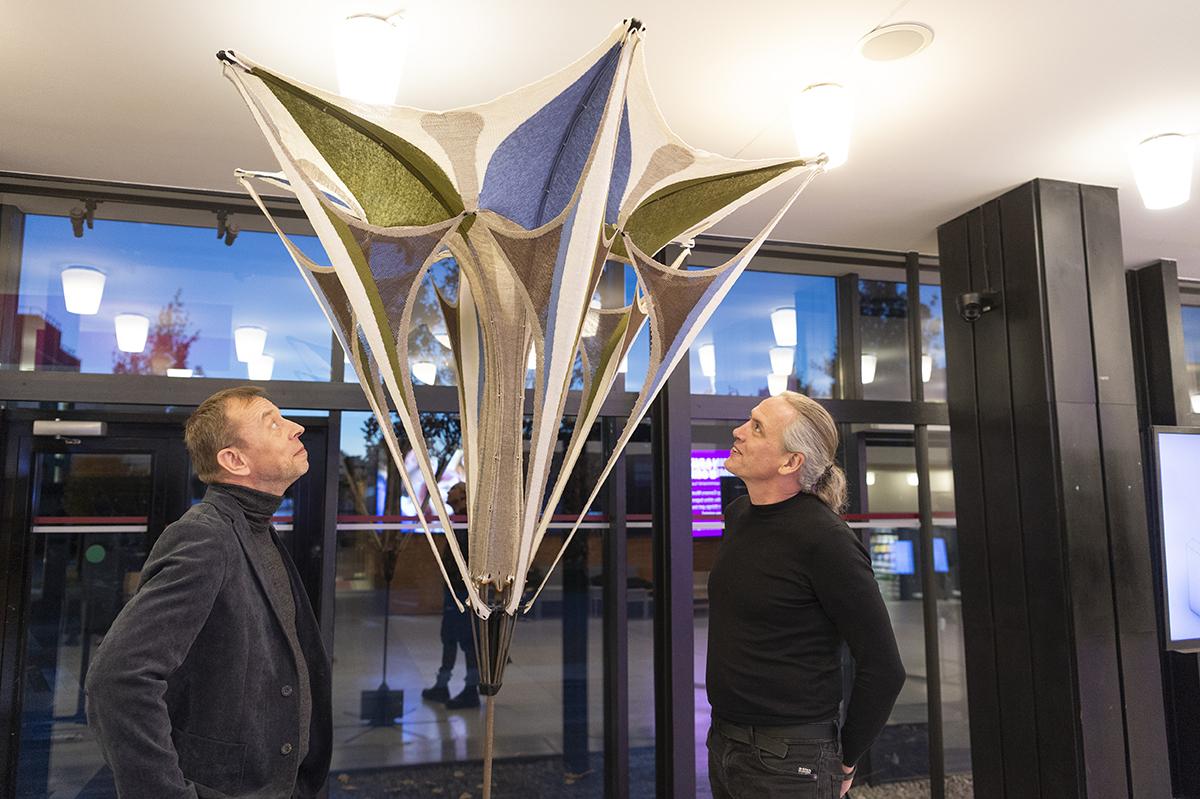
RAW (Computation for a New Age of Resource Aware Architecture) is a Horizon Europe project running from 2024 to 2027 that develops a resource-aware model for the construction sector. It is based on waste-sourced materials, such as reclaimed timber and agricultural residues, and fast-growing bio-based materials, such as hemp and flax. RAW starts from the idea that the variability of natural and reclaimed materials is not a flaw to be eliminated through sorting and waste, but a starting point for design. This approach is characterised by non-destructive material assessment, semantic data models and robotic fabrication of products. The project brings together DTU, Leiden University, the Royal Danish Academy (CITA), TalTech, the University of Stuttgart, WoodKPlus and OmTre. PUUSTER is a five-year interdisciplinary research project led by TalTech, the University of Tartu and the Estonian Academy of Arts. Its name combines the Estonian word “puu” (tree) with the English word “boosting”, reflecting the aim of giving new life and value to often overlooked timber resources. Together with industry, it explores how, for example, bark beetle-damaged timber, by-products and forest residues can be turned into sustainable construction materials. The Tallinn Architecture Biennale 2026, in turn, focuses on the relationship between constraints, cost and spatial creation, and on rethinking value, affordability and responsibility. These are the questions that connect the three initiatives.
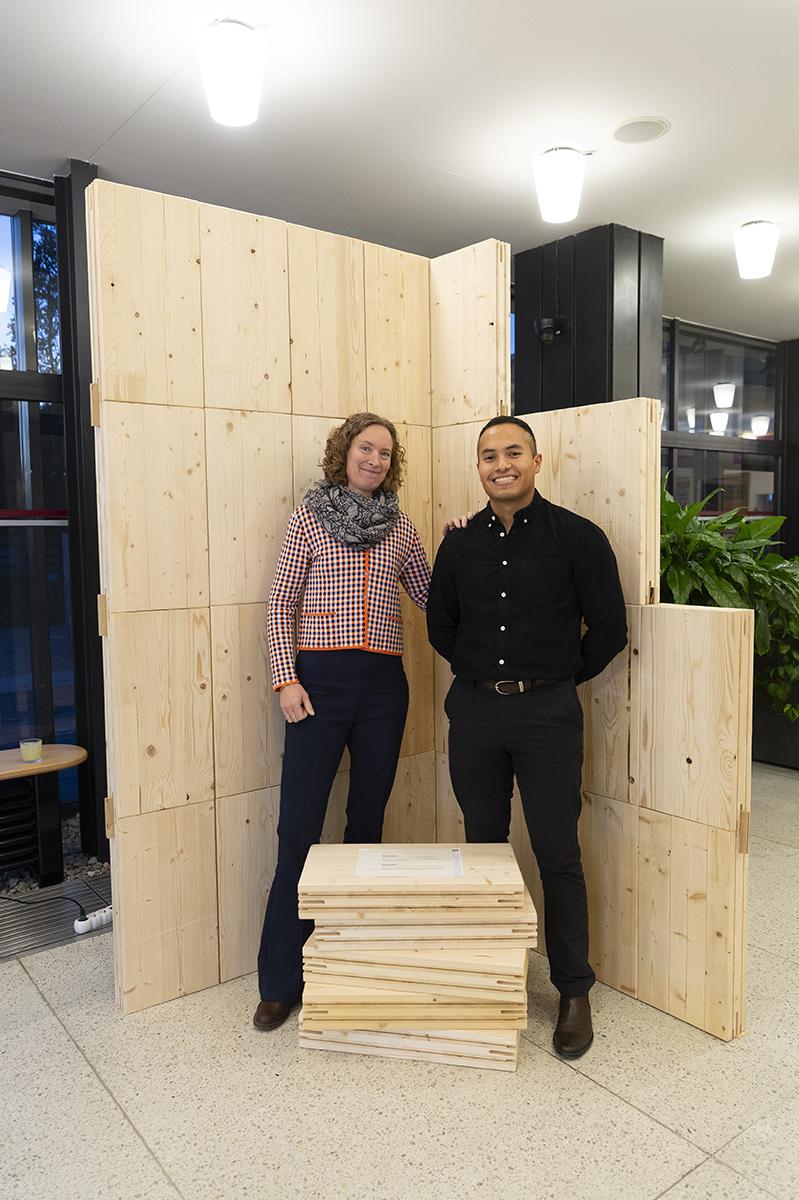
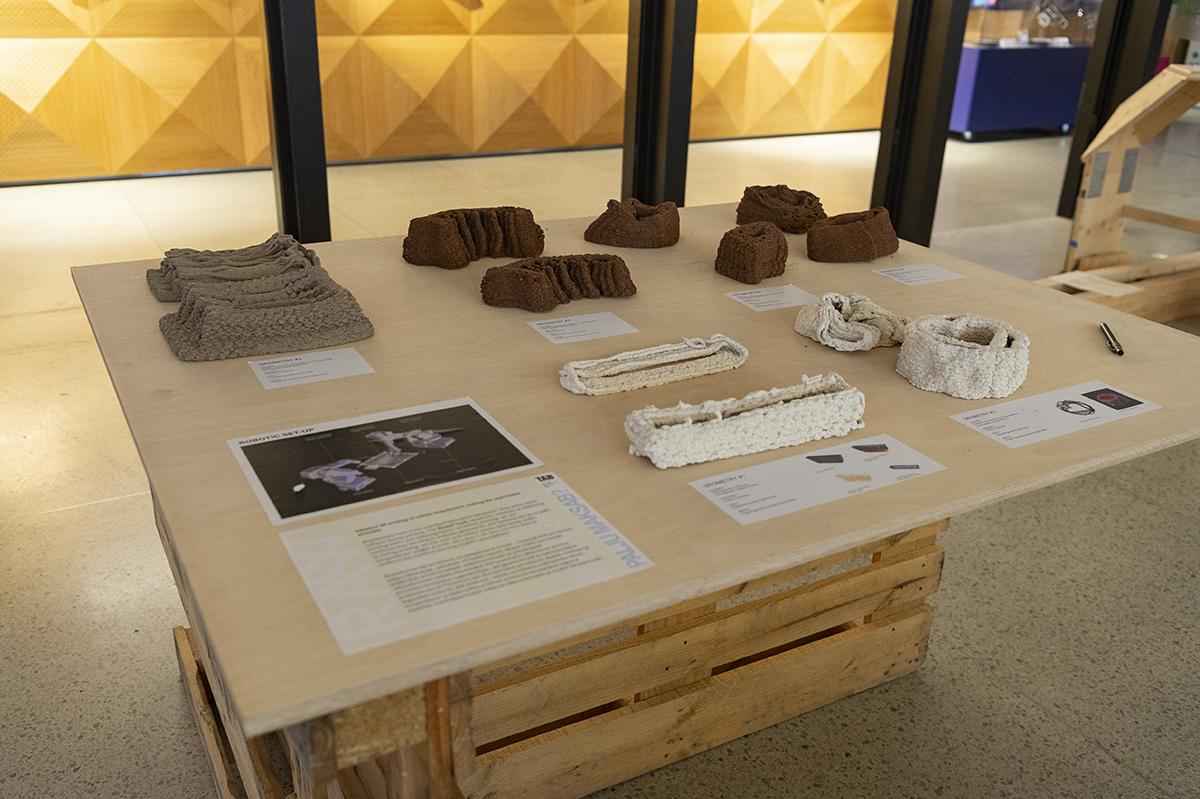
In line with the theme of the Biennale, the exhibition examined the costs of circularity on three levels: material and environmental, labour and social, and agricultural and territorial. It presented RAW prototypes from three material tracks, while posters presented the work of PUUSTER’s three universities. The timber track featured glulam beams made from low-grade and bark beetle-damaged timber, a structure made from old structural timber with wooden dowels, and OmTre’s ReBlokk wall, which is made from CLT offcuts and is easy to assemble and disassemble. The biopolymer track showed how materials that behave in non-standard ways, warping and collapsing during printing, can be made printable: machine learning is used to plan the print path before printing, sensors monitor how the material behaves during the process, and the system learns from the collected data for subsequent prints. The fibre track included hemp fibre yarns and composite test results, the hemp shading system HempHalo II, and a hemp composite beam fabricated through robotic filament winding, in which a tool mounted on the robot guides and visually inspects the fibres during winding.
Alongside the exhibition, at the symposium RAW partners and PUUSTER exchanged experiences on sourcing, processing and putting non-standard materials into practice. Seven short presentations were divided into three modules, each followed by a discussion with the audience. The first module, on sourcing and assessing the suitability of materials, featured RAW presenting the variability of reclaimed timber and agricultural residues and biopolymers as raw materials, while TalTech researchers spoke about non-destructive testing of low-grade timber. In the second module, on processing and properties, RAW presented robotic fabrication with variable input materials, and a professor from the University of Tartu discussed wood densification and novel hydrophobic coatings. The industry perspective was provided by a representative of Mistra-Autex AS, who spoke about what is needed for a new material to make it out of the laboratory. The third module turned to how solutions move into practice: RAW presented its semantic data model, and the redistribution of costs in circular construction, while an architect’s perspective introduced the assessment of circularity in modular timber construction.
Read and watch more
Meedias
- TeadusEST, season 5, episode 6: more about TalTech’s work on undervalued timber from 14:35.
- Tähelepanu! Tegemist on teadusega, 3. hooaja 2. osa
Project websites