
Ebru Metin is a doctoral researcher at the TalTech School of Business and Governance. Originally from Turkey, she has international experience and is researching how legal design can make complex legal systems more understandable and fairer for people.
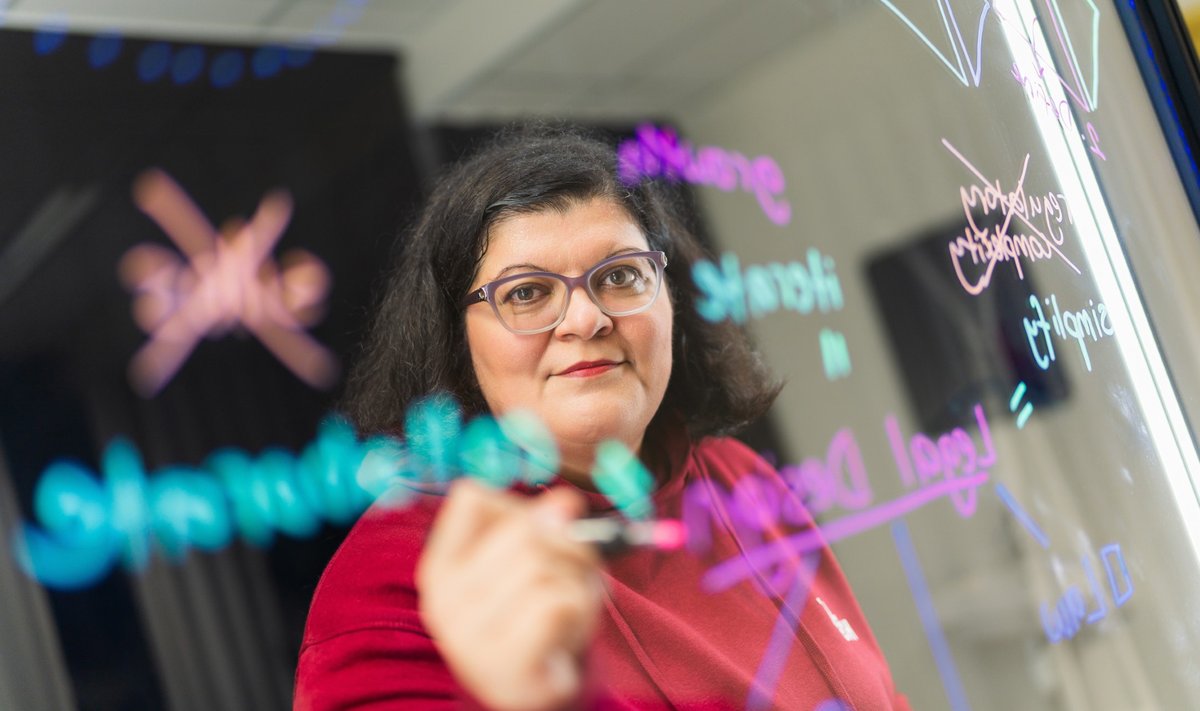
A researcher with experience in Turkey, Spain and the UK can pursue her interests in Estonia. For the past six years, her primary focus has been legal design, which seeks to simplify increasingly complex legal systems and regulations for people by using visual solutions. “When legal information is clearer and better designed, people understand their rights and obligations better, which leads to better legal compliance and fairer outcomes,” she believes.
Where are you from, and how long have you been active in science?
I am originally from Turkey and have been residing for the last 3.5 years in Estonia. After completing my bachelor studies in Turkey, I started working as a practising lawyer and also completed my first master's degree at Istanbul Bilgi University in 2013. I always wanted to travel and also study abroad. This wish came true when I was awarded with the Jean Monnet Scholarship which fully covered my second master's degree studies at King's College London in United Kingdom between 2013-2014. When I finish my studies, I worked several years in private and public sector in Turkey and Spain. After several years of work experience, I established Turkey's first social enterprise for legal design which combined law and human-centered design for fairer solutions and got several awards and acknowledgements from UNDP Turkey, British Council, Vital Voices/US Department of State, International Legal Technology Association and Euclid Network. I always had a passion for learning and deeply wanted to go back to academia. As a result, I have started my Phd in 2022 at TalTech.
How did you get into science, and what fascinates you about it?
I always had a passion for academia but I think the earliest motivating factors of me getting into science are my parents. My mother retired last year from Hacettepe University after 43 years of academic life. She always encouraged me to pursue a career in academia. In addition to her, one of the biggest supporters of my education has been my father. I still remember our recurring visits to the local bookstores where he encouraged my reading from very early ages. I was also very motivated to come back to academia after my work experiences, including my social entrepreneurship experience, as I always wanted to know more. Especially my Phd studies enabled me to learn more about legal design, a topic which I have been focusing since 2020. The diversity of ideas enables new opportunities and belonging to the academic ecosystem really motivate me. However, what fascinates me most is the possibility to improve real-world outcomes through research: helping people, organisations, and policymakers better understand complex rules and make more informed decisions.
What is the main scientific problem you are currently working on, and why is it important?
I am currently working on how complex legal and regulatory systems—especially in areas like sustainability and artificial intelligence—can be made more understandable, usable, and effective. Many well-intended regulations fail in practice because they are too complex. Making law clearer and more human-centred is essential for compliance, trust, and societal impact.
What discoveries in your field have had the greatest societal impact so far?
One of the most impactful developments has been the rise of legal design, which applies human-centred design methods to law. This approach has shown that when legal information is clearer and better designed, people are more likely to understand their rights and obligations, leading to better compliance and fairer outcomes. As a personal focus, I am focusing my research from a business and human rights angle which has been instrumental for corporate sustainability and meaningful stakeholder engagement.
Based on your field of research, what do you think is the most important problem in Estonia or in the world today?
Globally, one of the biggest challenges is ensuring that rapid technological and regulatory developments—such as AI regulation and sustainability rules—remain understandable and accessible. In Estonia and beyond, the key issue is not only adopting advanced regulation, but ensuring that people and organisations can actually use and implement it effectively.
Which of your research achievements are you particularly proud of?
I am particularly proud of my interdisciplinary work that bridges law, business, and design, as well as my contributions to building legal design research and practice. I am also proud of my published research and also my role as the TalTech Legal Lab's coordinator, in organising academic and public events that bring scholars and practitioners together.
What further goals would you like to pursue in your research?
I would like to continue my research on legal design and further develop practical, research-based tools and models that help organisations and policymakers to navigate regulatory complexity. In addition to this, I would like to expand my research more into access to justice and increase my research impact on the society. Finally in the long-term, I would like to build capacity in legal design by integrating it into education, professional training, and public-sector practices, enabling lawyers, policymakers, and organisations to apply human-centred approaches in their everyday work.
The article was published on Delfi Forte