
To introduce Tallinn University of Technology’s good practice for learning and teaching, we are highlighting 12 inspiring lecturers whose teaching has received high praise from students. One of them is Ergo Pikas from the School of Engineering.
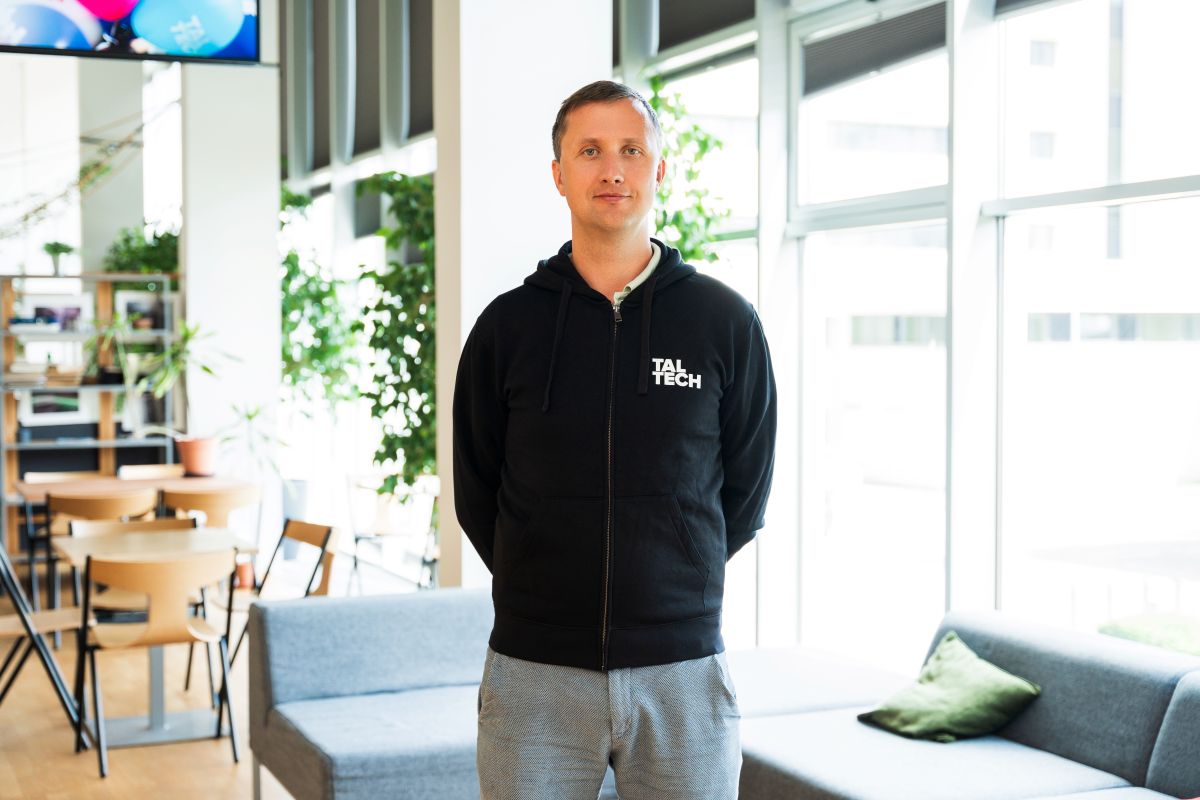
Ergo Pikas, Assistant Professor at the Department of Civil Engineering and Architecture at TalTech, describes himself as an avid reader and sports enthusiast, as well as a curious civil engineer. Although he could also have chosen to study gene technology or psychology, civil engineering felt like a natural choice. Today, he is one of the lecturers who combines teaching and research with philosophical thinking and sees learning as much more than simply acquiring knowledge.
Teaching creates an environment for learning
For Pikas, learning is first and foremost a source of freedom. “Learning gives you the freedom to choose – the ability to act in different contexts and contribute to society. It creates room to make informed decisions rather than being limited by chance or choices arising from a lack of knowledge,” he says.
In his view, no one can be forced to learn. A lecturer’s role is to create as many different situations as possible in which learners have the opportunity to experience, experiment and discover. “Teaching is primarily about creating an environment in which learning can take place,” Pikas says, summing up his approach. In his courses, he aims to create realistic and practical scenarios in which students can solve real-world problems.
Pikas describes the experience of learning as a small flash of insight that brings both understanding and satisfaction. “That moment when something complex becomes clear and you suddenly understand it – that is the joy of learning. I look for that experience myself every day, and I try to give my students the opportunity to experience it too,” he says.
As a lecturer, however, he sees that students often start working too much and too early alongside their studies, shifting their focus from university to work. “Work experience is extremely valuable, but education should be the first priority. Finding the right balance is one of the most important self-management skills,” he emphasises.
General competences – collaboration and environmental awareness come first
Asked to describe himself as a lecturer, Pikas chooses three key words: inspiring, because he wants to instil in students a genuine interest in knowledge; holistic, because he helps them understand connections and see the bigger picture; and free but demanding, because he communicates openly and informally with students while also expecting commitment and effort.
Of TalTech’s general competences, Pikas considers collaboration skills particularly important. According to him, the construction sector has too often been characterised by confrontation and control, whereas collaboration should in fact be based on trust. In his courses, such as the management strategy simulation, he has students work with real clients and mentors, allowing them to practise both collaboration and communication skills.
He also considers environmental awareness essential – not only in terms of technical solutions, but as a mindset. “It has to be part of our DNA – thinking in a way that respects resources, nature and people,” he says. He also sees critical thinking and taking responsibility as indispensable, particularly in research and when supervising theses.
Sources of inspiration and role models
Throughout his academic career, Pikas has always looked for inspiration in people rather than in the name of a university. He highlights Professor Rafael Sacks and Professor Lauri Koskela, among others, as people who have influenced his thinking and teaching. “Role models are people who make you see the bigger picture and think differently,” he says.
Pikas’s vision is for teaching and learning at TalTech to become even more inspiring and research-based in the future, founded on mutual trust and collaboration. “No major construction project is created by one person alone – it is the result of collaboration. The same applies to learning: we all learn together by sharing experiences and knowledge,” he says.
Find out more about good learning and teaching at TalTech: taltech.ee/en/learning