
Europe’s maritime sector is entering a decisive decade. The question is no longer whether the sector must change, but how quickly it can modernise its existing fleet and reduce emissions.
This challenge was at the centre of discussions in Brussels at the seminar “Powering Europe’s Maritime Retrofit Transition”, organised by the Estonian Maritime Academy in cooperation with the Estonian Research Council’s Brussels office. The event brought together policymakers, researchers, industry representatives and entrepreneurs to explore how to accelerate the green and digital transition of Europe’s maritime sector – and who should lead it.
As emphasised by Helen Kaljuläte, Ambassador of Estonia to Belgium and Luxembourg, “the European maritime sector has reached a point where it must focus on sustainability, fleet decarbonisation, and digital resilience.” According to her, now is the right moment to bring together policymakers, science and industry to jointly shape future solutions.
Maive Rute, Deputy Director General at the European Commission’s DG GROW, highlighted the importance of the recently adopted European maritime industrial strategy. She noted that Europe must be “better prepared for a new world where competitiveness, security and resilience are more important than ever.” The strategy focuses on strengthening industrial capacity, supporting innovation and directing investments into future-proof solutions.
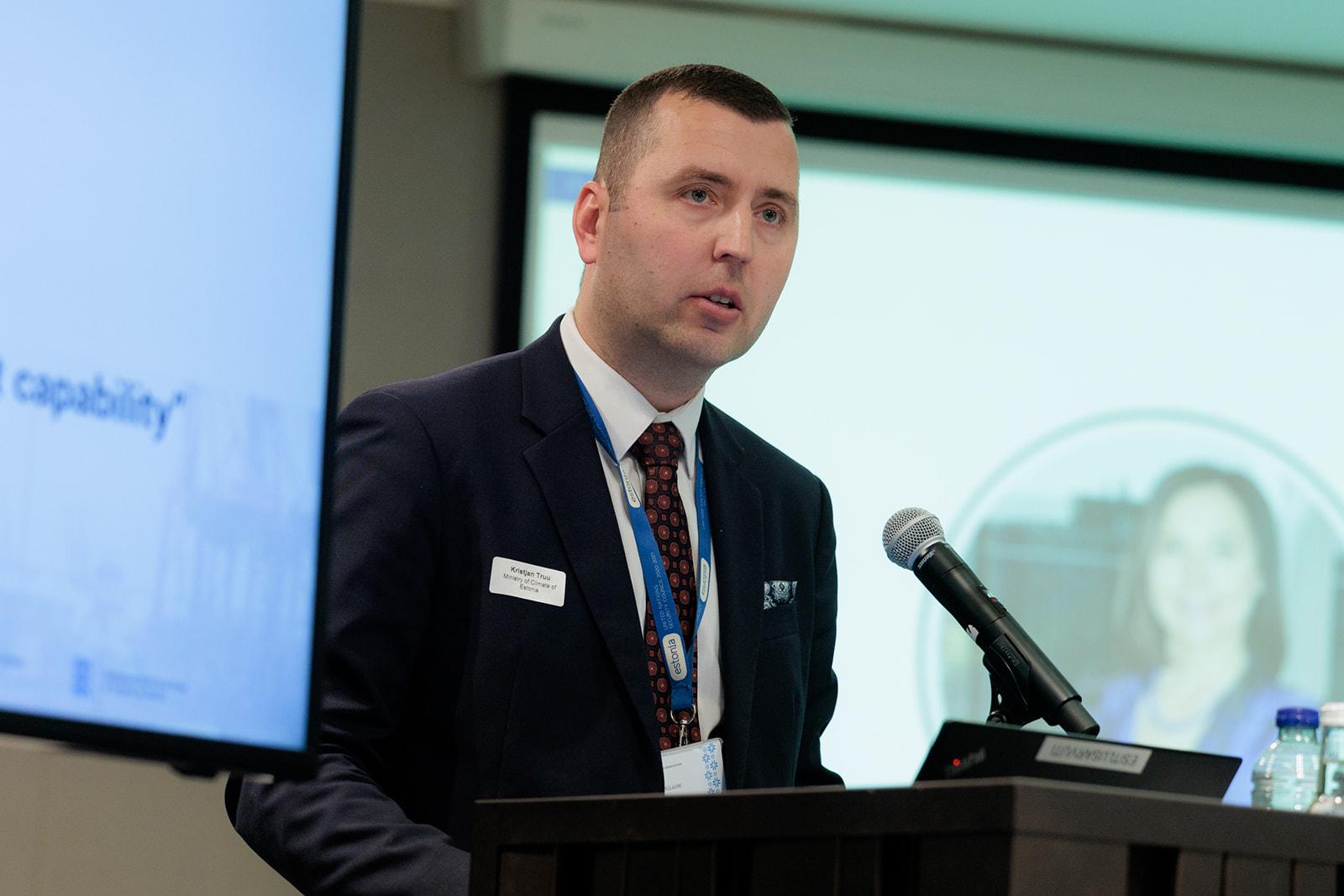
A clear message emerged from the discussions: Europe cannot meet its climate targets without large-scale modernisation of the existing fleet. Kristjan Truu, Deputy Secretary General at the Ministry of Climate of Estonia, stressed that “retrofit is not a niche activity, but the fastest and most cost-effective way to reduce emissions from the existing fleet.” As the majority of vessels operating in 2030 and even 2040 already exist today, the focus must be on upgrading existing ships rather than relying solely on new builds.
At the same time, Truu pointed out a key bottleneck: Europe’s capabilities are fragmented. “We currently lack a sufficiently coordinated ecosystem and a complete value chain from design to implementation,” he said, emphasising the need for stronger cooperation between industry, science and the public sector.
Estonia is positioning itself as an active contributor to this transition. Roomet Leiger, Director of the Estonian Maritime Academy at Tallinn University of Technology, presented the initiative to establish a Centre of Excellence for maritime retrofit. According to him, the goal is “to create a high-impact and internationally recognised competence centre that helps transform the existing fleet into energy-efficient and digitally advanced systems.” The planned centre will bring together expertise in marine engineering, alternative fuels, digitalisation and cybersecurity, creating a platform where research and industry collaborate closely to bring solutions into practical use more rapidly.
Within the EC-MaRe initiative, experts - Roomet Leiger, Director of the Estonian Maritime Academy; Dr Ulla Pirita Tapaninen, Professor and Head of the Maritime Transport Research Group; Dr Pentti Kujala, Professor and Head of the Waterways Safety Management Research Group; Dr Sanja Bauk, Associate Professor and Head of the Maritime Cybersecurity Centre; and Raido Lember, Co-founder and Board Member of the Estonian Maritime Cluster - presented approaches to ship modernisation, green technologies, maritime cybersecurity and industry collaboration. The presentations highlighted the need to bridge scientific knowledge with practical solutions that enable the maritime sector to respond quickly to both environmental and digital challenges.
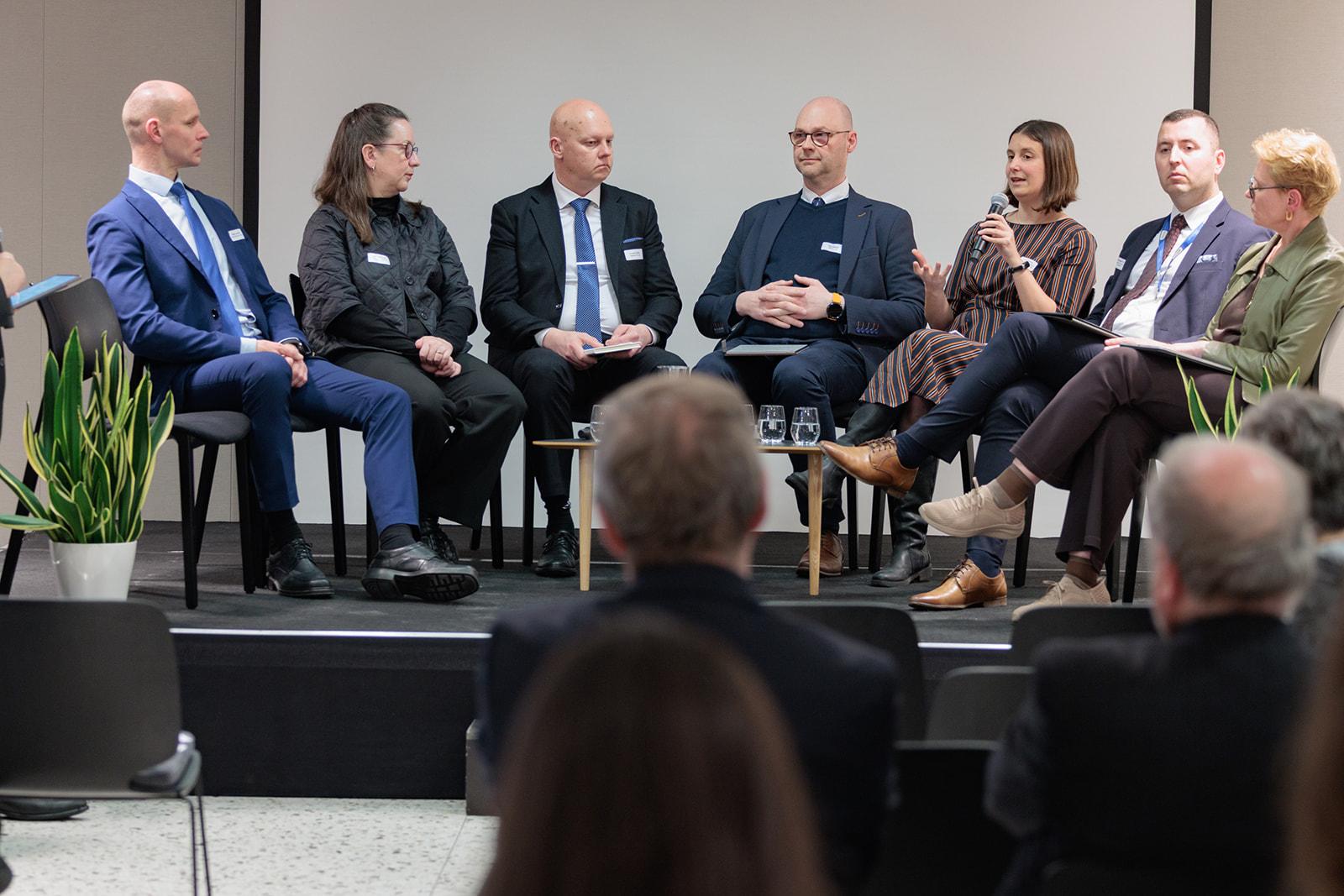
The panel discussion, titled “Accelerating Europe’s maritime economy through retrofit, innovation and policy”, focused on how to move the sector forward. Participants emphasised that Europe must shift from creating regulations to effectively implementing them. This requires better coordination, targeted funding and a stable and predictable regulatory framework.
Speakers also underlined that fragmentation between Member States is weakening Europe’s competitiveness. One potential solution discussed was stronger cooperation through joint initiatives such as the EU Industrial Maritime Value Chain Alliance, which could help pool resources and accelerate innovation across the sector.
The seminar was moderated by Jaak Viilipus, CEO of the Estonian Maritime Cluster.
The conclusion was clear: Europe’s maritime transition cannot happen without large-scale modernisation of the existing fleet. To achieve this, Europe must align its capabilities, direct investments into implementation and act quickly and in a coordinated manner. The question is no longer whether change will happen, but whether Europe can lead it.