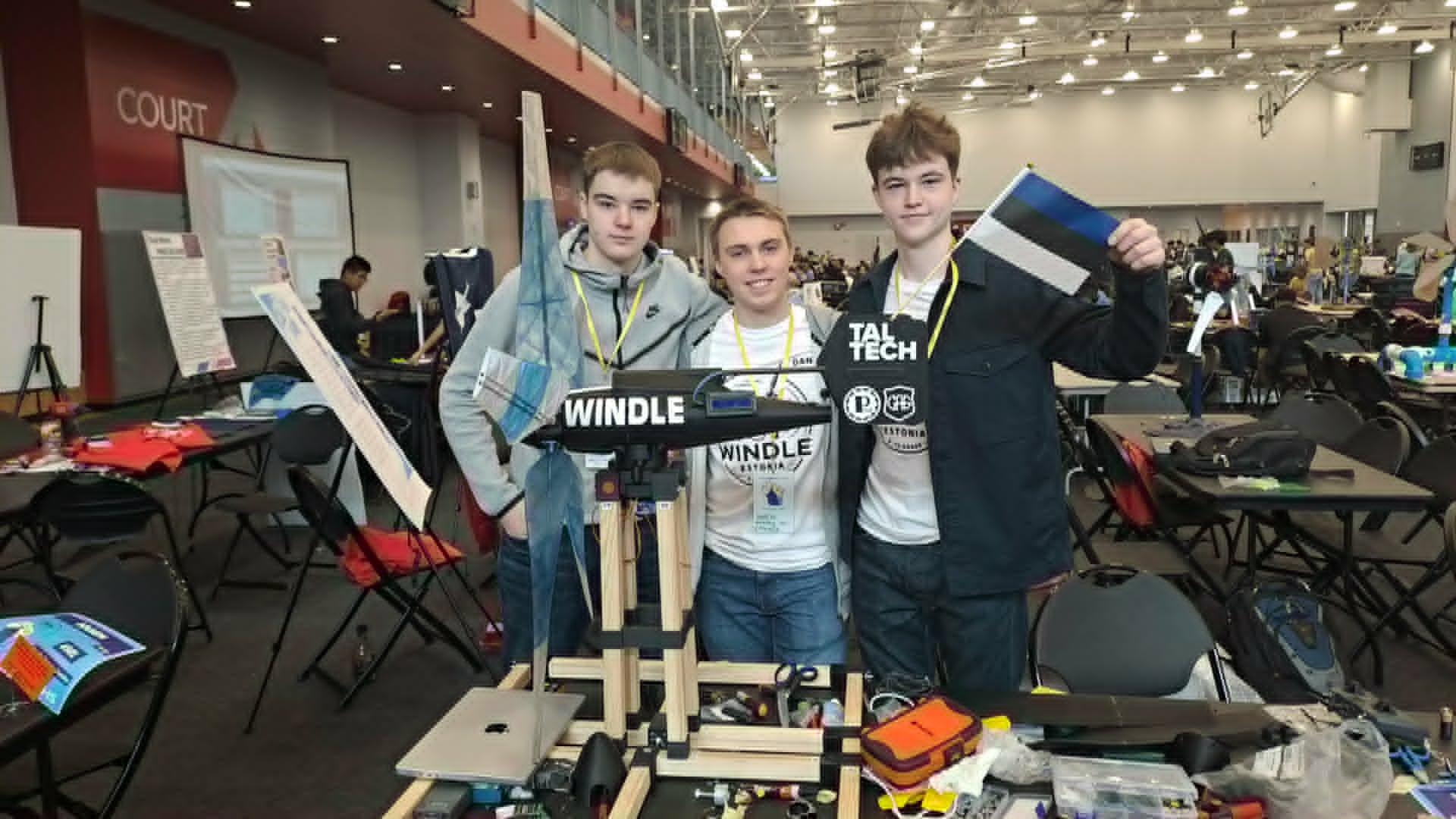
Estonian team Windle defeated competitors from around the world at the international finals of the World KidWind Challenge held in the U.S. and the wind turbine they built was named the best in the competition. The Windle team, crowned world champions, consisted of Sander Orukivi, Daniel Simagin, Rasmus Orukivi, and Peeter Persidski from Tallinn Reaalkool and Gustav Adolf Gymnasium. They were mentored by Kenari Koonik from TalTech.
The World KidWind Challenge is not a typical school competition where a nice idea or a working model is enough. Teams must prove that they have a deep understanding of their solutions, can present them effectively, make quick changes, and solve unexpected problems at a pace typical of real engineers.
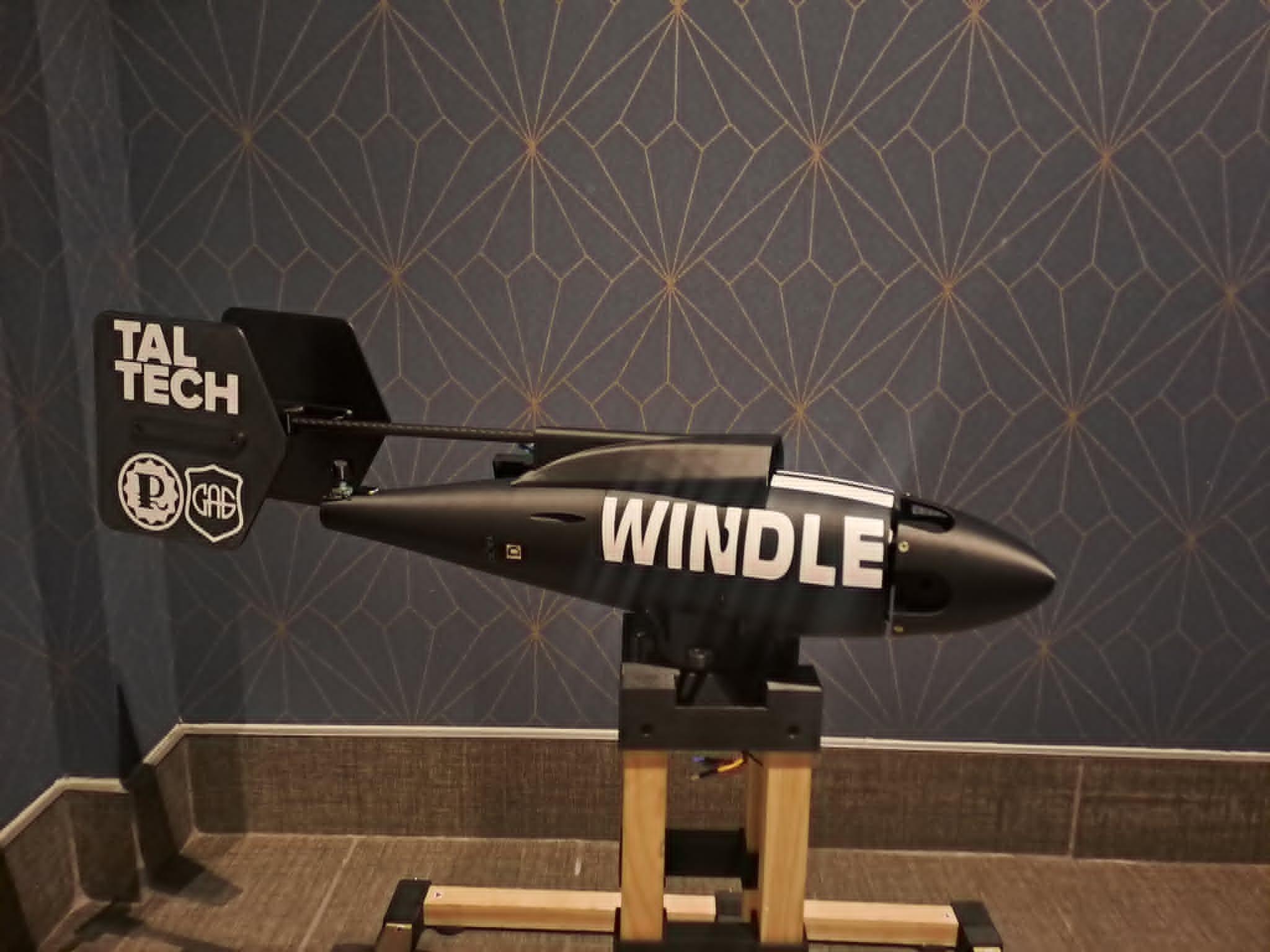
Behind Windle’s success were months of work, testing, and continuous development. The team refined their turbine step by step, seeking solutions for efficiency, stability, and construction. And this months-long effort took the Estonian boys to the top of the world.
“This victory clearly shows that Estonian youth have world-class potential,” said Igor Krupenski, a visiting professor at TalTech and founder of Enerhack. “The most important thing isn’t even the medal itself, but how the young people learned to think like real engineers during the process—to analyze, test, make mistakes, and try again. It is precisely this kind of experience that shapes future engineers.”
The international finals of the competition brought together strong teams from various countries, and the competition was fierce. The judging criteria included technical solutions, wind tunnel tests, knowledge, and collaborative problem-solving.
According to Alesja Nehhožina, Development Manager at Enerhack, the greatest value of such projects lies in the practical experience they provide. “Young people see that engineering isn’t just something abstract in textbooks,” explained Nehhožina. “They get to actually build their ideas, test them, and bring them to the global stage. Windle’s victory sends a very strong message to other young people in Estonia—the ideas we create here can compete with the best in the world.”
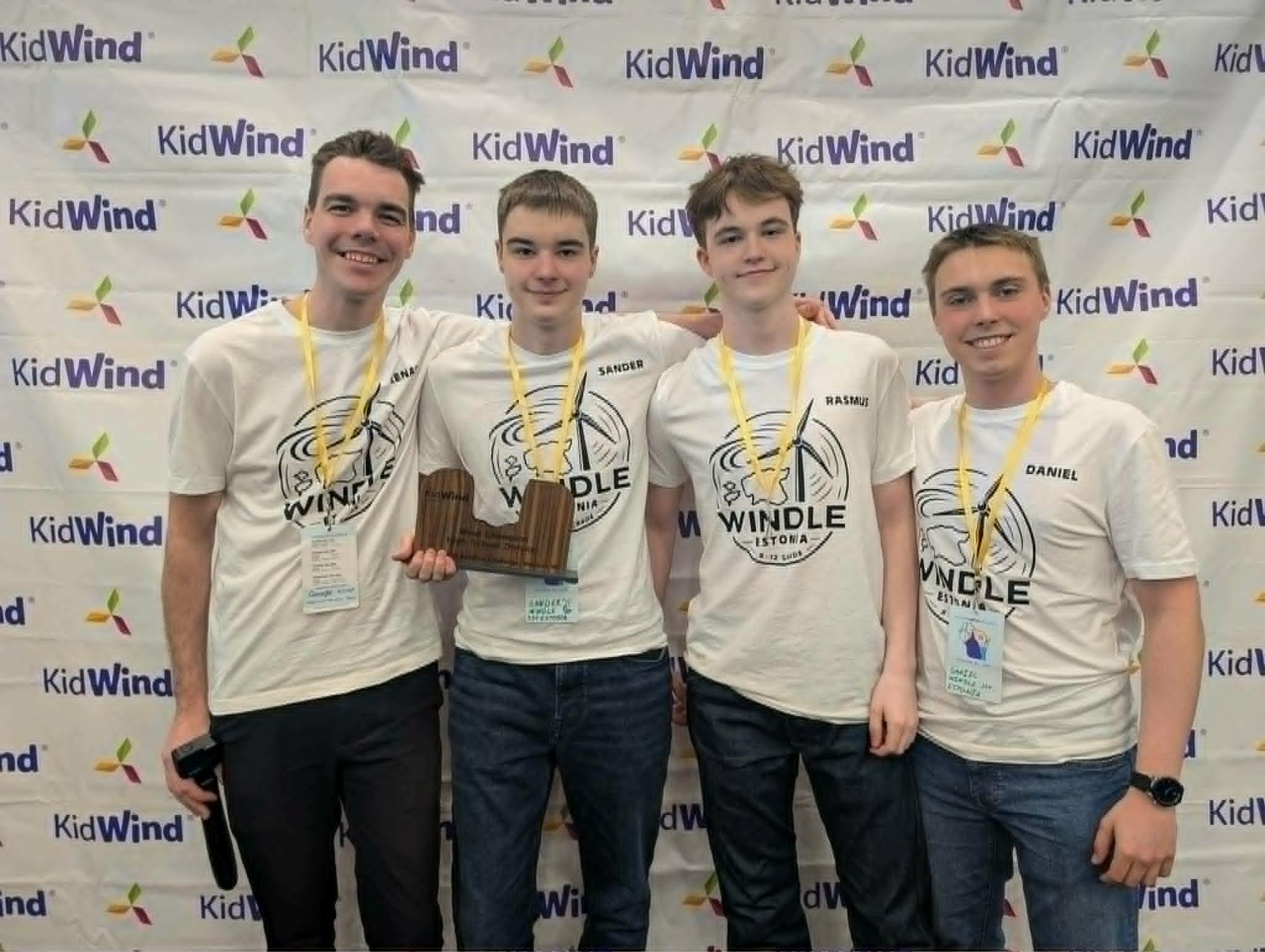
Mentoring also played a significant role. Windle’s mentor, Kenari Koonik, helped the team develop their ideas, test solutions, and stay focused in challenging situations throughout the entire process. It is precisely this kind of collaboration between young people and mentors that is one of the strengths of the KidWind Challenge.
Windle’s world championship title is of symbolic significance. The importance of green technology and renewable energy is growing worldwide, and the need for a new generation of engineers is increasing every year. The success of Estonian youth demonstrates that local students possess the knowledge, creativity, and courage to solve major problems.
Just a few months ago, the same team competed in the KidWind Challenge Estonia finals held in the TalTech auditorium. Now they have returned from the U.S. as world champions—an achievement that marks a significant moment for youth engineering and green technology in Estonia as a whole. Estonian school students built a wind turbine that turned out to be the best in the world.
Teams registration for the 2026/27 season of the KidWind Challenge Estonia begins on August 1 and runs through the end of September. Both middle school (grades 6–9) and high school (grades 10–12) students are welcome to participate. Theory will be taught in October, and starting from November, students will build wind generators under the guidance of their mentors. The competition day for that season will take place at Tallinn University of Technology in January 2027.