
On 15–16 January 2026, Tallinn University of Technology (TalTech) hosted a strategic meeting of the EuroTeQ network, bringing together presidents and rectors, vice-rectors for academic affairs, project managers and work package leaders.
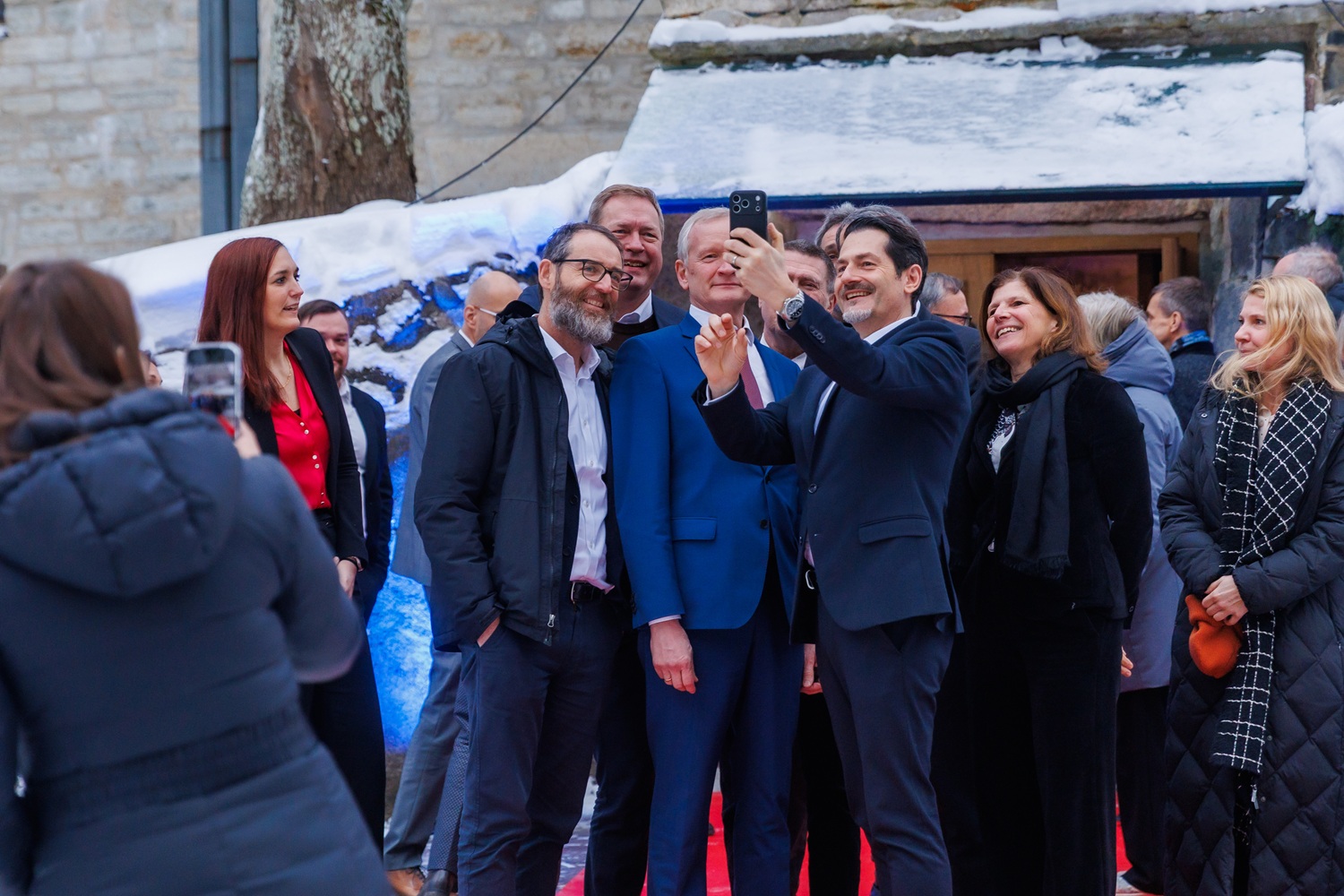
Delegations from Europe’s leading technical universities and business schools gathered in Tallinn, including École Polytechnique Fédérale de Lausanne (EPFL), Technical University of Munich (TUM), Technical University of Denmark (DTU), Eindhoven University of Technology (TU/e), Czech Technical University in Prague (CTU), HEC Paris, IESE Business School, and École Polytechnique (L’X).
The meeting was also attended by guests from the EuroTech Universities Alliance, underlining the importance of collaboration between Europe’s major university networks.
The purpose of the summit was to review EuroTeQ’s progress to date, discuss future directions in European higher education, and define the strategic priorities for the network’s next phase. As part of the European Universities Initiative, EuroTeQ brings together nine leading institutions in engineering, technology and business to jointly advance education, research and innovation, thereby strengthening Europe’s global competitiveness.
EuroTeQ as a Response to Europe’s Major Challenges
The strategic discussions were opened by Tiit Land, Rector of Tallinn University of Technology, and Thomas F. Hofmann, President of the Technical University of Munich. While reflecting on the achievements of EuroTeQ’s first five years, the focus was firmly on the future – in particular, on defining EuroTeQ’s role in Europe over the coming decade.
The presidents agreed that EuroTeQ must go beyond cooperation in education alone. The changing geopolitical landscape, growing pressure on Europe’s economic competitiveness, and the need for greater strategic autonomy brought issues such as health, security and defence to the forefront. It was emphasised that engineering and technological education must respond more directly to these challenges, and that EuroTeQ could serve as a platform for developing new European-level collaboration models and solutions.
Developments in European education policy also formed an important backdrop to the discussions. Participants noted that by 2030, learner mobility in traditional universities is expected to reach 23%, and within European university alliances as much as 50% – an ambitious goal requiring more flexible learning pathways and advanced digital solutions.
Learners, Academic Staff and Artificial Intelligence
On the second day, parallel workshops focused on EuroTeQ’s strategic priorities for the next decade from the perspectives of learners, academic staff and university employees. The discussions extended beyond vision-setting and addressed difficult strategic choices.
A major topic was the role of lifelong learning. Participants agreed that master’s programmes could increasingly become spaces where different generations of learners meet, and where academic education is more closely aligned with the upskilling and reskilling needs of industry. This was seen as essential not only for educational flexibility, but also for workforce retention in Europe and the professional development of future leaders.
The need for operational excellence – both in educational delivery and in cooperation with industry – was strongly emphasised. Virtual programmes, shared digital platforms and scalable solutions were identified as key enablers for increasing EuroTeQ’s impact across Europe.
TalTech–Eindhoven Agreement and a New Double Degree Master’s Study Programme
Artificial intelligence was a recurring theme throughout the summit. Discussions explored how AI can support learning and assessment, and in which areas EuroTeQ-wide cooperation would be most effective – for example, in developing intelligent learning support systems and AI-based assessment environments. These conversations were closely linked to the broader question of how EuroTeQ can contribute to strengthening Europe’s autonomy and competitiveness.
As host, Tallinn University of Technology introduced participants to Estonia’s journey as a digital society and to TalTech’s strategic priorities. The programme included presentations on TalTech’s AI roadmap, applied innovation in collaboration with industry, and deep-tech entrepreneurship. Estonia’s experience in combining digital solutions with entrepreneurial thinking was widely recognised by partners as a distinctive strength in the European context.
During the meeting, TalTech and Eindhoven University of Technology signed a cooperation agreement, laying the foundation for a double degree master’s study programme in computer science and artificial intelligence (learn more about the double degree programme HERE). Similar collaboration opportunities were also discussed with HEC Paris, representing Europe’s leading business schools.
Looking Ahead
The outcomes of the EuroTeQ Presidents’ Summit will inform the development of the network’s vision and mission, as well as help define priorities for the next project period. For Tallinn University of Technology, the summit reaffirmed its role as an active driver of European cooperation in higher education and innovation.
According to Ingrid Pappel, Vice-Rector for Academic Affairs at TalTech, EuroTeQ cooperation is of strategic importance to the university, supporting internationalisation, the enhancement of educational quality, and closer integration of education and research.
“For example, within the EuroTeQ Collider, students work on real-life challenges together with leading European universities and companies. This helps develop future-oriented competences that are difficult to acquire to the same extent in a purely local learning environment,” Pappel explained.
She added that close collaboration between partner universities also provides a strong foundation for research cooperation, joint funding applications and international projects, further integrating education, research and innovation within the EuroTeQ framework.