
Researchers from the Department of Marine Systems at Tallinn University of Technology recently published a study in the journal Environmental Research: Climate investigating marine cold spells in the Baltic Sea from 1982 to 2023. By analyzing Copernicus satellite sea surface temperature data, the team estimated the long-term changes and variability of these extreme cold events. A primary focus of the study was to assess how the overall long-term warming of the sea, compared with short-term interannual variability, affects the frequency and intensity of cold spells. Ultimately, these observations provide important insights into how coastal waters respond to changing atmospheric conditions despite rapid global warming.
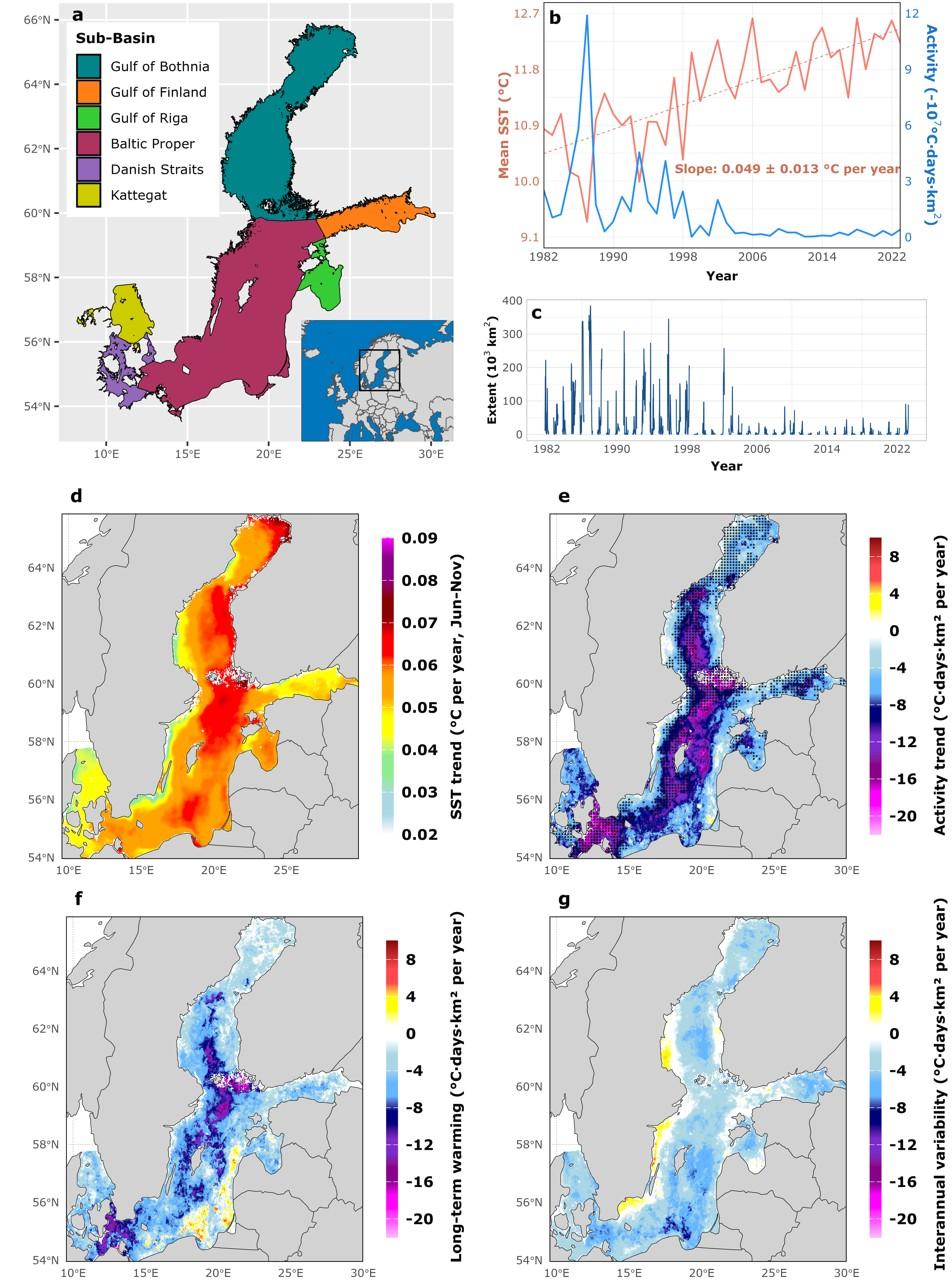
While marine heatwaves are well studied, marine cold spells - characterized by anomalously low sea surface temperatuures - also significantly impact marine ecosystems and have socioeconomic consequences. Because the Baltic Sea is experiencing a steady long-term warming trend (increasing by about 0.05°C per year), the overall number, duration, and extent of marine cold spells have decreased. However, when researchers mathematically removed the background global warming trend from the data to isolate short-term variability, they discovered a contrasting trend near the coast.
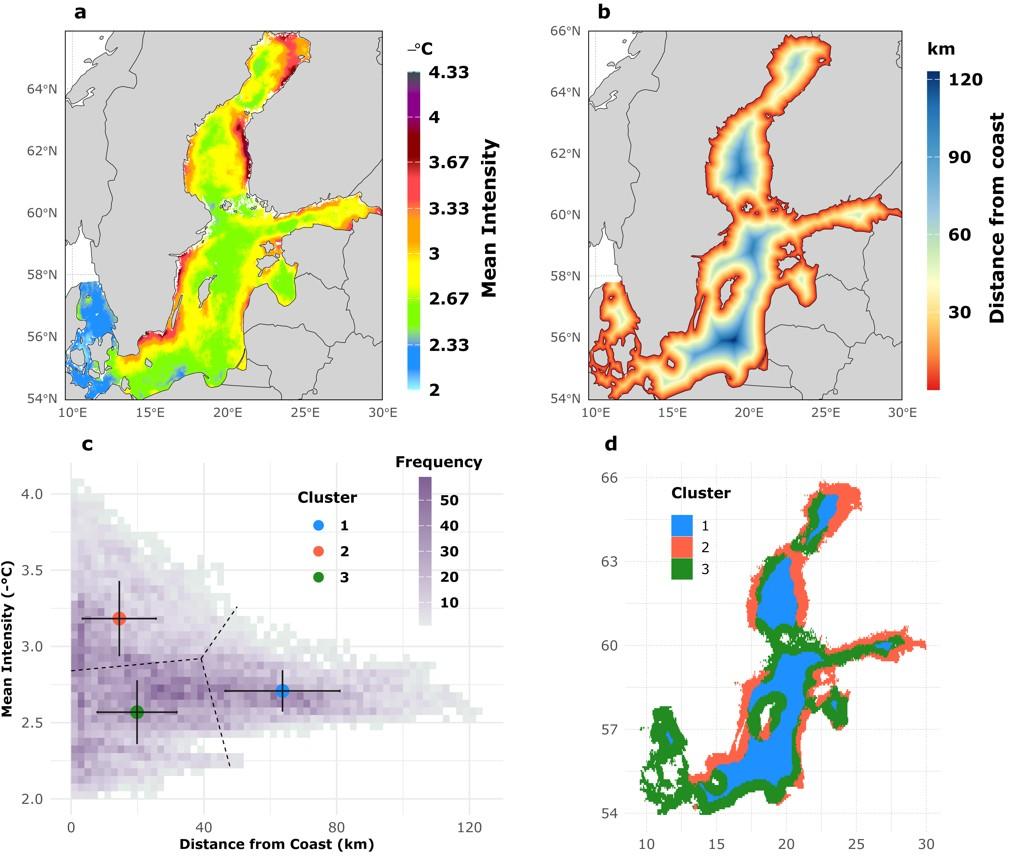
Coastal cold spell events are generally more intense than offshore events, with temperatures dropping by approximately 4°C. Since 2006, the intensity of these near-shore cold spells has increased significantly in specific coastal regions. These extreme coastal events are primarily linked to strong winds that cause coastal upwelling - a process in which warm surface water is pushed away and cold water is brought up from deeper layers. Another contributing factor to these extreme coastal events is the arrival of cold Arctic air over the Baltic Sea under specific atmospheric conditions. Large-scale atmospheric circulation patterns, such as the North Atlantic Oscillation (NAO), strongly influence these wind regimes and contribute to the severity of these coastal cold spells.
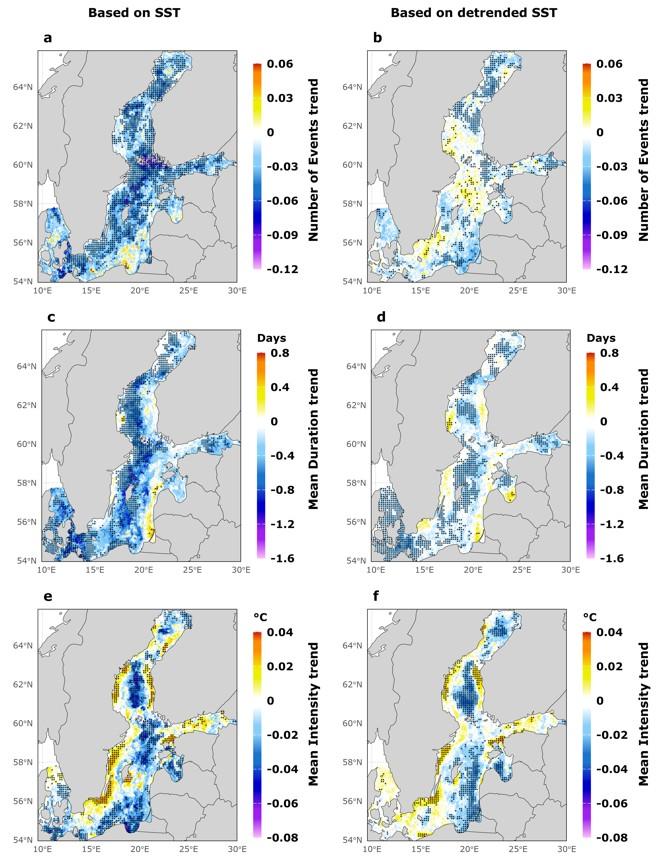
The study successfully mapped the changing nature of marine cold spells over a 42-year period. It demonstrated that while the Baltic Sea as a whole is warming and experiencing fewer cold spells, extreme coastal cold spells are simultaneously becoming more intense due to wind-driven upwelling and Arctic air intrusions. These findings will be used to better understand the hidden temperature stresses affecting local marine ecosystems and fisheries. Further research on these characteristics is critical for developing adaptation strategies that can mitigate the ecological impacts of changing cold spell dynamics, contributing to the resilience of the Baltic Sea region in a warming climate.
The scientific article "Marine Cold Spells in the Baltic Sea", co-authored by Tallinn University of Technology (TalTech) researchers Shakti Singh, Ilja Maljutenko, and Rivo Uiboupin, has been published in the journal Environmental Research: Climate.