Second-year student Jörgen Vask, who studies Cyber-Physical Systems at TalTech’s Tartu College, did not choose his field based on a detailed career plan, but rather followed his gut feeling. He was interested in electronics and IT and was looking for a programme that would give him a broad foundation while keeping his options open for the future.
“I wasn’t completely sure what I wanted to do. I only knew that technology was the field I wanted to be in,” he says. “This programme seemed the most versatile—it gives me the chance to discover what I really enjoy and then explore it in greater depth.”
Looking back, Jörgen says it was the right decision. “The time I’ve spent studying here has been an absolute joy.”
Learning is like eating an elephant one bite at a time
When asked to define learning, Jörgen gives a concise answer: making complicated things simple. “There’s one sentence I tell myself when I’m dealing with difficult topics: everything is actually simple—you just have to find it in the chaos,” he explains. “You start piece by piece, experiment, test things, think them through, and at some point it clicks.”
For him, learning is a process, not a one-off effort. It is like eating an elephant one bite at a time—step by step, consistently. The difficulty lies not in something being impossible, but in the time and concentration it requires. “When I sit down and focus, time disappears. At some point, I look up and realise the work is done.”
Jörgen follows two simple principles when it comes to learning: if you are going to do something, do it properly, and doing something is better than doing nothing. “If I take something on, I want to see it through,” he says. “Sometimes you can take a break to clear your head, but eventually you still have to sit down and get started.”
When it comes to teaching, Jörgen highlights one important nuance: it is not the teacher who needs to be memorable, but the message behind what they say. In his view, one of the greatest challenges in teaching is presenting a subject in a way that genuinely makes students think along. The content needs to be engaging, but not artificially so. The teacher’s role is not to “play the clown”, but to create a connection between the subject and the learner.
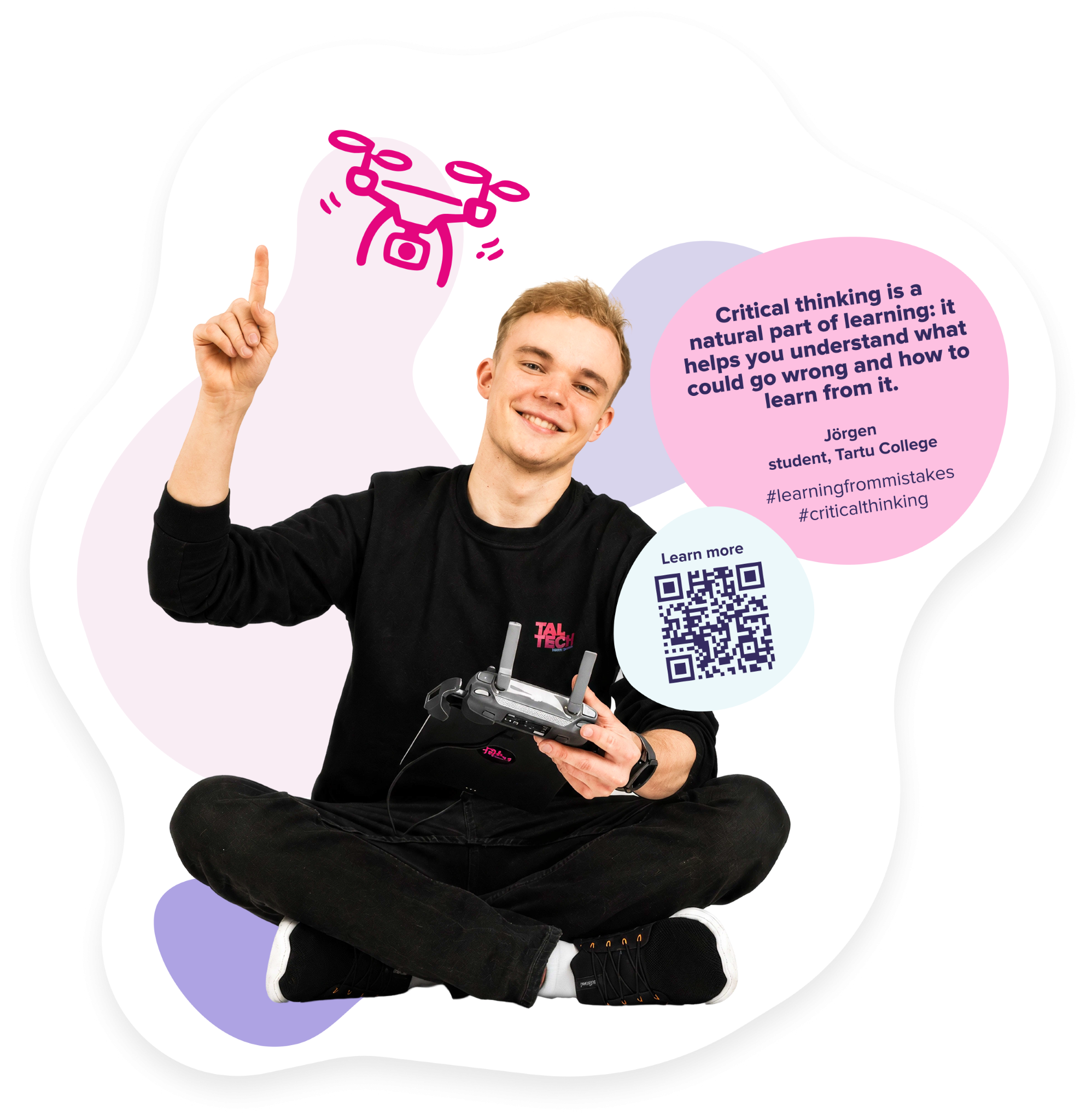
He appreciates lecturers who connect theory with practice and talk about how things work in real life—including how they can go wrong. “If you know what can go wrong, you make better decisions. That’s real engineering thinking.”
We need to talk about mistakes too
Jörgen believes engineering education should pay more attention to how things can go wrong. “If you can imagine what might go wrong, you make better decisions from the outset,” he says. “You think through what you need to be careful about and what you can do to prevent it from happening.”
In his view, it is not enough to complete a drawing or make a circuit work on paper. It is also important to understand the potential points of failure—where something could burn out, where a component could overheat or where a system could crash.
“If you’ve thought through those scenarios, there’s a much better chance that it will work the first time and that nothing melts or blows up,” Jörgen says.
For him, it is precisely this ability to think ahead—to analyse potential failures—that distinguishes a student who understands the theory from a real engineer.
Critical, hardworking and a little humorous
As a student, Jörgen describes himself in three words: critical, hardworking and a little humorous in social situations.
“I can be quite critical at times. I always ask: do we actually need this? Couldn’t we do it better?” he says. When he has a project or needs to put a device together, he does not do things simply for the sake of getting them done. He wants to understand why something is done in a particular way and whether there might be a more efficient solution.
Jörgen also has a strong work ethic. “Once I sink my teeth into something, I want to produce something solid. Not just throw something together and hope it somehow works.”
The third trait comes out particularly in social situations. Jörgen likes to find ways of making even difficult and theoretical subjects interesting for himself. “If something seems dry or difficult, I sometimes come up with a funny association, even something completely absurd. It helps me remember.”
He believes learning does not have to be overly serious or stressful. A little humour—even if it sometimes involves a “slightly dangerous way of thinking”—helps the content stick. And once you remember the subject matter, half the work is already done.
A hands-on mindset
If Jörgen had to explain to a friend why they should come to TalTech, his answer would be simple: here, you get to make things happen. “You have the freedom to experiment here. If you come up with a project, you can even get funding for it. The only question is whether you’re willing to take the initiative.”
What fascinates him about his field is putting knowledge into practice and thinking about how he can use it in the future.
One idea that has stayed with him since basic school is creating a smart home. “I want to know how to automate my future home so that with a single tap on my phone I can turn on the lights, open or close the curtains, or even start the fireplace,” he explains. For him, it is not simply about convenience—it is about having the skills and understanding how systems work and how to build them himself.
He has already started taking small steps in that direction. He is currently working on a project in which he is building a system with remote control in mind. “I’m gradually building up experience,” he says. For him, that is what learning is really about—doing, experimenting and moving step by step towards the skills he genuinely wants to use.
He also highlights the environment at Tartu College as a source of motivation, with senior students, the technology club and collaborative projects all playing an important role. Above all, it is other people who are making things happen who have inspired him. “When you see other people doing cool things, you want to do something yourself. And it’s even better when you can go and show them what you’ve made.” He says these senior students became his first “judges” and informal mentors—people whose feedback and approval gave him confidence and encouraged him to keep going.
He now works at the university in a role related to his field, where his responsibilities include the workshop and 3D printing, as well as leading the robot combat team. For him, this is a natural continuation of learning—university studies and real projects are not two separate worlds.
General competencies are not an added bonus—they are a prerequisite
When asked why general competencies are necessary, Jörgen responds with a question of his own: “What qualities do you need to do your professional work well?”
For Jörgen, university has above all taught him self-management. “No one tells you every single step anymore. I came here voluntarily. It’s my responsibility to get my work done, understand the subjects and keep moving forward,” he says. Independent programming and physics courses have taught him to take responsibility himself—to work through material before class, set aside the necessary time and get the work done even when his motivation is not at its peak.
At the same time, he has developed his collaboration skills through projects, hackathons and group work, where good results are only possible when communication works. Critical thinking has become a natural part of learning: every solution needs to have a reason behind it, and you also have to consider what might go wrong. His experience shows that when you ask questions and take initiative, collaboration can extend far beyond the lecture hall.
He considers practicality, a strong work ethic and initiative to be among his strengths. If something is worth doing, it is worth doing properly—not simply to tick a box. At the same time, he sees no point in unnecessary complexity if the same result can be achieved in a simpler and more reliable way.
“There’s no point putting energy into things that don’t create added value,” he says. Having the courage to experiment, take on projects and seize opportunities is a natural part of learning for him. Alongside this, he considers communication skills equally important—the ability to ask questions, discuss ideas and keep a conversation flowing. In his view, it is precisely this combination of independence, critical thinking and the courage to take action that gives people an advantage both at university and in their future careers.
Feedback and dialogue
Of all the principles in the Good Practice for Learning and Teaching, the ones that resonate most with Jörgen are responsibility and dialogue. “If you don’t get feedback, you don’t know how to improve,” he says.
He appreciates lecturers who are willing to stay after class to discuss things, answer questions and even help students think through their projects. In his experience, good dialogue makes learning more meaningful and motivating. At the same time, he believes the university could do even more to consciously strengthen its culture of feedback.
Jörgen also says that creativity, initiative and ethics are genuinely present at the university—not just in words, but in practice. He says he has yet to meet a lecturer who has dismissed a project or idea by saying, “Don’t do it, it’s pointless.”
“Even if the idea has been a little… let’s be honest, comically bad,” he says with a smile, “it hasn’t been shot down. Instead, they’ve explained what problems might arise and then suggested trying it in a different way.”
In his view, that distinction is extremely important: it is about guidance rather than prohibition. Students retain the responsibility and freedom to experiment while also receiving professional feedback that helps them improve their ideas. This kind of environment encourages students to try, make mistakes and try again without stifling creativity or initiative before they have even had a chance to develop.
The future: more hands-on skills and insights from alumni
Jörgen believes education could place even greater emphasis on its connection with the labour market. “If nothing else motivates students, the thought of a future job will definitely make them sit up and listen,” he says. Knowing that a particular skill or habit could later make a difference in a job interview immediately makes learning more meaningful to him. It is no longer simply about collecting credits, but about preparing for real situations.
According to Jörgen, this perspective—understanding what employers actually expect—also helps students keep going when a subject feels difficult or motivation starts to fade. “If you know you’re going to need it, you get it done. And when you eventually start working or go to an interview, you’re prepared.”
When Jörgen thinks about how the university could develop, he highlights two areas. The first is more practical, hands-on learning. He uses an electronics course as an example. “You can put the components together, sure—but how do you diagnose a faulty device? How do you find the problem?” he asks. He believes there should be more assignments where students have to think like engineers do in real life—not merely building things, but also analysing and troubleshooting faults.
He also sees value in systematically examining the career paths of graduates. Analysing where alumni go after graduation and which skills they actually use would provide a clearer picture of which knowledge and skills are critical and which play more of a supporting role. “If you bring all that information together, you get a pretty clear picture of what really matters,” he says.
For Jörgen, learning is work—but it is work he enjoys doing. His story shows that when the environment is supportive and opportunities are plentiful, there is really only one thing left to do: take the initiative and get started.
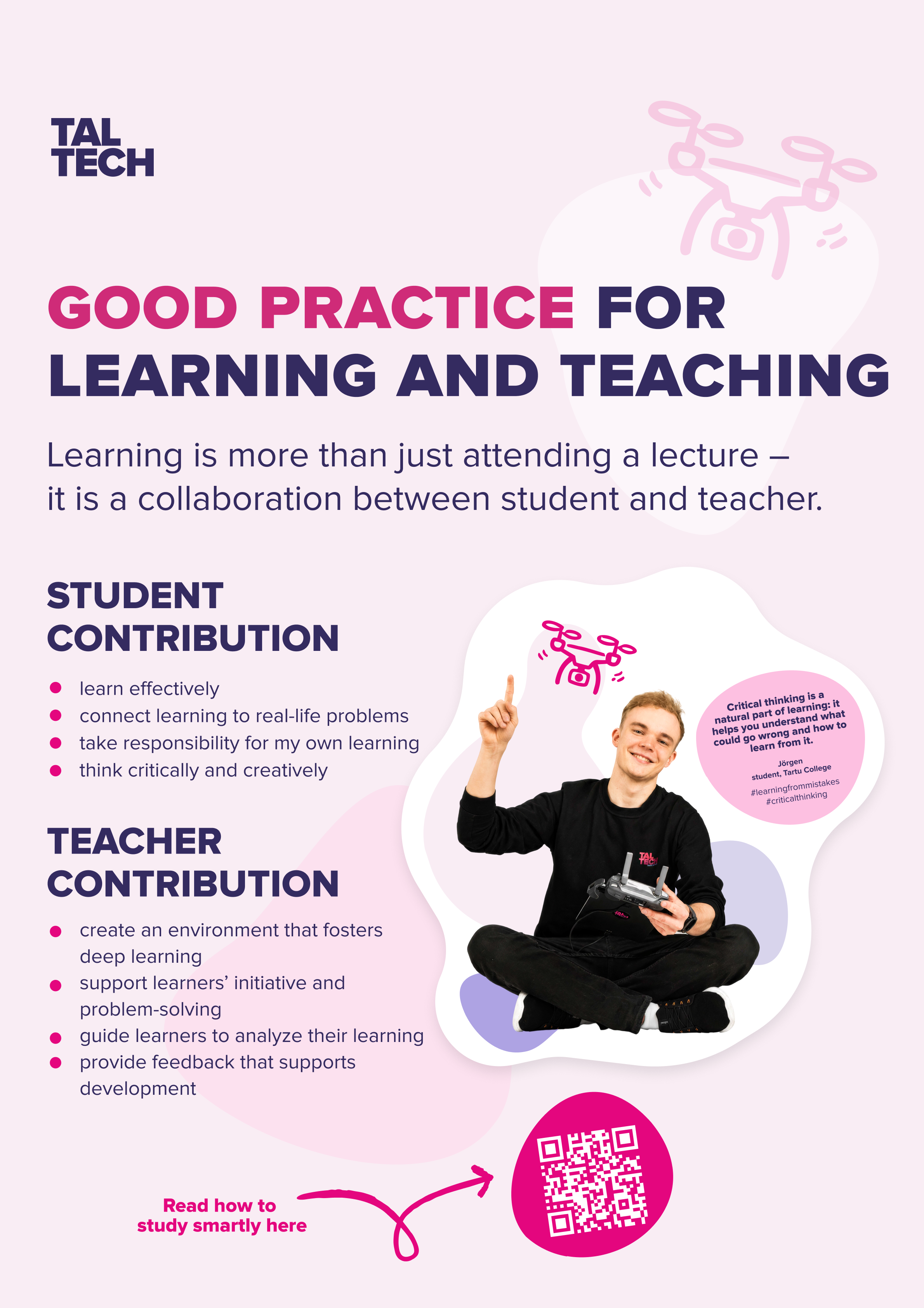
TalTech’s Good Practice for Learning and Teaching is a university-wide agreement aimed at supporting high-quality learning and teaching and fostering a shared academic culture. At its heart is the idea that learning is not merely about acquiring knowledge, but a collaborative process of development in which both the learner and the lecturer have an important role.