
To introduce Tallinn University of Technology’s good practices for learning and teaching, we are highlighting 12 inspiring lecturers whose excellent teaching has been highly appreciated by students. One of them is Karl Läll from the School of Engineering.
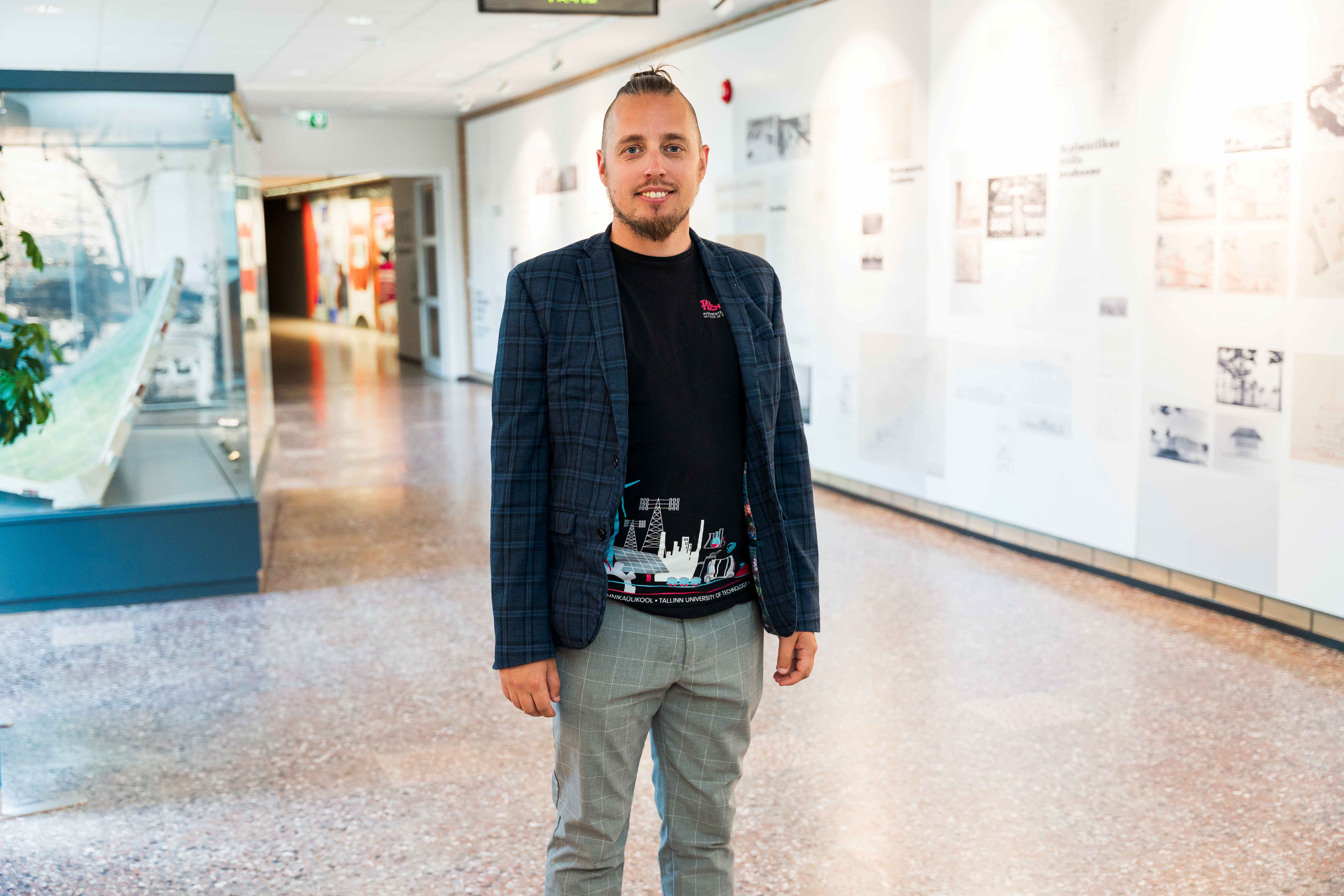
Karl Läll, a project assistant at TalTech’s Department of Mechanical and Industrial Engineering, teaches Internet of Things practical classes at both bachelor’s and master’s level, as well as practical classes in physics and mechanics. He also contributes to the Autonomous Vehicles Lab and collaborates with the Open University to bring programming and engineering education to upper secondary schools. He has been teaching at TalTech for nearly five years, but has more than 15 years of teaching experience, having started with the “Noored Kooli” programme.
Learning as applying knowledge
Läll defines learning with a formula: learning = new knowledge + applying it. “If knowledge is not applied, it is of no use,” he explains, giving the example of the well-known fact that smoking is harmful to health – the knowledge is there, but learning only takes place when that knowledge is actually put into practice.
For him, teaching and learning are almost opposites. “As long as I’m talking in a lecture and the student is scrolling through Facebook, no learning is taking place. Learning begins when I stop talking and the student starts thinking about how to solve the task,” says Läll. His principle is to “step aside” – to give students the opportunity to discover things for themselves and make mistakes, intervening only when they encounter an obstacle they cannot overcome on their own.
As a lecturer, Läll describes himself in three words: supportive, because students should not be afraid to approach him; accommodating, because he recognises that different students have different starting points and put in different levels of effort; and cheerful, because he believes that a positive atmosphere supports learning better than fear or pressure.
Transversal competencies – all are important, with self-management at the forefront
In his teaching, he is inspired by moments when a student achieves something new – whether it is their first working program, a sensor that measures temperature or an internet-controlled jukebox. “When a student gets close to reaching their full potential and enters a kind of flow state, that is the best feeling for the lecturer as well,” he says.
Läll believes that one of the university’s primary goals is to prepare students for working life, which means that general competencies are essential alongside subject-specific knowledge. For him, no single competency is more important than another, but he places particular emphasis on self-management and independent development – the ability not to wait for someone to supervise you, but to take responsibility for your own work and development. He considers creativity and critical thinking equally important, as they help engineers see problems from new perspectives and come up with unexpected solutions.
According to Läll, these competencies cannot be taught as a separate subject; instead, they need to be embedded throughout all courses and assignments – in group work, open-ended tasks and projects.
Good teaching practice – academic freedom and responsibility
Of TalTech’s principles of good teaching practice, Läll values academic freedom and the courage to experiment most highly. He believes that a lecturer’s job is not simply to deliver lectures in exchange for a salary, but to ensure that students actually learn. This means continually checking their understanding, providing flexible guidance and encouraging students to take responsibility for their own learning.
Läll’s vision for learning at TalTech is project-based, interdisciplinary and supportive of creativity. “If a student builds, for example, a chair as part of a project, they can use that same object to demonstrate their knowledge of materials technology, mechanics of materials and electronics. That’s what real life is like – problems aren’t divided according to academic subjects,” he says.
Learn more about good learning and teaching practices: https://taltech.ee/en/learning