
To introduce Tallinn University of Technology’s good practices for learning and teaching, we are highlighting 12 inspiring lecturers whose excellent teaching has been highly appreciated by students. One of them is Karolina Kudelina from Virumaa College.
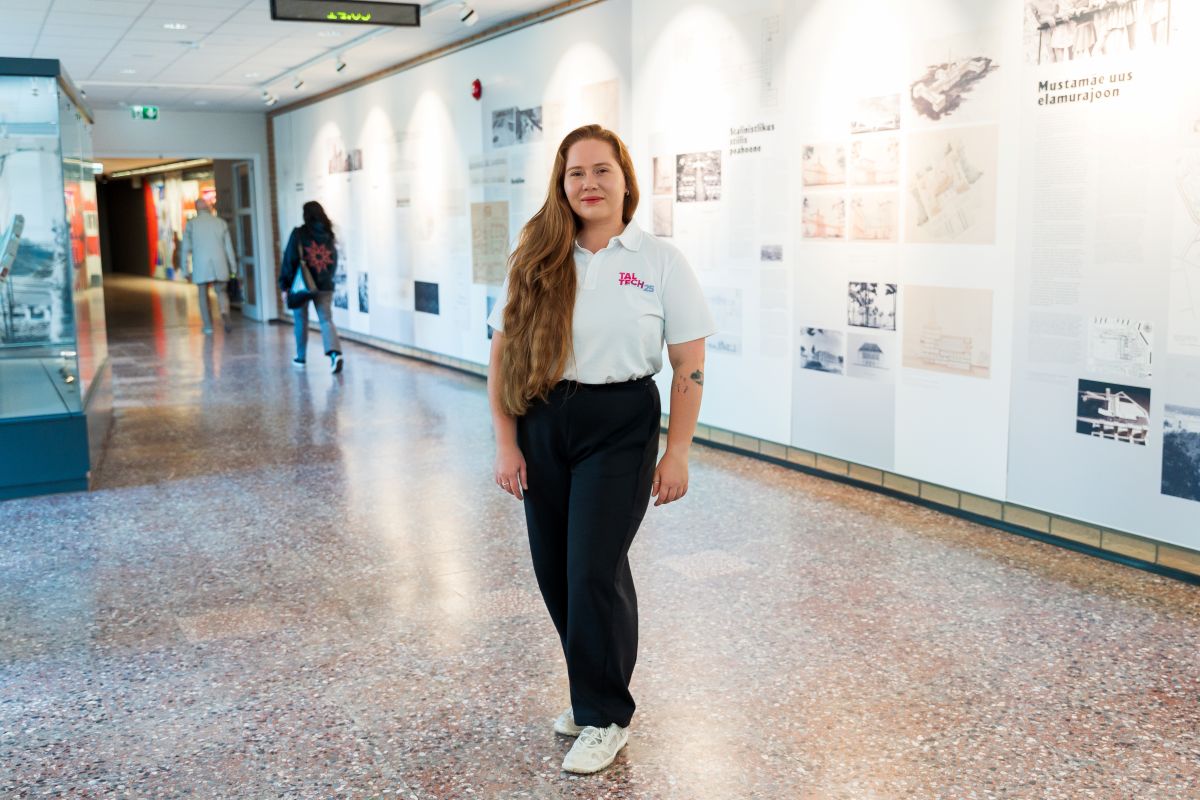
TalTech Virumaa College researcher Karolina Kudelina is known among students as a lecturer who values dialogue, empathy and understanding the learner. Her field is energy engineering, but in her teaching, she combines technical precision with a human-centred approach.
Teaching as dialogue and empathy
For Kudelina, learning is a never-ending process and a natural part of life. “I can’t imagine life without learning – I’m constantly learning myself, not only for my own sake, but also so that I can teach better,” she says. To her, learning means continuous self-development: the world is changing rapidly, and teachers should set an example for students by continuing to grow themselves.
If learning is a way of life, then teaching, she says, is a dialogue. “Teaching is not a monologue or simply the transfer of knowledge – it is communication and collaboration,” she says. Her classes are dynamic processes in which questions, discussions and feedback are just as important as the lecturer’s explanations.
Kudelina emphasises the role of empathy – the ability to listen, understand and support. “When I see a student’s eyes light up because they have understood something, that is the most beautiful moment in my work,” she says.
Skills that take you further: critical thinking, communication and responsibility
To describe herself as a lecturer, Kudelina chooses three words: empathetic, because she considers it important to understand learners’ needs; structured, because knowledge should be built up logically and step by step; and inspiring, because she wants to motivate learners to recognise their limitless potential.
In Kudelina’s view, knowledge alone will only take you so far in life. She considers critical thinking – the ability to analyse situations and make informed decisions – the most important aspect of a student’s development. Equally important are communication skills, which enable collaboration and help prevent misunderstandings, and a sense of responsibility, which supports ethical decision-making and reliability.
She develops these skills in her courses through group work, the analysis of real-life problems and discussions. “A student may be good at calculations, but if they cannot communicate their ideas clearly or work as part of a team, good solutions may never be put into practice,” she explains.
Good teaching practice – research-based learning, entrepreneurship and collaboration
Of TalTech’s principles of good teaching practice, three resonate most strongly with Kudelina: research-based learning, entrepreneurship and collaboration. She believes that teaching should be connected to current research findings and real-world problems rather than focusing solely on theory. It should also develop students’ initiative and their ability to tackle challenges independently, as well as in collaboration with fellow students and lecturers.
Her journey into teaching began with guest lectures and workshops, where she noticed how children’s and young people’s eyes lit up when they discovered something new. “That’s when I realised that teaching is not just about sharing knowledge – it is an opportunity to inspire students and help them grow into better people,” she recalls.
In Kudelina’s dream TalTech, learning would be practical, inspiring and collaborative. She believes that every course should involve solving real-world problems and close collaboration with companies and colleagues, while giving students the space and freedom to experience the joy of discovery.
Her teaching motto is simple yet meaningful: “Help learners understand, not memorise.”
Learn more about good learning and teaching practices: https://taltech.ee/en/learning