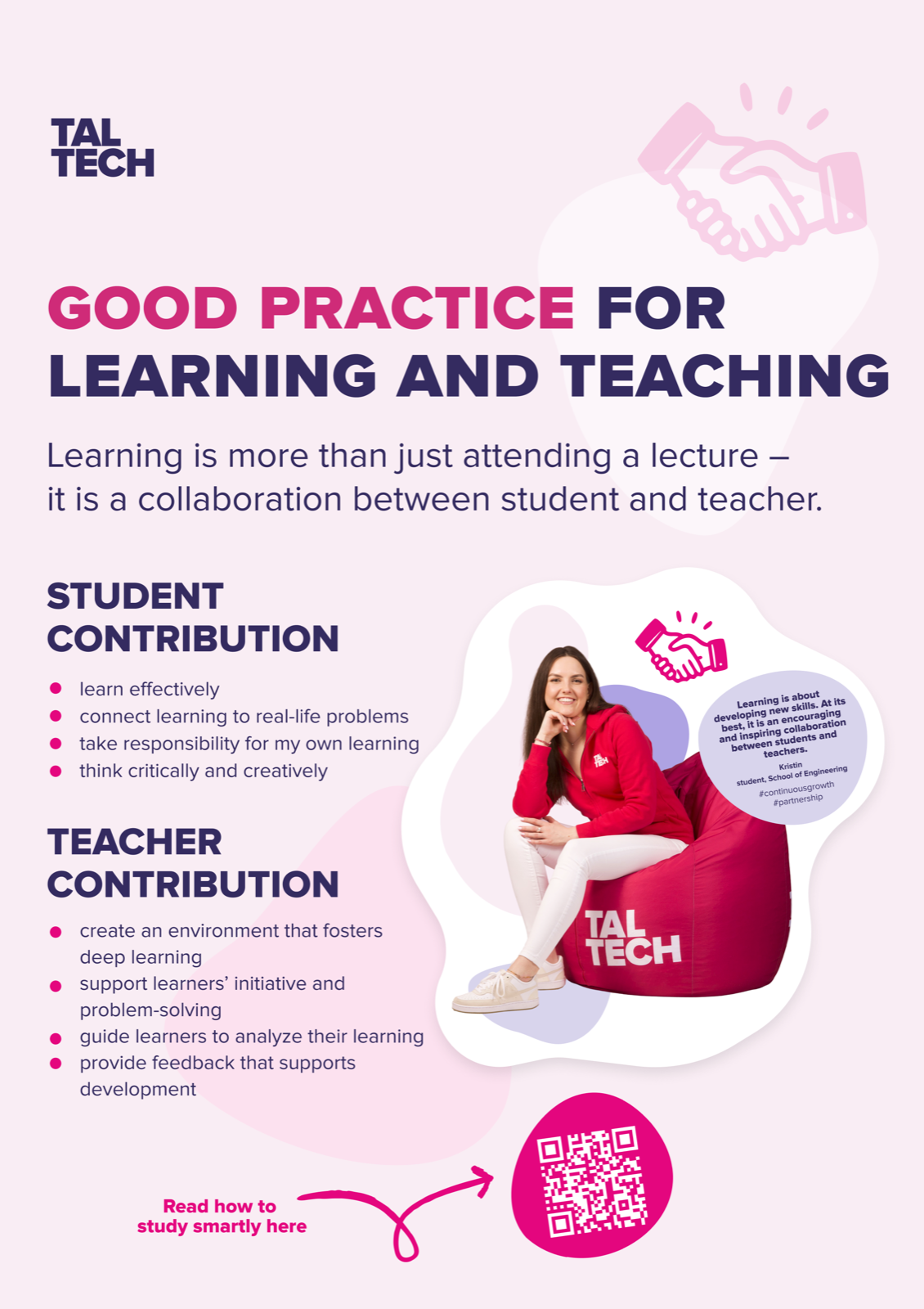
Kristin Taru, a fifth-year student of Indoor Climate in Buildings and Water Engineering, is approaching the end of her studies. Looking back, she says her chosen field has given her exactly what she once hoped for: challenges, personal growth and the sense that her knowledge will allow her to make a real contribution to society.
“At first, I actually wanted to go into the humanities. I was very interested in journalism, public administration and politics,” Kristin recalls. “But towards the end of secondary school, I decided I wanted to challenge myself and try something that would take me out of my comfort zone. Something challenging that would also offer security for the future.”
That led her to engineering, a field she describes as both difficult and deeply rewarding. “In a way, it was difficult all the time, but then you get better at it. That need for fulfilment is constantly being met. And I really like the fact that doing this work allows me to give something back to society.”
Learning as a partnership between student and teacher
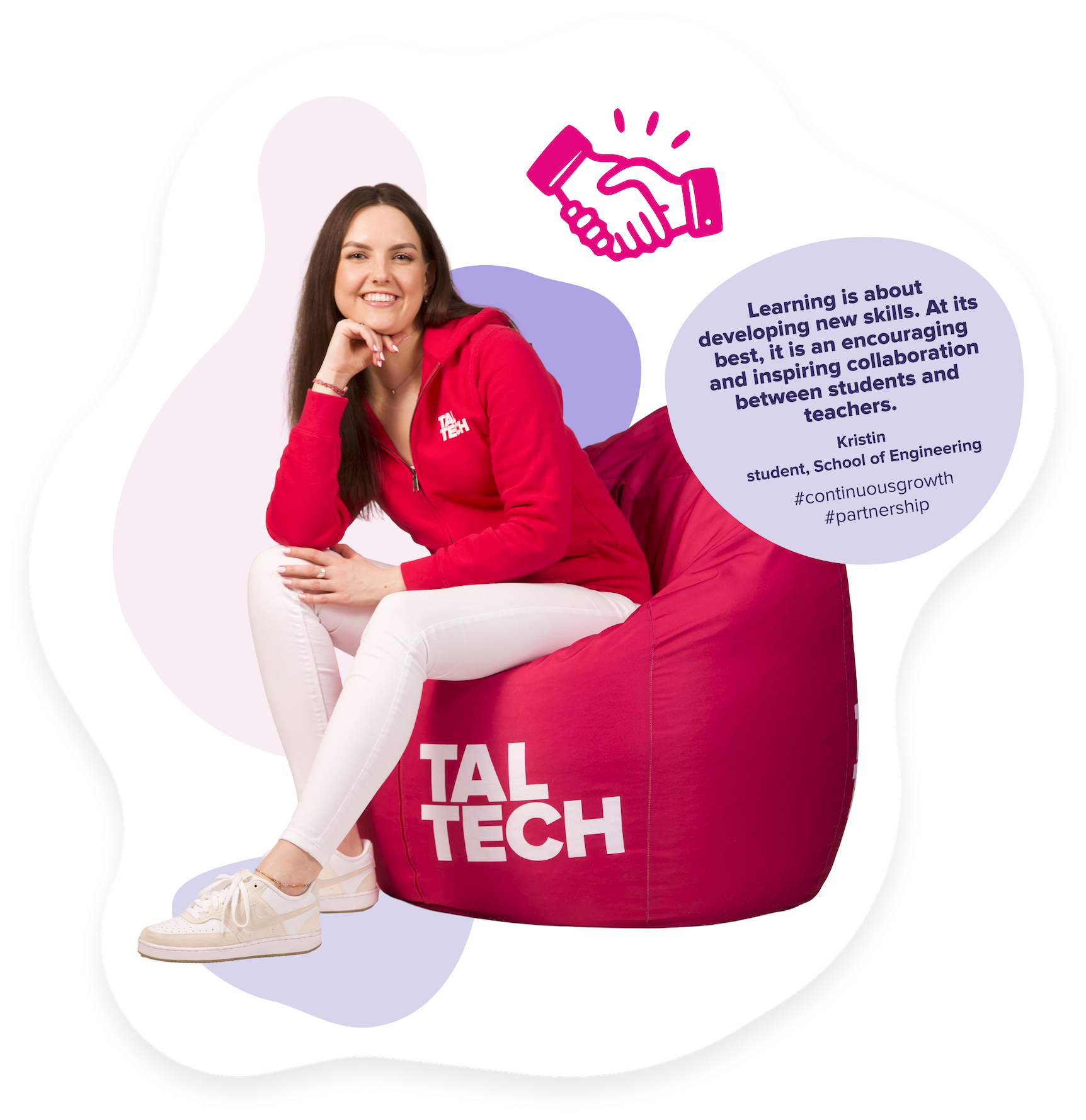
For Kristin, learning is above all about continuous development and cooperation between student and teacher. “Learning means developing a new skill and broadening your horizons. But it is also an ongoing partnership between student and teacher. To me, cooperation is the key word in learning.”
As a metaphor, she describes learning as deliberate discomfort: “Learning means stepping outside your comfort zone. You take on something you do not yet understand and keep working at it until you finally get it. It is never comfortable, but it is very useful and necessary.”
For Kristin, teaching is about more than passing on knowledge. It is also the ability to spark a student's interest and enthusiasm. “Teaching means motivating students. Understanding the subject is one thing, but seeing students' eyes light up and making them want to learn is another.” In her view, the essential ingredients of teaching are knowledge, support and inspiration.
Kristin also highlights the importance of the teacher's role in stressful courses. “Some teachers say right at the start: this is a demanding course with a heavy workload, but if you are struggling, please get in touch. That creates a safety net. You are not alone. In stressful situations, it matters that someone says: it is all right, you can do this, we are in this together.”
Kristin's three words for ideal teaching are modern, motivating and supportive.
“We cannot remain stuck in the way things used to be. Everything develops. Teaching has to keep up with the times.” She adds that motivation and support help students persevere and develop in challenging fields.
The principle of shared responsibility in the Good Practice for Learning and Teaching resonates with Kristin most strongly. “The teacher is responsible for creating the conditions for effective learning, and the learner takes responsibility for learning. It is never one-sided.” She again stresses how important it is for students to feel confident asking questions and for teachers to create a supportive atmosphere.
A motto that keeps her going through difficult times
Kristin admits that there have been many difficult moments during her studies, but one particular mindset has helped her. “At the start of every year, I return to the same sentence: successful people make a habit of doing the things that people who fail do not like doing.”
When her studies are difficult, she reminds herself that success also means tolerating discomfort. “If I want to succeed, I have to do the things that are hard and unpleasant. And once that becomes a habit, I move closer to my goals.”
Asked to describe herself as a student in three words, Kristin immediately names perseverance, courage and curiosity. “I do not leave things unfinished. I keep working until I understand. And I am not afraid to ask questions and try new things. I am also curious to keep learning and improving.”
Much of her motivation comes from the way she imagines her future self. “What motivates me is picturing myself ten years from now. I want to see how far I can go if I really put in the effort.”
Kristin also emphasises the role of fellow students in learning. Her year group is small and close-knit. “We are never alone. We share our worries and joys, encourage one another and help each other catch up. Discussing things with fellow students gives you an explanation in plain language. That really helps the knowledge stick.”
General competencies can matter more than specialist knowledge
Kristin acknowledges that although she had not previously been directly familiar with TalTech's framework for general competencies, she now understands their importance very clearly. “Cooperation, problem-solving, communication: you cannot get by anywhere without them. And the ability to cope with stressful situations is especially important,” she says.
She stresses that these skills do not always come from lectures. They require conscious personal development: learning to manage your emotions in tense situations and to focus on the process, rather than only on the result.
Kristin is clear that general competencies can be even more important than professional skills. “When you leave university and start work, you are not a fully trained specialist straight away. You have the basic knowledge, but you keep learning. For that, you need cooperation, communication, perseverance and a willingness to learn.”
Kristin emphasises that general competencies develop through the broader experience of university life as well as in the classroom. Her involvement in the student council has played a major role, giving her practical opportunities to develop communication and cooperation skills. “I led the student council for several years, and that really helped me develop my communication and cooperation skills. It is an environment where you have to engage with people, discuss things, reach agreements and make something happen together,” she says.
In her studies, too, Kristin sees these skills developing through practical tasks. Although she cannot name a single particular course, she considers group work an important opportunity to develop cooperation skills. “Group work definitely helps you learn to cooperate. And communication skills also develop because you have to be able to explain clearly to your teacher what your question is and where exactly you are getting stuck,” she explains.
Kristin believes that developing general competencies also requires students to have the courage to take an active part. “You develop these skills all the time, sometimes without even realising it. But you have to be brave and willing to speak up. If you just sit quietly in the corner, those skills will not develop.”
TalTech trains the mind and teaches you to make connections
Asked what is most valued in studying at TalTech, Kristin says the emphasis is on strong foundations and training the mind. “TalTech gives your brain a good workout and teaches you to make connections. You do not always understand at first why you are studying a particular subject, but it is actually strengthening your mind.”
She believes the university values students who take learning seriously and make a real effort.
In her ideal university, there would be more collaborative learning and more individual support. “Going to a consultation should be the norm, rather than the exception. Cooperation between student and teacher, along with direct feedback, is one of the most important parts of learning.”