
For the fifth time, TalTech Estonian Maritime Academy and the TalTech Centre for Entrepreneurship brought together students, researchers, and maritime professionals to hack the future of shipping in just 12 hours.
This year’s MarineHäkk focused on retrofit—the modernization of existing vessels to reduce emissions, improve energy efficiency, and advance maritime green technologies to a new level. The €10,000 prize fund was sponsored by the Port of Tallinn.
Setting the Focus: Retrofit as a Strategic Imperative
MarineHäkk 2025 opened with keynote speeches from leading figures in Estonian maritime and innovation:
- Erik Puura (TalTech)
- Kristjan Truu (Ministry of Climate)
- Valdo Kalm (Port of Tallinn)
- Kristel Toom (TalTech)
- Kadi Kasepõld (Estonian Maritime Academy)
- Hackathon leads Rasmus Hirtentreu and Rasmus Kalep
TalTech Vice-Rector for Entrepreneurship Erik Puura set the tone:
“Today is the day when words turn into action. MarineHäkk is not just an event – it is where Estonia can take its role in the maritime green transition.”
Deputy Secretary General of the Ministry of Climate Kristjan Truu linked the hackathon’s theme to global climate policy. Retrofit, he emphasized, is not merely a technical upgrade but an economic and environmental necessity:
“Shipping must adapt. The EU Emissions Trading System has expanded to maritime transport, and by 2050 vessels must be climate-neutral. Retrofit is not a luxury; it is a strategic inevitability.”
Truu also introduced a €25 million national retrofit support measure that entered into force in April. The scheme supports Estonian shipping companies in transitioning to alternative fuels, hybrid solutions, and exhaust gas cleaning systems.
“If we attract projects here and connect science, industry, and innovation, we will not only comply with regulations – we will create an entirely new value chain. Estonia can be not just a participant, but a leader.”
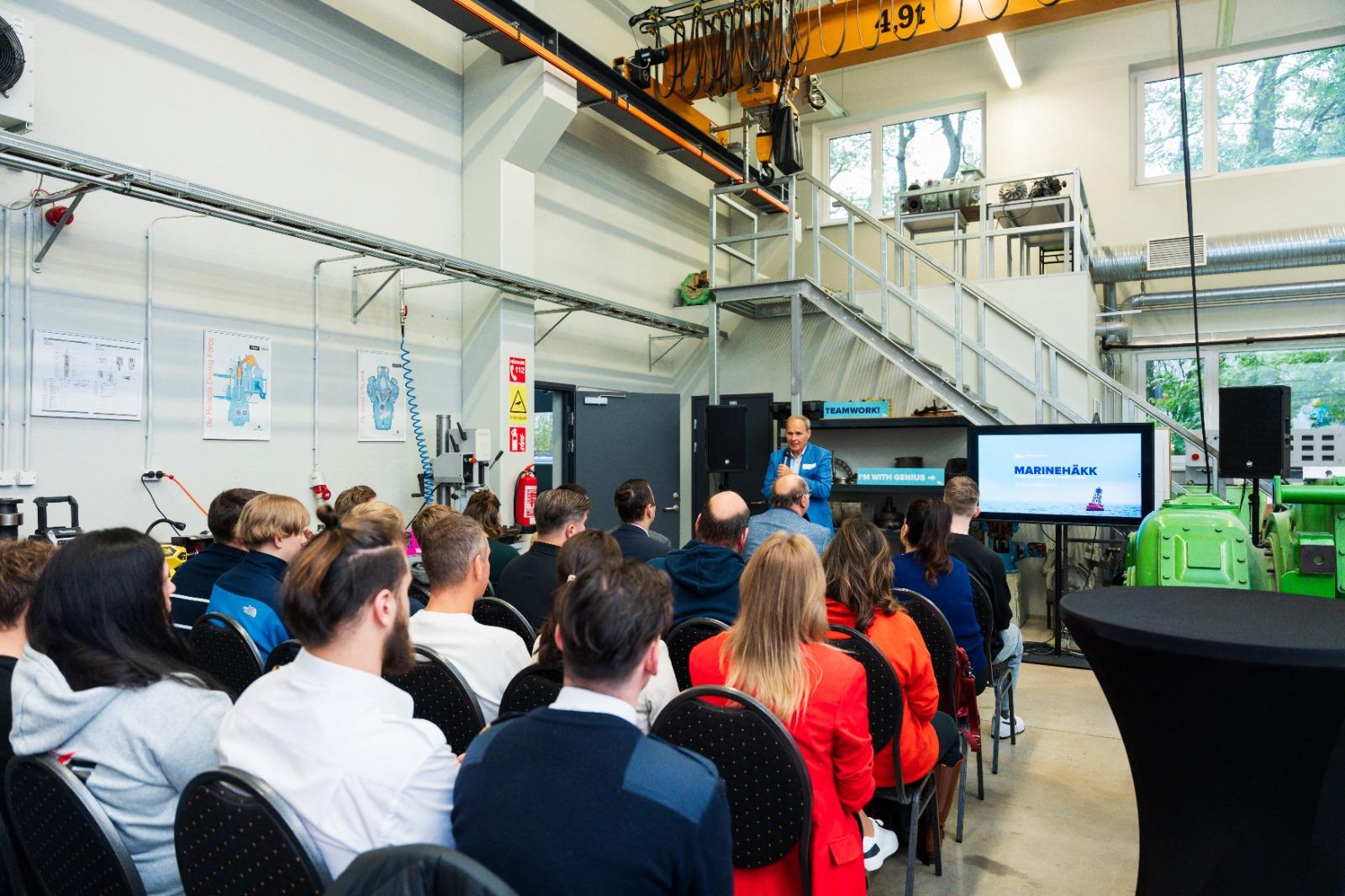
Port of Tallinn CEO Valdo Kalm highlighted the economic dimension:
“Retrofit hits the bullseye – it combines three megatrends: digitalization, renewable energy, and new fuels. The green transition in shipping is happening now, and Estonian ports have a unique opportunity to lead.”
Kalm noted that the Port of Tallinn is actively preparing infrastructure for methanol and green ammonia, emphasizing that Estonian ports possess both the space and expertise that many European ports lack.
Kristel Toom, project lead of the Retrofit Hub, underscored the importance of knowledge-based collaboration:
“Estonia, as a laboratory of the Baltic Sea, brings together a sensitive ecosystem, science, and entrepreneurship. The Retrofit Centre of Excellence creates a platform that unites these three fields toward a common goal.”
She noted that Estonian research institutions are integrating alternative fuels, digital twins, and cybersecurity into comprehensive solutions that reduce maritime carbon footprints.
Doctoral researcher Kadi Kasepõld provided practical examples:
“Through the REISFER project, we have already seen existing ferries converted into electric and hybrid vessels. These are no longer experiments but real steps toward zero emissions.”
Innovation in Garage Mode: 12 Hours of Prototyping
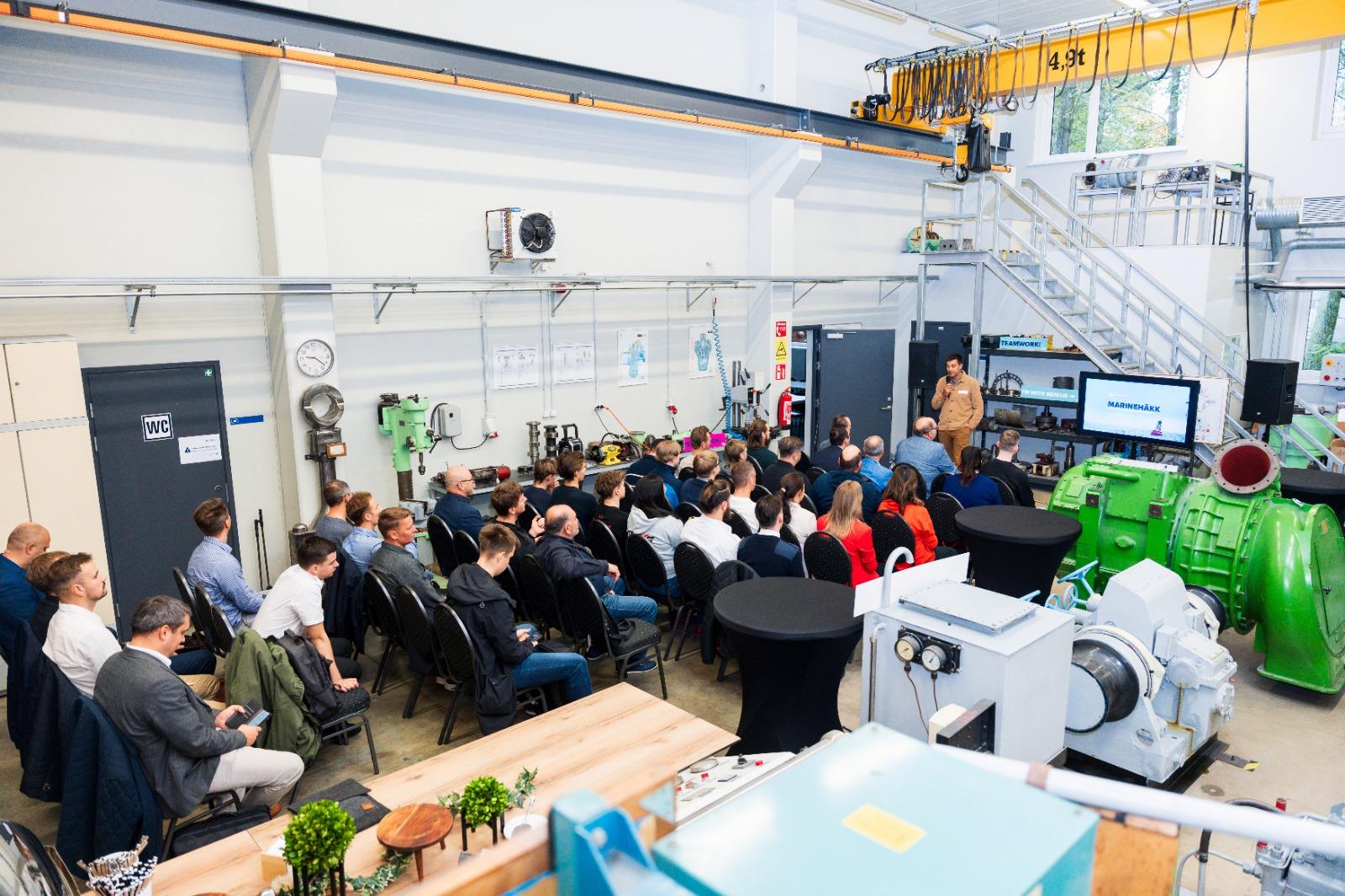
MarineHäkk is defined by its hands-on “garage format.” For one day, TalTech’s mechanical engineering building filled with prototypes, tools, and ideas.
Project manager Rasmus Hirtentreu explained:
“Many great ideas are born in exactly this kind of environment – hands in oil, heads full of ideas. MarineHäkk brings universities, companies, and researchers into one space where real solutions emerge.”
Rasmus Kalep, Head of the TalTech Centre for Entrepreneurship, emphasized collaboration:
“The real value lies in dialogue. Sometimes the best outcome is not a finished prototype, but understanding what does not work and how to improve it.”
MarineHäkk 2025 demonstrated that a hackathon is more than an idea marathon – it is a movement where maritime becomes a laboratory for future energy technologies, and student–researcher collaboration generates solutions that may reach real vessels and ports.
Jury: A New Generation of Maritime Innovators
The jury included:
- Valentin Bratkov (TalTech)
- Guldar Kivro (TS Laevad)
- Ragmar Saksing (Estonian Maritime Cluster)
Saksing summarized:
“We are seeing a new generation of maritime innovators. The solutions were surprisingly mature and substantial – some boldly brilliant.”
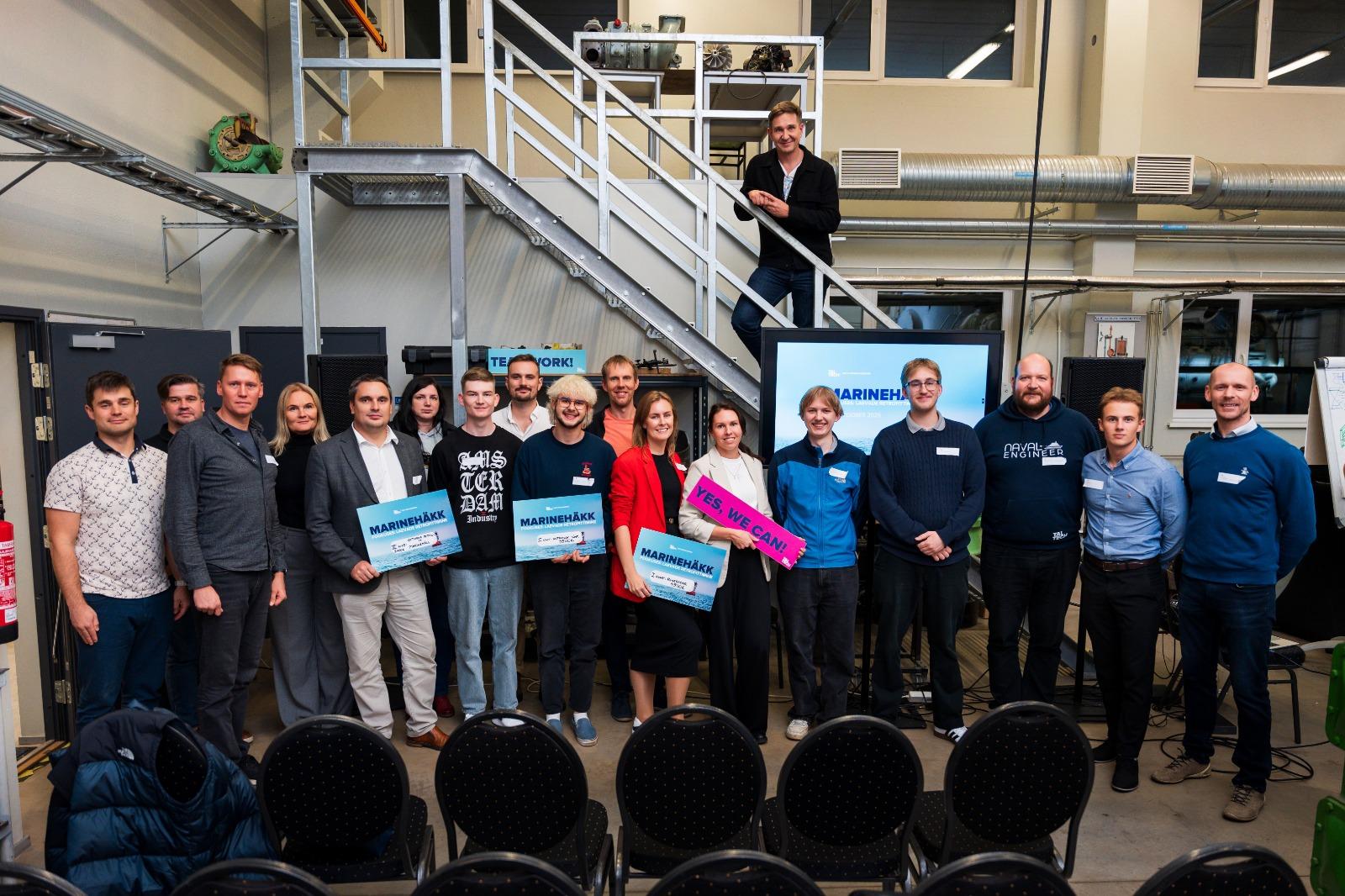
Winning Teams and Solutions
🥇 1st Place – RoheRadar
Challenge: Increasing crew awareness and motivation
Solution: A gamified digital learning environment offering daily micro-challenges and insights on energy efficiency. The system integrates psychology, game mechanics, and real vessel energy consumption data.
“The green transition starts with people, not only technology.”
🥈 2nd Place – Astronavigation System
Solution: An optical celestial navigation system ensuring vessel positioning during GPS disruptions. Designed for critical maritime infrastructure and security-sensitive regions.
“They came in cold and digitized the sextant – maybe crazy, maybe genius,” commented Ragmar Saksing.
🥉 3rd Place (Shared) – OptiMar Metrics & LLC 611
OptiMar Metrics
Developed the Smart Retrofit Analyzer, a data-driven tool to assess retrofit project impact. Using onboard sensor data, the system provides recommendations for short-term optimization and long-term investment planning.
LLC 611
Created a green certification system tracking the recycling and processing of retrofit waste. The concept aims to establish an internationally recognized standard, endorsed by the Estonian Maritime Cluster, Metrosert, and IACS.
“LLC 611’s idea is something that could scale at the European level,” noted Saksing.
Notable Solutions Beyond the Podium
Draft-Line – Automated draft measurement system reducing loading errors and CO₂ emissions through more accurate cargo data and real-time stakeholder access.
Roheline Süsinik (Green Carbon) – Focused on reusing captured CO₂ from exhaust gases. The team modeled a process converting collected CO₂ into methanol (marine fuel) or using it as a refrigerant in cooling systems.
FansOnly – Tackled underwater continuous noise pollution by designing a propeller tunnel system that reduces cavitation and rudder blade impact noise, protecting marine life.
Estonia Is Ready for the Maritime Green Transition
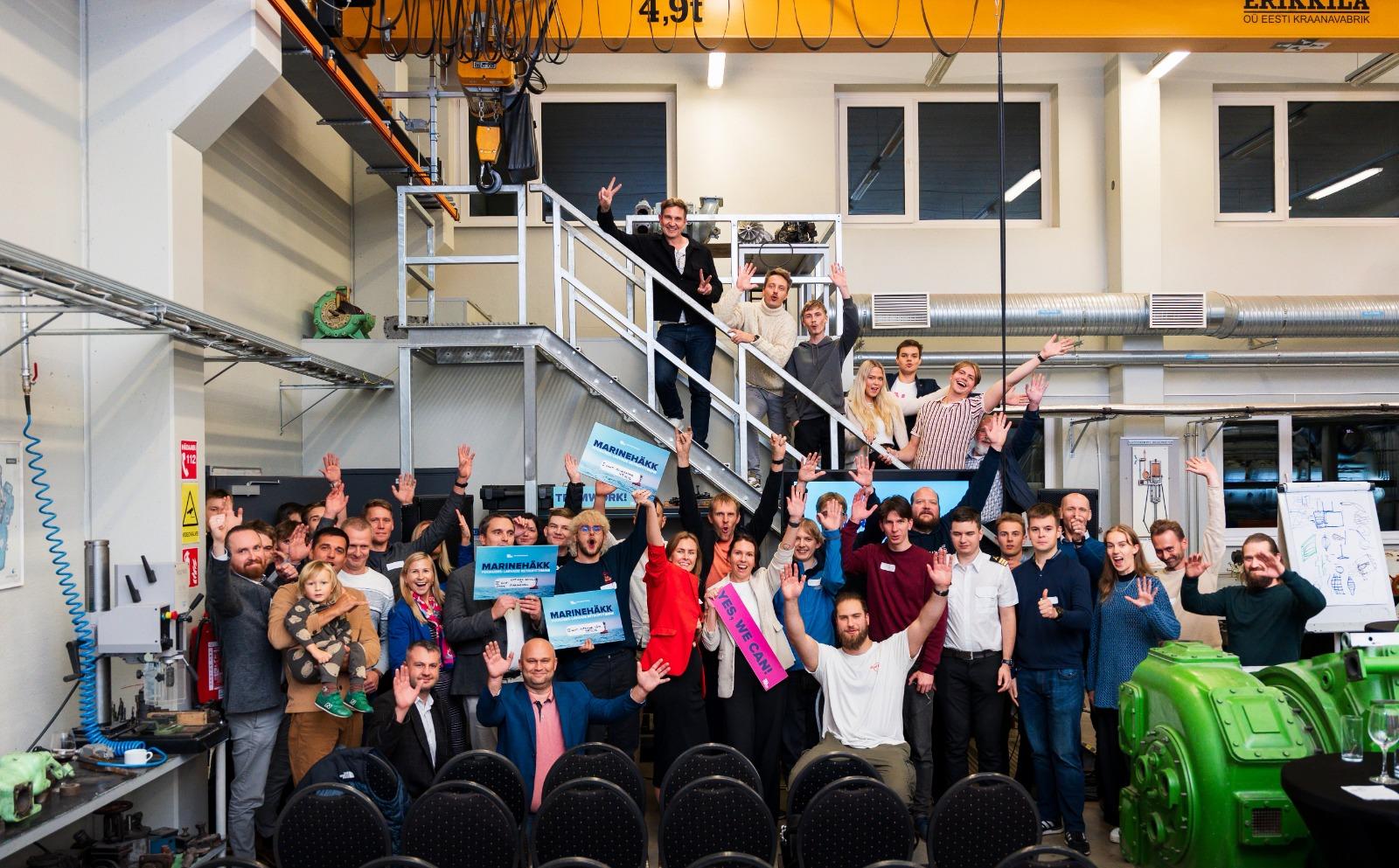
“MarineHäkk showed that Estonian maritime is no longer stuck in the old paradigm. We have the knowledge, the courage, and the industrial capacity to create truly functional green solutions,” said Ragmar Saksing.
Retrofit is not merely a technical upgrade but a new economic model that connects science, industry, and policy. This integrated approach positions Estonia to become a green technology hub in the Baltic Sea region.
MarineHäkk 2025 proved that maritime today is a mindset – a collaboration between people, technology, and environmental responsibility toward a shared goal: ensuring that the Baltic Sea, and Estonia along its shores, remains as blue as it is sustainable.