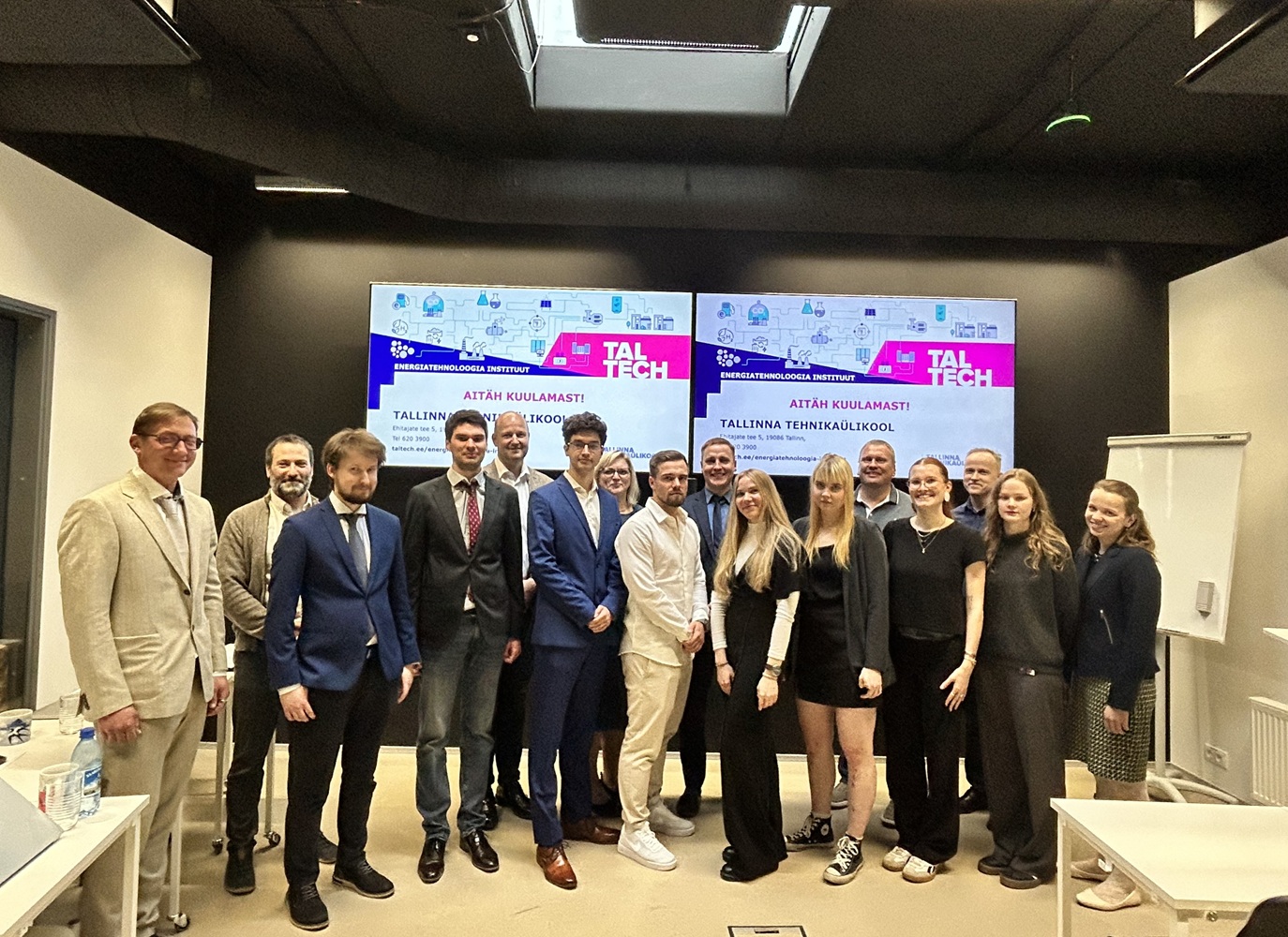
On June 5, twelve students of the Energy Technology and Thermal Engineering programme defended their Master’s theses at the Institute of Energy Technology, Tallinn University of Technology. The evaluation committee highlighted the strong practical relevance of the works and their clear connection to current challenges in the energy sector. All graduates will also be awarded the initial professional qualification of Level 7 Heating Engineer.
The theses focused on key topics such as energy system modernisation, renewable energy integration, industrial efficiency, and environmental impact assessment. Aleksandr Embrich explored Retrofitting Existing Fossil Fuel Fired Fluidized Bed Power Plants to High Temperature Thermal Storage Systems. Nicole Lavinia Gleeson analysed Possibilities for valorization of oil shale industry residues, while Elisabeth Kangro investigated Rare Earth Element Leaching from Oil Shale Waste Rock Fractions. The transition of urban energy systems was addressed by Kristian Kirs in Spatial planning for the transition of small district heating networks to renewable energy in Tallinn.
Industrial applications and efficiency were further examined by Aneta Kõiva in Technical and Economic Analysis of Product Cooling Solutions on the Example of Paint and Varnish Industry and by Birgit-Lume Paju in Determination of Primary Energy and Weighting Factors for Estonian District Heating Sector. Environmental monitoring and methodological reliability were studied by Helen Puškin in Emission Assessment Methods and Methodological Reliability for Combustion Plants in Estonia, and by Ella Maria Raud in Study of Chromium (VI) Reduction Kinetics and Measurement System validation.
Advancements in energy conversion technologies were explored by Kristo Tarkmeel in Optimization of Chemical Looping Gasification of Biomass and Oil Shale. Future energy infrastructure development was analysed by Sten Erik Tuuleveski in Nordic-Baltic hydrogen corridor initiative in Estonia. Local emission impacts were addressed by Magnar Vainumäe in Measurement of Pollutant Emissions from the Most Common Furnaces in Estonia, and Anna-Liisa Virro developed a methodology in Using Energy and Resource Audit Data in Sectoral Analysis: Development of a Methodology Based on the Example of the Sawmill Industry.
The graduates’ work contributes both to the development of Estonia’s energy system and to broader goals of sustainability and resource efficiency.