
TalTech scientists in collaboration with researchers from Rockefeller University have described a mechanism that acts like a built-in clock in brain cell development, ensuring that the right genes switch on at precisely the right moment. The discovery may offer new clues about what goes wrong in nervous system disorders such as autism or intellectual disability.
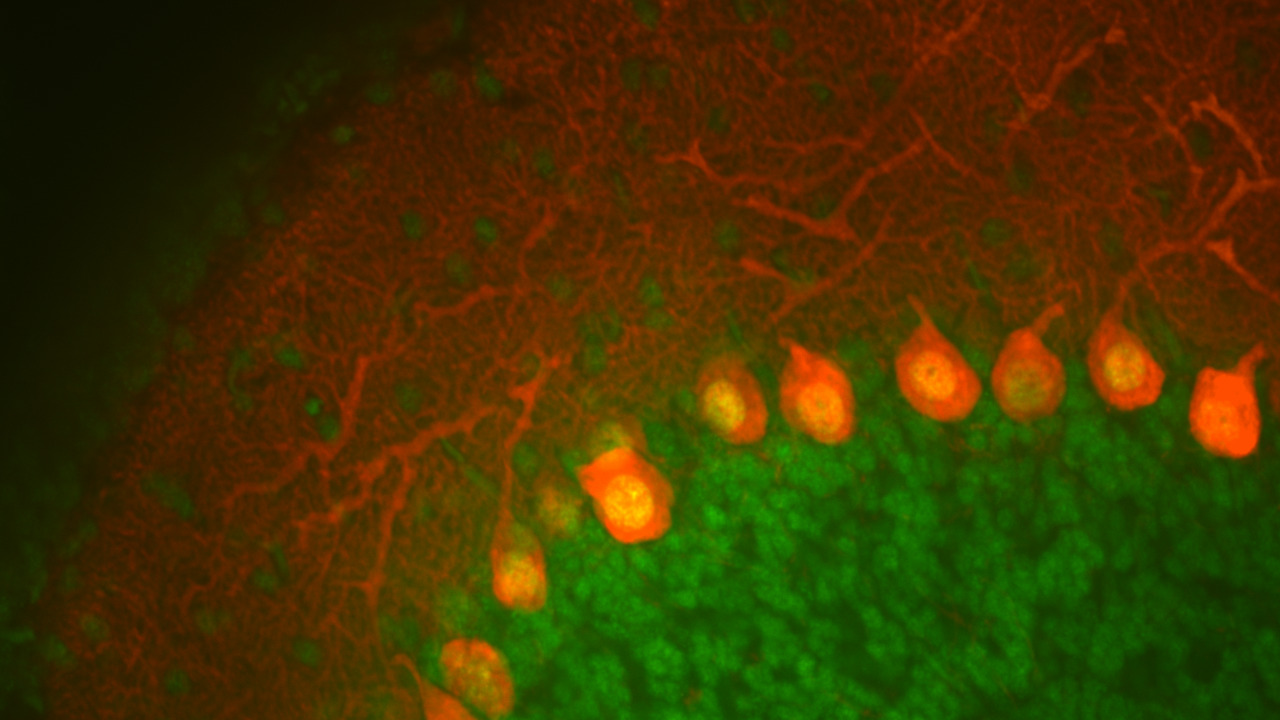
The brain is the most complex organ in the human body. Different parts of the brain perform a variety of functions, all of which are necessary for it to operate in one way or another. These functions are carried out by neurons, which communicate with one another in intricate ways. There are many different subtypes of neurons, which differ from each other in gene expression, cell structure, and function.
For the brain to perform all its functions, the correct number of the right types of neurons must emerge during development. Newborn neurons must migrate from their birthplace to the right location and form connections – synapses – with precisely the right target cells.
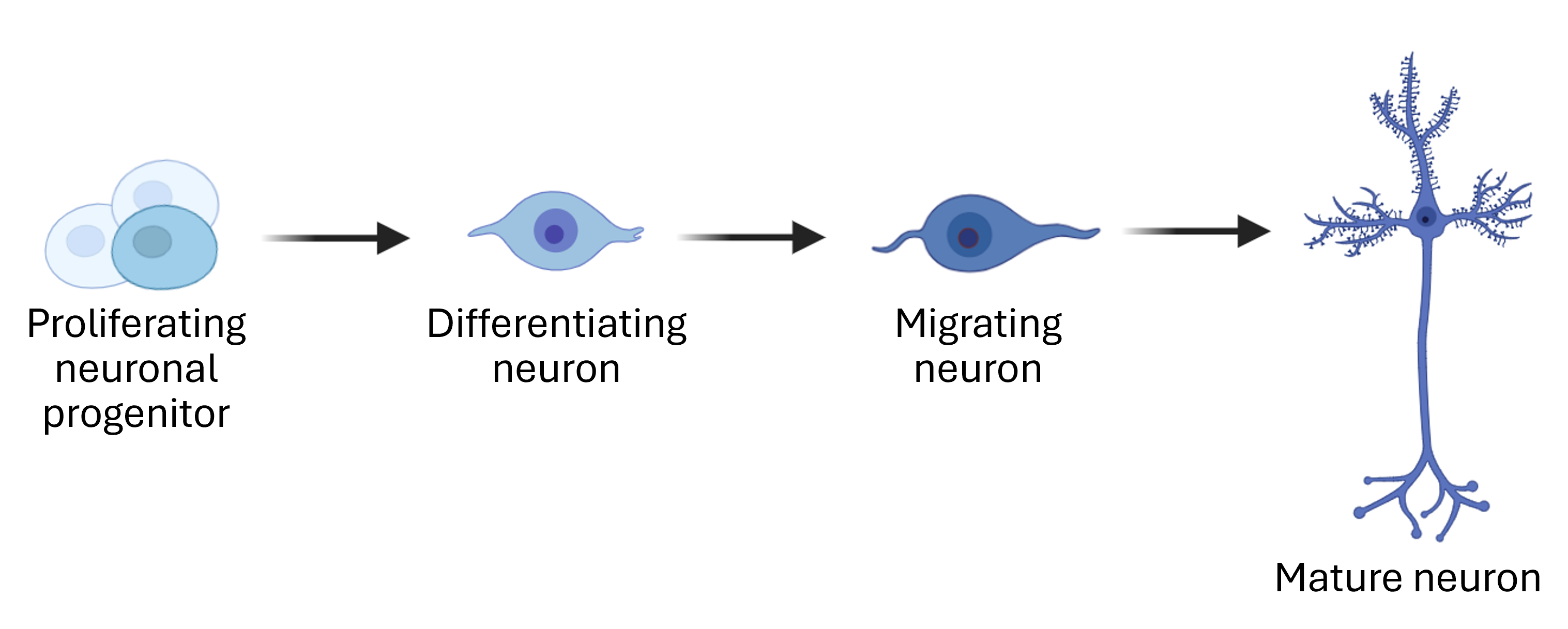
Neuronal development proceeds through several stages. Initially, neuronal precursor cells proliferate. They then begin to differentiate – transforming into specific types of neurons – and migrate to their correct position in the brain. Finally, the cells mature and establish connections with other cells. All of these stages must occur at exactly the right time and in the right order. If maturation happens too early or too late, a neuron cannot form the correct connections, and the brain will not function properly.
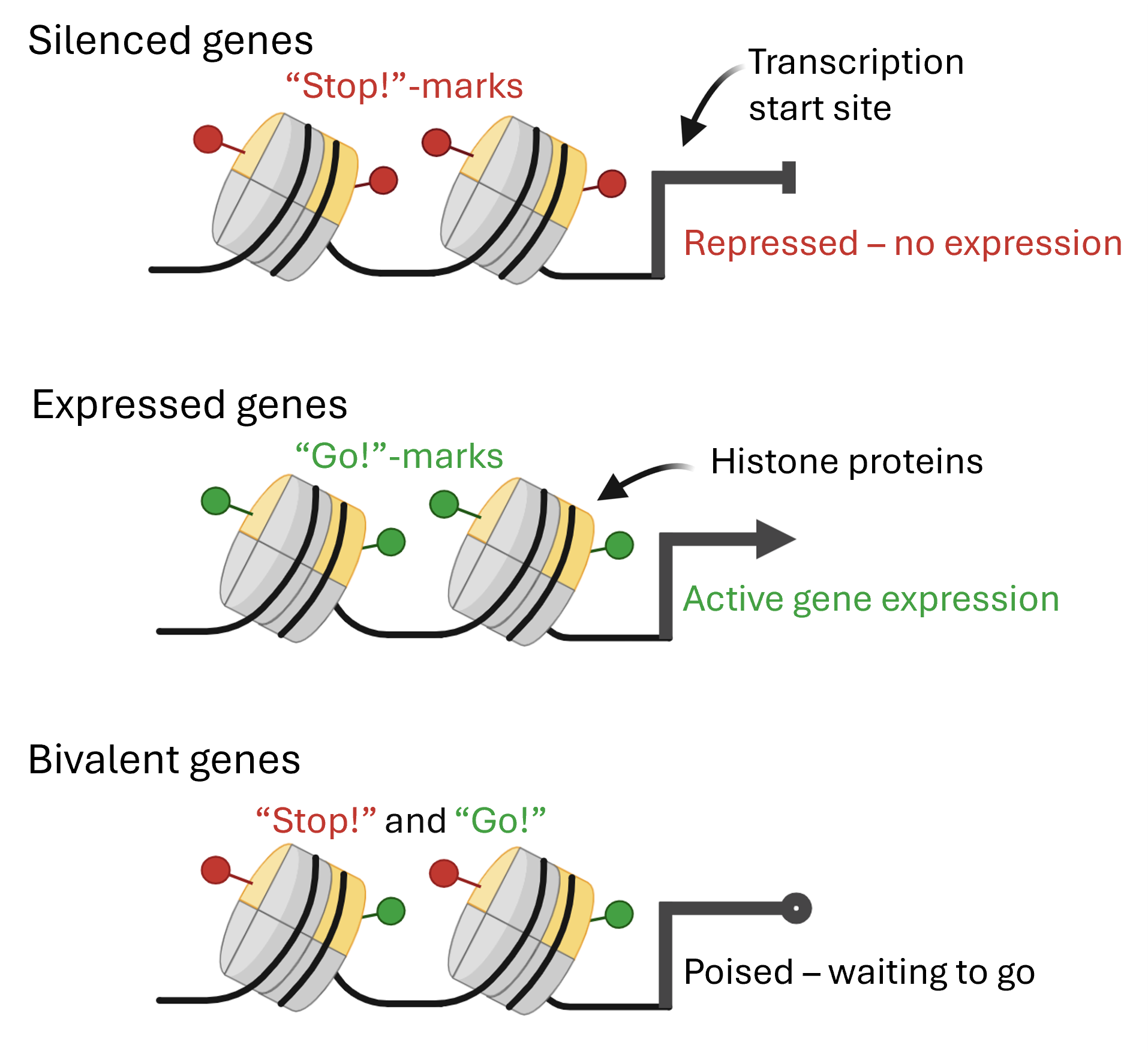
The transition of neurons from one developmental stage to the next is governed by epigenetic marks – molecular signals that switch gene expression on and off. Kärt Mätlik, head of the neuroepigenetics research group at TalTech and lead author of the study, compares these marks to traffic lights on the DNA.
"Some marks give a green light ("produce this gene product") and others a red light ("this gene does not need to be expressed right now"). For example, in a neuronal precursor cell, genes required for cell proliferation during the division stage have a green light. In a mature neuron, however, those same division-related genes must be shown a red light, because their activation there can lead to uncontrolled cell proliferation – that is, cancer – or to cell death," she explained.
Some genes, however, carry both a red and a green light simultaneously. This combination of epigenetic marks is known as histone bivalency. Genes marked by bivalency resemble runners poised at the starting line: ready to move, but waiting for the right moment.
Recently published studies have shown that this mechanism holds back the expression of maturation-related genes in neuronal precursor cells until the time is right. If the repressive signal is artificially removed from bivalent genes in a precursor cell, maturation-related genes are expressed prematurely, the cell matures too early, and skips other critical developmental stages. These findings have led to the conclusion that the balance between the two signals acts as a built-in clock, ensuring that neuronal maturation only occurs once the preceding developmental stages have been completed.
Beyond this, it has emerged – somewhat unexpectedly – that hundreds of genes remain bivalent even in mature adult brain cells, where developmental processes have long since concluded. "Histone bivalency has previously been associated primarily with very early development. Surprisingly, however, studies in recent years – including our own earlier work – have shown that some genes remain bivalent in mature neurons," said Mätlik.
As part of the recent review article, the researchers examined which types of genes are maintained in a bivalent state in the adult brain. "We found that genes that are bivalent across multiple different neuronal populations are linked to the stress response and cell death. This suggests that bivalency might allow mature neurons to respond rapidly to, for example, stress or injury. On the other hand, some bivalent genes in mature neurons were also required during those same cells' earlier development – meaning bivalency could function as a kind of memory of a cell's developmental history and the choices made along the way," she noted.
How the localisation of bivalent marks is regulated, and what their precise functions are in the adult brain, remains to be determined by future research. Kärt Mätlik and her neuroepigenetics research group are continuing to investigate these questions using methods that allow them to track and modify changes in bivalency at different stages of neuronal development, including in human neurons.
The review article by scientists from TalTech and Rockefeller University was published in the journal Genes & Development Genes & Development and summarises current knowledge on histone bivalency in neuronal development.
“The Neuroepigenetics Research Group is part of TalTech’s Centre of Excellence in Health and Food Technologies.”