
On 14 March, Estonian universities, public authorities and sports organisations signed a cooperation memorandum that sets a clear goal: the sustainability of Estonia’s top-level sport must be based on a functioning dual career system and strong university sport.
At the heart of the agreement is the understanding that elite athletes should not be forced to choose between sport and education. On the contrary, higher education and university sport together create an environment that helps produce Estonia’s next international medal winners as well as future leaders of society.
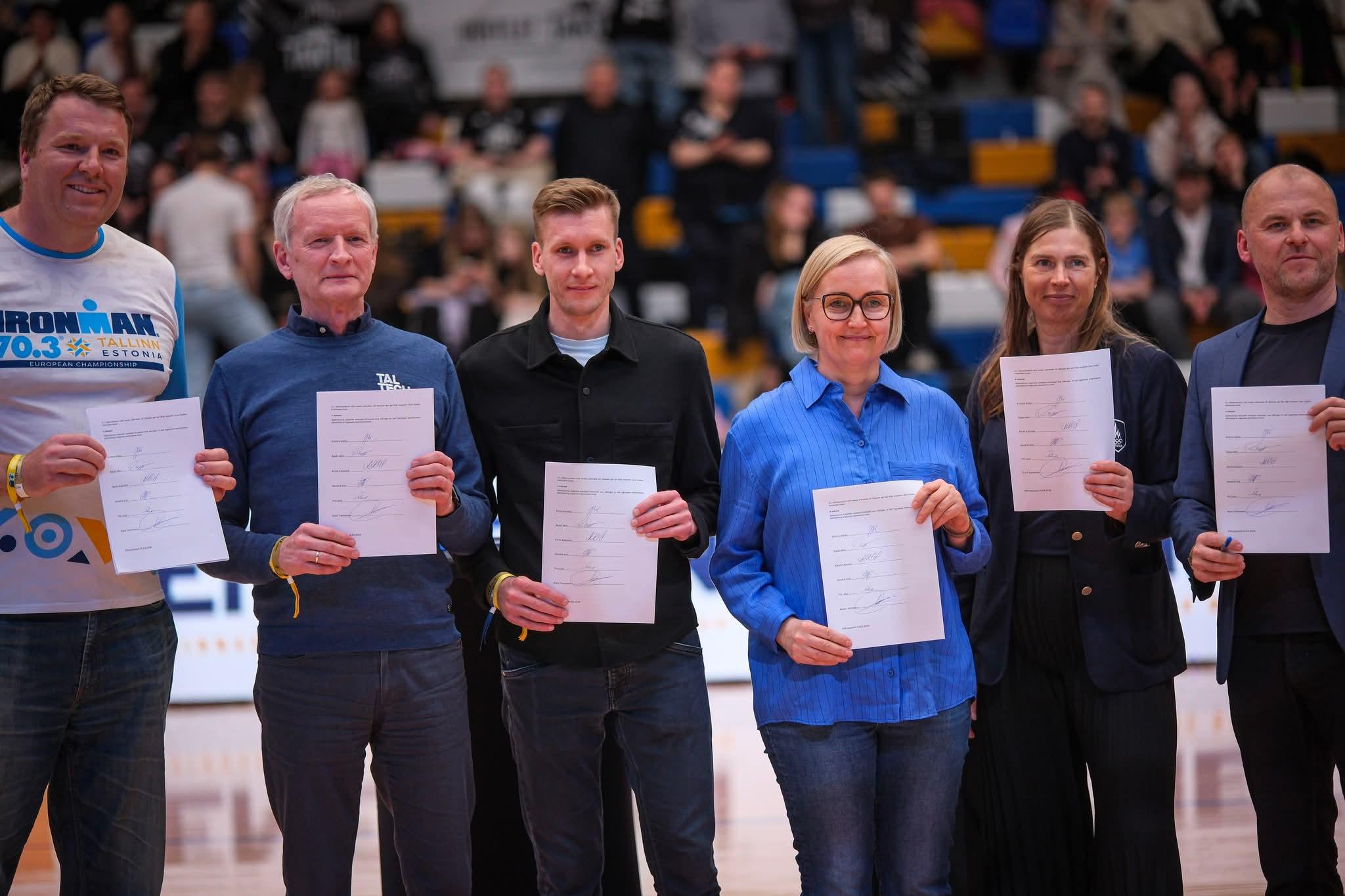
“Estonia needs people who are both knowledgeable and physically active. Therefore, top-level sport and higher education should not be two separate worlds,” said Minister of Education and Research Kristina Kallas. “With today’s agreement, we send a clear message to young athletes: entering university does not mean the end of a sporting career. On the contrary – the state, universities and sports organisations are jointly creating conditions that allow athletes to develop both their academic and athletic potential.”
Tiit Land, Chair of the Estonian Rectors’ Council and signatory of the agreement on behalf of the universities, emphasised that elite sport and higher education should not exclude one another.
“Estonian universities aim to create an environment where elite athletes can develop both their academic and athletic potential. Flexible study opportunities help ensure that athletes do not have to choose between education and top-level sport. At the same time, we want university sports clubs to be better integrated into Estonia’s sports system, giving universities a stronger role both in athletes’ development and in the future of Estonian sport,” said Land.
According to Hendrik Voll, President of the Estonian Academic Sports Federation, the foundation of Estonia’s top-level sport must lie within universities if it is to endure and develop.
“With the memorandum signed today, we are taking an important step forward in developing university sport,” he said. “In Estonia, the base for university sport is still relatively narrow, but this decision will hopefully expand it significantly. The stronger university sport becomes, the greater its impact on Estonia’s elite sport.”
According to Raido Mitt, Deputy Secretary General for Sport at the Ministry of Culture, the memorandum establishes a framework that allows elite athletes and top university athletes to pursue higher education with a more flexible study load. This would help them better combine their studies with training, camps and international competitions.
“At the same time, together with the Estonian Olympic Committee and the Estonian Academic Sports Federation, we want to initiate a broader discussion on the role of university sport in Estonia’s sports system and explore ways to give greater weight to participation and results at the Universiade when allocating funding to sports federations,” Mitt explained.
According to Kersti Kaljulaid, President of the Estonian Olympic Committee, supporting the educational path of elite athletes is important both for the athletes’ future and for the sustainability of Estonia’s sports system.
“An athlete’s career is often limited in time. Therefore, it is extremely important that elite athletes have the opportunity to obtain a higher education alongside their sporting career, providing a strong foundation for a successful life after sport,” Kaljulaid said.
Starting from the 2027/2028 academic year, Estonia’s public universities, professional higher education institutions administered by the Ministry of Education and Research, and the Estonian Academy of Security Sciences are ready to admit up to 150 athletes whose applications have been approved by the Estonian Olympic Committee and the Estonian Academic Sports Federation and who meet the admission requirements of the respective institution. The parties aim to ensure that athletes can study free of charge even if they study at a slower pace, i.e. with a part-time study load.
“At the Estonian Academy of Security Sciences, we value our students’ good condition – physical, mental and their willingness to learn. It is particularly gratifying when elite athletes choose to study with us,” said Rector Kuno Tammearu. “From the 2027/2028 academic year onwards, we will offer elite athletes and leading university athletes the opportunity to study free of charge with a part-time workload, supporting both their sporting careers and their educational path in the field of internal security.”
The memorandum was signed by the Estonian Rectors’ Council, the Estonian Olympic Committee, the Estonian Academic Sports Federation, the Ministry of Education and Research, the Ministry of Culture, and the Estonian Academy of Security Sciences.