
Marine defence and autonomous systems were at the centre of this year’s MarineHäkk, where TalTech Estonian Maritime Academy and TalTech Innovation brought together roughly 70 participants and 8 teams for a one-day hackathon on 8 May 2026. The winner was NOMAD, with an autonomous naval surface drone concept aimed at long-duration missions in the Baltic Sea region.
The sixth edition of MarineHäkk was built around a simple premise: the maritime sector needs solutions that work in real operational conditions, not just on paper. This year’s focus was Marine Defence and Resilience, reflecting wider pressure on maritime infrastructure, border-zone communications, autonomous systems and dual-use technologies. The event was organised by TalTech Estonian Maritime Academy together with TalTech Startup Centre.
The challenge set was broad but highly practical. Teams worked on drones and autonomous platforms in maritime applications, resilient coastal communications, modular mission payloads for autonomous surface vessels, port infrastructure resilience, naval drone landing systems, shipboard jamming and signal filtering, dark vessel detection, and smart coastal defence. Challenge partners included the Police and Border Guard Board, Kraken Technologies, TS Laevad, the Estonian Navy, Baltic Workboats AS, TalTech Centre for Defence and Security Technologies and defence expert Rene Toomse.
That combination gave the event a distinctly sector-driven character. Rather than abstract ideation, the teams were solving problems tied to border security, critical infrastructure protection, maritime surveillance and operational resilience in the Baltic Sea region. The one-day format forced participants to move quickly from problem definition to concept development and final pitch. The jury consisted of Meri Heikkinen from UnManned VC, Peeter Ude from SubMerge Baltic, Tuomo Veivo from Redstone VC, and Ulla Tapaninen from TalTech. The prize fund was provided by the Port of Tallinn and SubMerge Baltic.
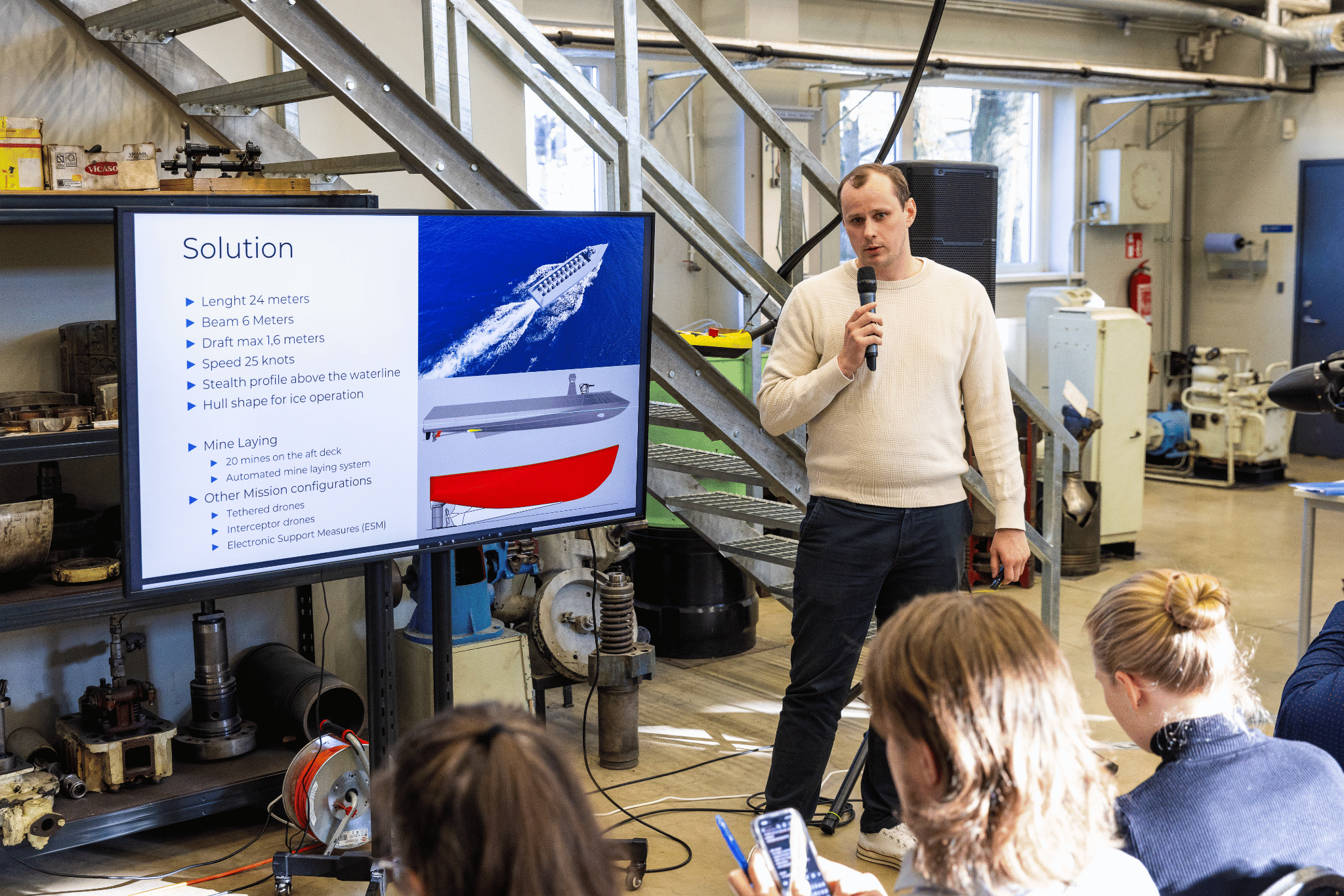
Winner: NOMAD
The winner, NOMAD, tackled Baltic Workboats AS’s challenge on autonomous naval surface drones for long-duration missions. The challenge asked teams to design a modular unmanned surface vessel capable of operating in shallow waters, harsh weather and contested environments, with minimal shore support.
NOMAD proposed a 24-metre autonomous naval drone with an ice-capable hull, a stealth profile above the waterline, GNSS-denied navigation and passive situational awareness. The concept also covered secure communication options and mission flexibility, including sensor arrays, cargo delivery and communication relay functions. The team’s submission reflected a strong understanding of the operational constraints in the Baltic Sea region, where cold weather, ice, fog and denied communications remain major design factors.
Jury view: strong real-world relevance
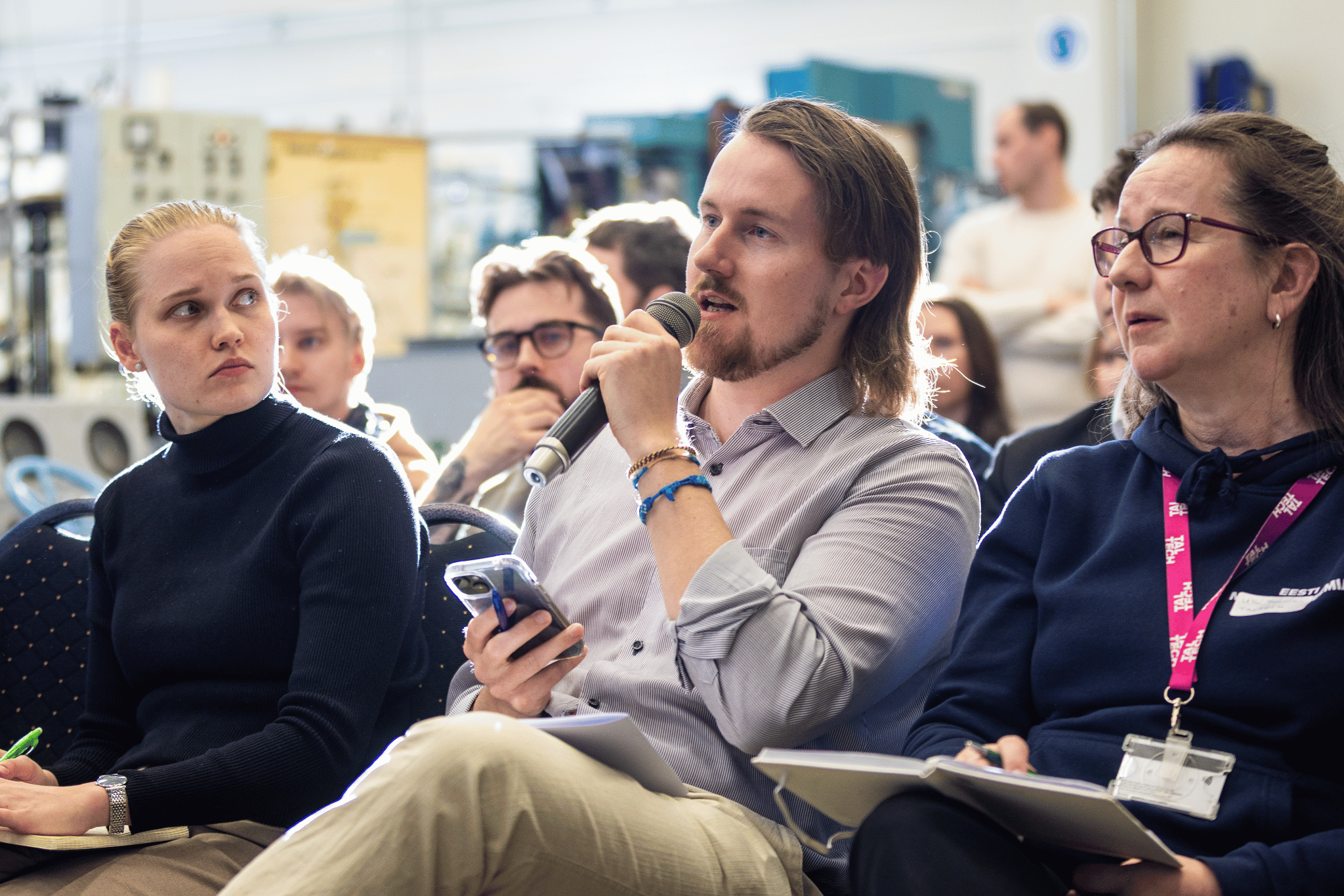
Tuomo Veivo, jury member from Redstone VC, said:
“As a jury member, I was positively surprised by the quality of the challenges themselves: very operational and real-life needs of maritime safety in the Baltic Sea and beyond. Even more positive was to see how much the teams were able to achieve in just one day, starting from zero and ending up with an idea which in the best cases could be implemented within weeks if not days.”
That comment captures one of the key strengths of MarineHäkk: it is not only a student competition or an innovation showcase, but a fast-moving working format where real problems are translated into concrete concepts under time pressure.
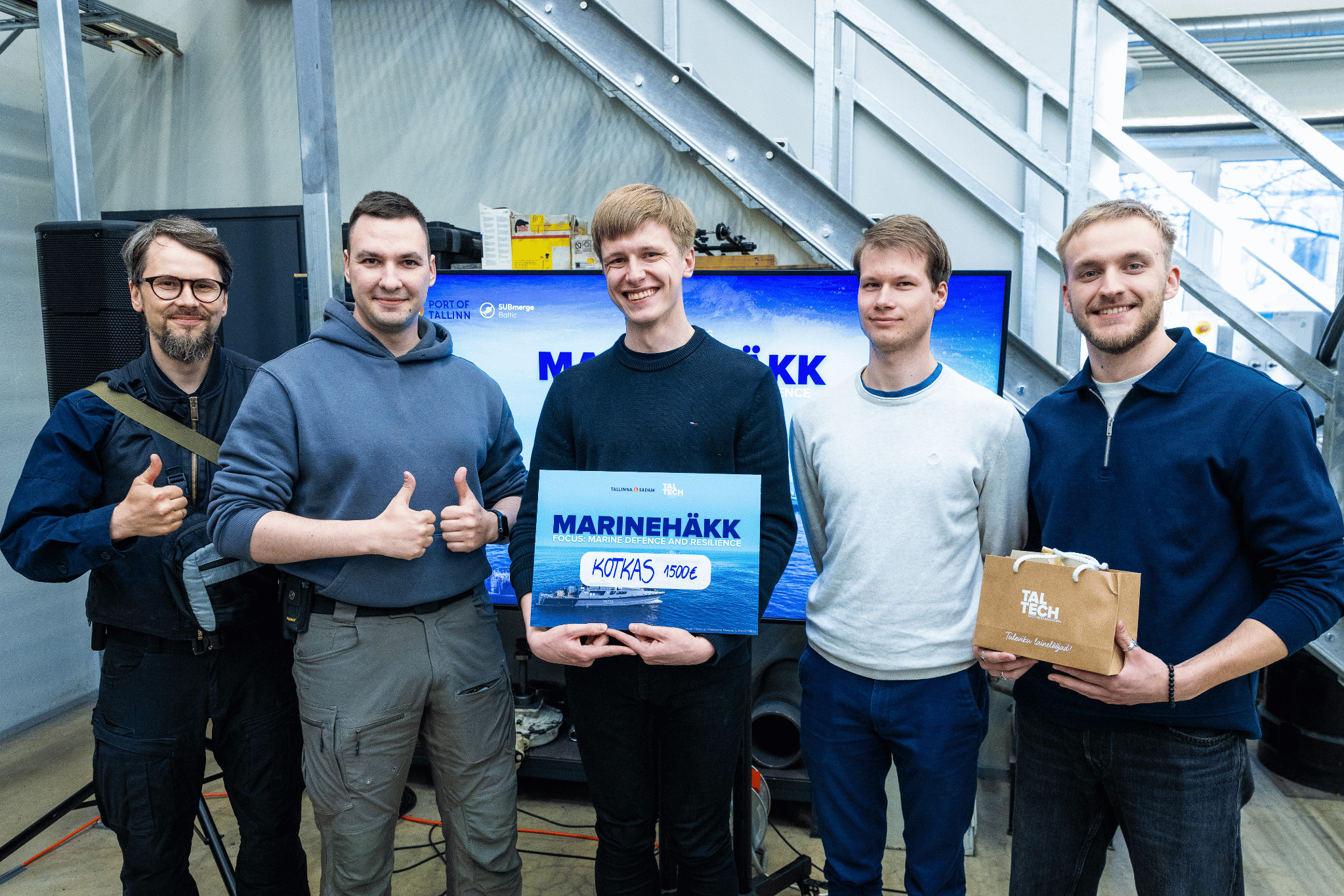
Honourable mentions
The jury also recognised Kotkased and SeaFence with honourable mentions.
Kotkased addressed the problem of people getting lost on Lake Peipsi, manual ice-thickness measurement and communication-denied zones. Their concept combined an unmanned ground vehicle, a UAV scout camera, autonomous task planning, live tracking and environmental sensors.
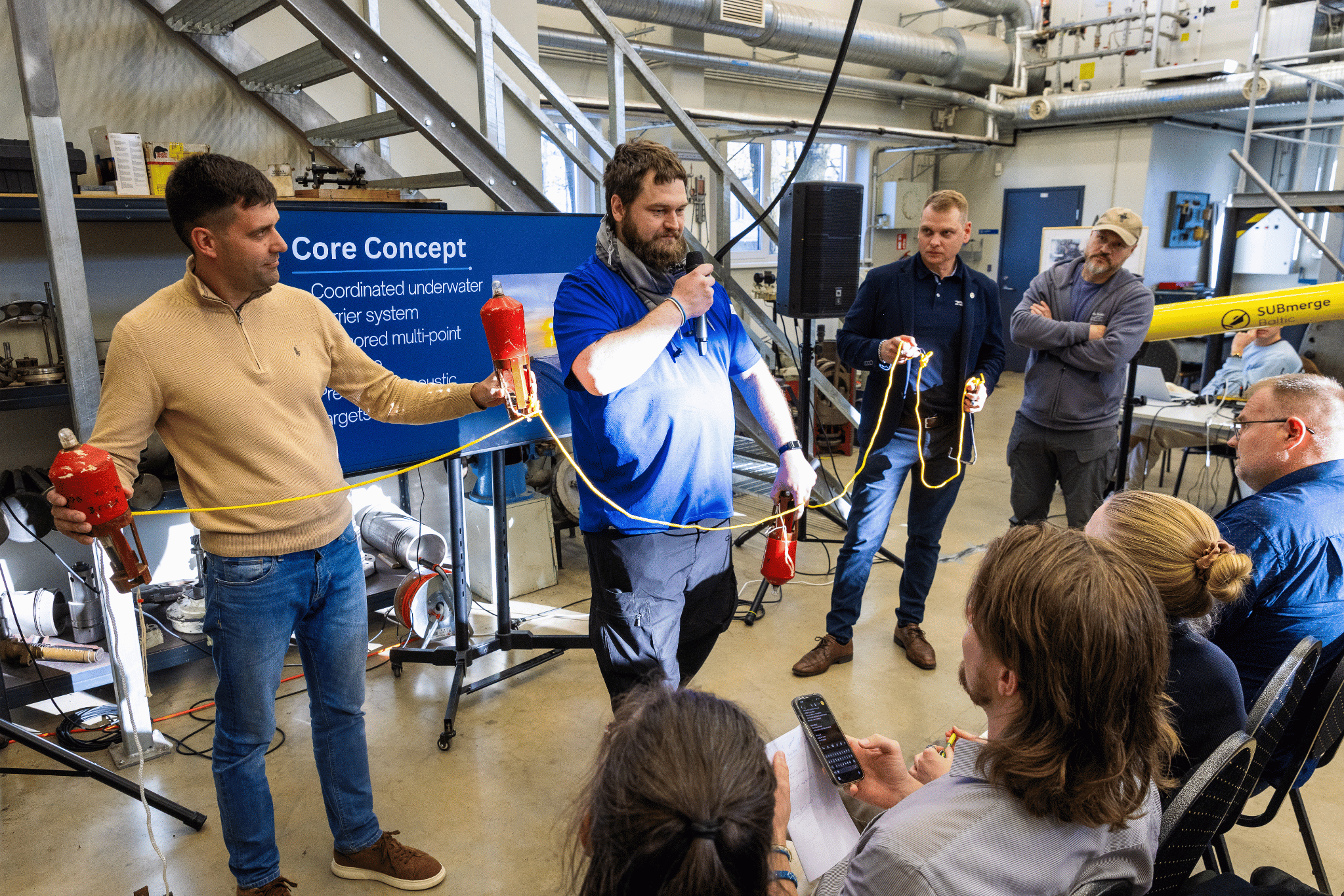
SeaFence worked on a smart autonomous mine system for coastal defence, proposing a modular underwater barrier concept built from connected units, anchors and low-cost commercial components. The system was designed for rapid deployment and remote control.
Why the event matters
MarineHäkk has become a useful indicator of where maritime innovation is heading. The challenge themes show clear demand for autonomy, resilient communications, sensor fusion, infrastructure protection and dual-use solutions that can support both civil and defence applications. For companies and organisations, that matters: it points to a growing market for technologies that can be deployed in harsh, constrained and security-sensitive environments.
For TalTech, the hackathon also serves a broader role as a cooperation platform. It connects companies, public-sector organisations, students and experts around practical problems and gives participants a chance to test ideas quickly, receive feedback and build contacts for future development.