
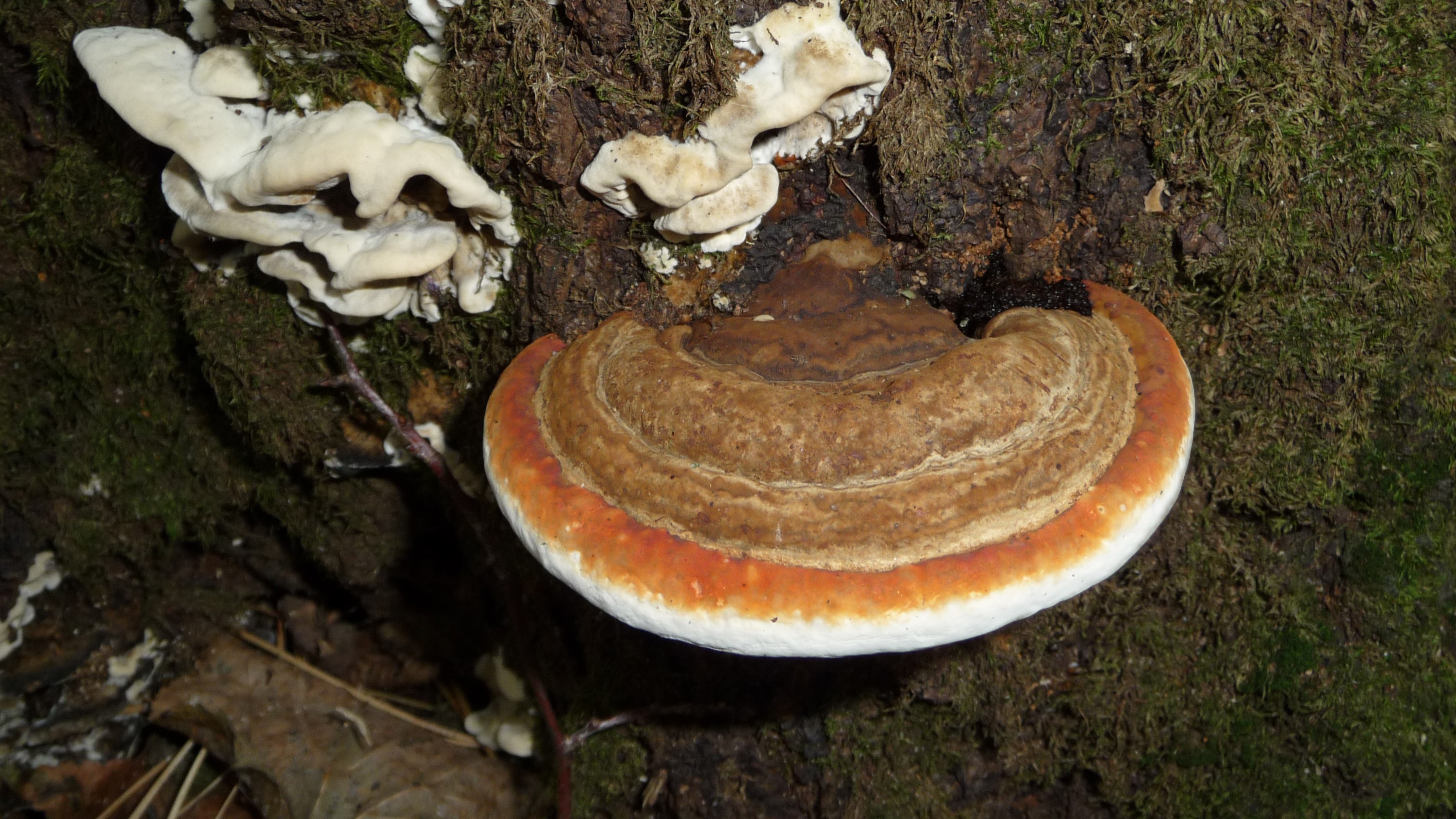
Researchers from the Department of Chemistry and Biotechnology at Tallinn University of Technology have found that extracts of the red-belted bracket fungus (Fomitopsis pinicola), which is common in Estonian forests, are active against both the bacterium that causes Lyme disease and several gram-negative bacteria commonly associated with hospital-acquired infections.
Lyme disease, caused by the bacterium Borrelia burgdorferi, can be treated with antibiotics, but some patients continue to experience symptoms even after treatment has ended. One possible explanation is the bacteria’s ability to form biofilms – protective layers that shield them from drugs and help them survive.
The spread of antibiotic-resistant bacteria has become one of the most important global problems in medicine. For this reason, researchers from Tallinn University of Technology and the Agricultural University of Georgia included, alongside Borrelia burgdorferi, three gram-negative bacteria commonly associated with hospital-acquired infections. These bacteria can cause respiratory, urinary tract and bloodstream infections and are important pathogens in hospitals: Klebsiella pneumoniae, Acinetobacter baumannii and Enterobacter cloacae.
Gram-negative bacteria are more difficult to target with many antibacterial agents because of their cell structure. Chemists at the Department of Chemistry and Biotechnology have for years been searching for new bioactive compounds with antibacterial activity in plants found in Estonia and traditionally used in folk medicine. In previous studies, they identified such compounds in plantain and carline thistle.
This time, they looked for a new candidate among fungi. Senior Researcher Maria Kulp, the lead author of the study and head of the Analytical Chemistry Research Group, explained the choice: “We chose the red-belted bracket fungus Fomitopsis pinicola as the subject of our study because this medicinal mushroom is known to contain various bioactive compounds, while its potential antibacterial and antioxidant activity, particularly against Borrelia burgdorferi, has so far been insufficiently studied.”
The researchers grew the fungus’s mycelium in the laboratory to obtain fungal material with a consistent composition that would not depend on where the fungus was collected. They prepared water and ethanol extracts from the fungal material and tested their effects on both the bacterium that causes Lyme disease and the three problematic hospital-associated bacteria.
Laboratory tests showed that the fungal extracts inhibited the growth of all the bacteria studied, reduced their viability and, in some cases, killed the bacteria completely. Particularly importantly, the extracts also inhibited biofilm formation and reduced the extent of existing biofilms. Because biofilms make bacteria considerably more resistant to drugs, weakening biofilms is considered an important direction in the development of new antimicrobial treatments.
In addition to their antibacterial activity, the researchers studied the antioxidant properties of the extracts and their effects on healthy cells. The tests showed that the extracts had a dose-dependent ability to neutralize free radicals that can damage cells, while most of the extracts showed low cytotoxicity. This suggests that they were generally well tolerated by human cells.
Although the results showed an effect on the bacteria, Maria Kulp emphasized that this is only the first stage of the research. “At this stage, we have only shown that Fomitopsis pinicola extracts have promising activity under laboratory conditions and may be a source of natural antioxidant and antimicrobial compounds. The next step is to identify which bioactive compounds are responsible for this activity. Further studies are needed to confirm their safety and effectiveness, and only then will it be possible to assess whether they could eventually lead to new treatment options,” the senior researcher said.
The article was published in the MDPI journal Sci.