
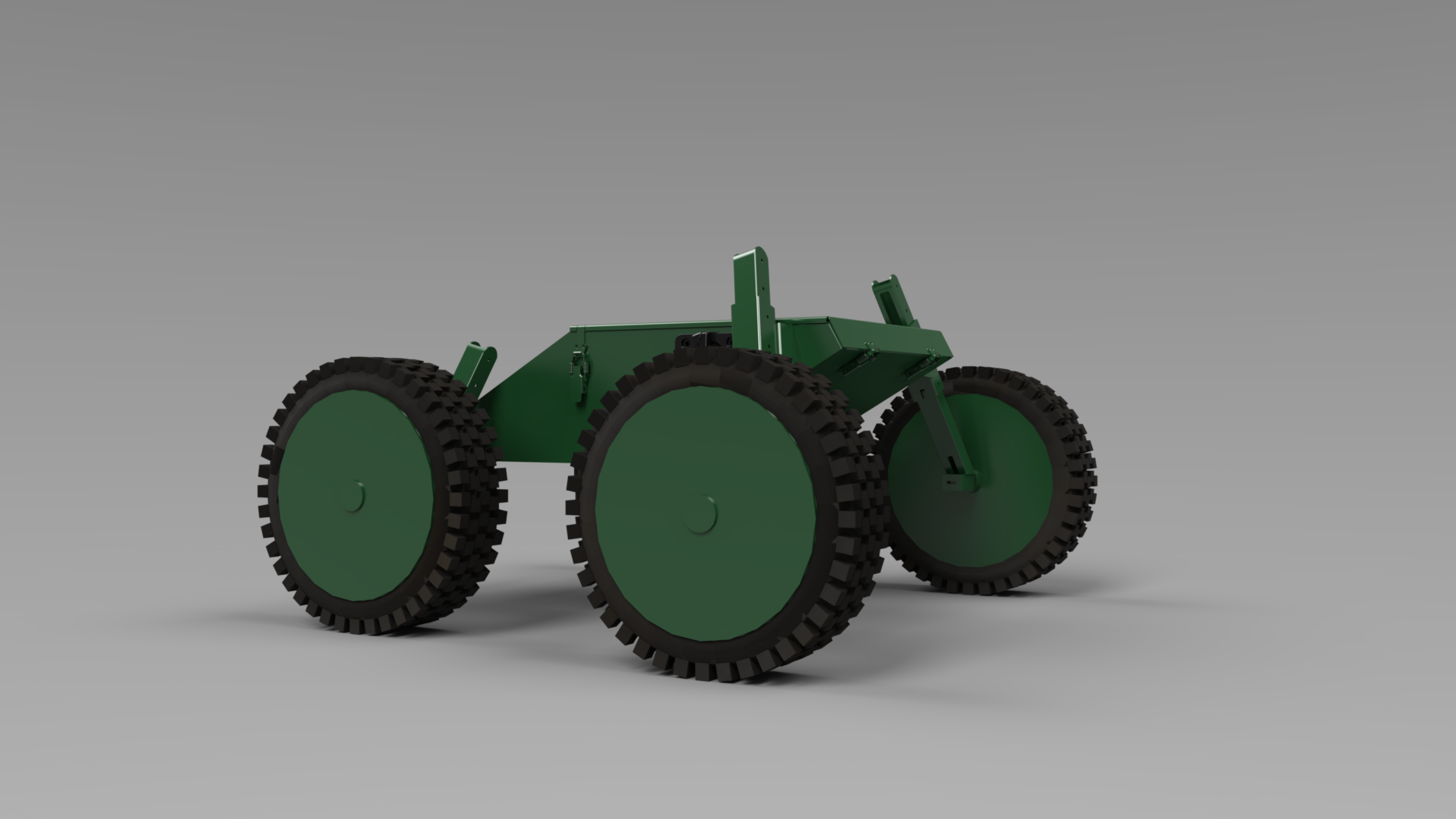
When people think of robotics, they often picture drones and flying machines. TalTech startup Ragnarok Robotics is taking a different approach by developing a modular unmanned ground vehicle (M-UGV) that can be adapted for a wide range of applications, from navigating challenging terrain to transporting heavy loads.
"It's like a car that you can equip with a shopping basket or any other module," explained Lorenz Ernits, representative of Ragnarok Robotics, describing the concept in its simplest form.
From a Request in Ukraine to a Startup
The story of Ragnarok Robotics did not begin with the idea of building "a cool robot." Instead, it started with a real-world need. According to Ernits, the journey began at Terastiim, an engineering company based in Peetri, Estonia, which was approached by partners in Ukraine to develop a specific type of robot.
The first prototype was designed and assembled at Terastiim before being sent for field testing. Feedback came from both users testing the system in Ukraine and defence specialists in Estonia. Based on their input, the team began developing the next generation of the vehicle.
As the project evolved, the team decided to establish a dedicated company around the technology. What began as a contract development project gradually grew into Ragnarok Robotics, a startup focused on building reliable unmanned ground vehicles for demanding environments.
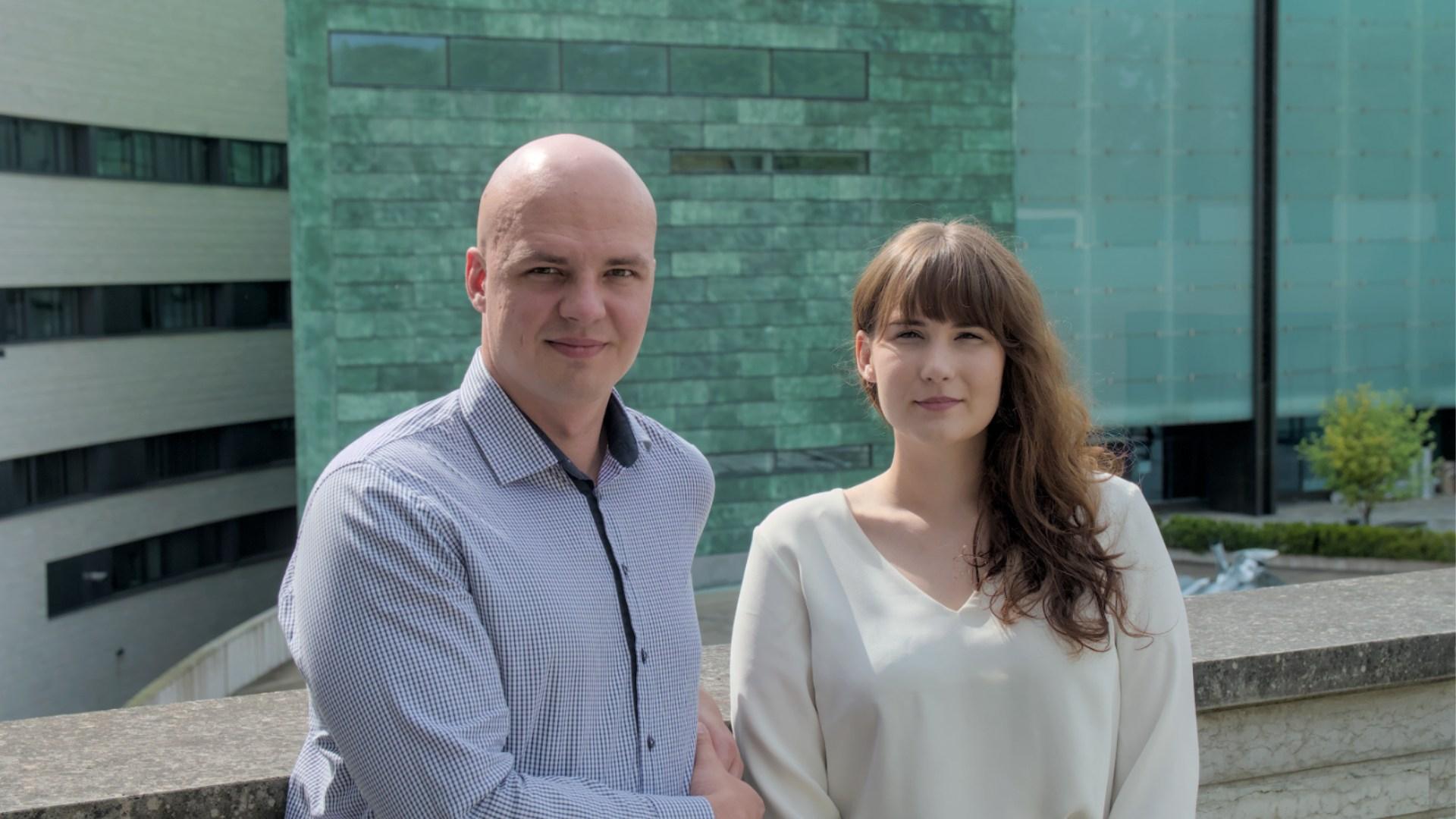
Although the core team is small, the development effort is supported by a broader network of partners and advisors. According to Ernits, the core team currently consists of five people. In addition, the project brings together several partners and consultants who contribute technical expertise and support the development of various components.
Why an Unmanned Ground Vehicle?
Ragnarok Robotics initially set out to develop a simple and affordable remotely operated robot that could be used in a variety of situations. However, discussions with investors quickly made one thing clear: the market was already crowded, and standing out would require a stronger point of differentiation.
"We were told quite directly that the idea wasn't unique enough. That's when we started shifting our focus towards autonomous driving," Ernits said.
In his view, the effectiveness of drones is influenced by many factors, including weather conditions, the operating environment, signal interference and the risk of failing to reach the intended destination.
"When flying is not possible or practical, you need an alternative that operates on the ground and can be adapted to different tasks," he explained.
A Modular Platform Built for Flexibility
One of the defining features of the robot developed by the student-led startup is its modular design. In practice, this means that different modules can be mounted onto the same base platform depending on the intended application. This makes it possible to tailor both the robot's capabilities and its overall cost to specific operational needs.
Initially, the team saw modularity primarily as a strong selling point. As development progressed, however, they realised its greatest value lay in manufacturing.
"At first, we thought it would be the main benefit for customers. In reality, it's a major advantage for us because it makes both development and production simpler and more cost-effective," Ernits explained.
According to Ernits, the robot also stands out because of its technical performance.
"In its weight class, it's the fastest, has the highest payload capacity and is the most affordable," he said.
Reliable communication is another critical factor for any remotely operated ground vehicle. According to Ernits, the biggest challenge today is not hacking, but signal jamming and interference, which can make radio communication unreliable or disrupt it entirely.
To address this, the team uses fibre-optic communication, which provides a more stable and secure connection. However, this approach also comes at a considerable cost. Ernits noted that a 10-kilometre spool of fibre-optic cable can cost around €1,000–1,500. There are also environmental considerations, as the fibre does not biodegrade and can accumulate in large quantities in conflict zones over time.
The Next Step: Camera-Based Human Following in Challenging Terrain
The next stage of development is increasingly focused on software and autonomy, particularly in complex environments with limited visibility, such as forests. According to Ernits, achieving full autonomy remains a significant challenge, so the team is taking a more practical step-by-step approach.
"We're teaching the robot to follow a person, so it becomes like a backpack on wheels," he explained. In practice, this means the robot must be able to keep up with its operator across difficult terrain, even if the person temporarily disappears from view.
According to Ernits, this capability must rely primarily on computer vision.
"You have to do all of this using only cameras. You can't rely on lidar or other active sensors because any light, laser or transmitted signal could reveal your position on the battlefield," he said.
Expanding Beyond Defence: Construction and Mining
Although the robot was originally developed to address defence-related needs, the company is increasingly exploring civilian applications. One reason is the pace of development: companies operating in conflict zones can test new technologies in real-world conditions and iterate much faster.
"It's difficult for us to compete with companies that can test their systems in the field and have the next version ready within days," Ernits said.
As a result, the team has begun exploring opportunities in other industries. They are already in discussions with several construction companies and also see strong potential in the mining sector. In these environments, the robot could be used to transport materials and equipment or operate across difficult terrain and in hard-to-reach locations.
Ernits illustrated the idea with a light-hearted example: "On a construction site or in a mine, sometimes you simply need to get something from A to B. If the robot can carry 250 kilograms, that's a pretty substantial load, even if it's just a crate of beer."
Growing as a Startup and as Entrepreneurs
Although Ragnarok Robotics is now an established startup, its core team remains closely connected to the TalTech student and alumni community. According to Ernits, building the company has required an enormous amount of time and commitment, with much of the work being carried out alongside studies, full-time jobs and other responsibilities.
"Everyone has invested a huge amount of effort into this. Most days, there's not much time for anything beyond sleeping, exercising and working on the project," he said.
What keeps the team motivated, Ernits explained, is the desire to build something that has a real impact.
"We want to create something that genuinely helps people and creates value. Something that might make a difference or inspire someone," he said.
Ragnarok Robotics is also part of TalTech Student Ventures, the university's venture development programme. According to Ernits, the programme has helped the team both evaluate the company's progress and expand its network. In particular, he highlighted the KTH Innovation Readiness Level (IRL) framework, which provides a structured way to assess different aspects of venture development. The accompanying assessment tool proved especially valuable by helping the team identify where to focus their efforts as the company continues to grow.
For Ernits, the entrepreneurial journey has also shaped his personal ambitions.
"Personally, I never want to work a traditional nine-to-five job again. I've dreamed of becoming an entrepreneur for as long as I can remember," he said.