
TalTech recognized two major initiatives for outstanding initiatives in the sustainability field over the past year: the integration of sustainable development, the green transition, and the circular economy into both degree and continuing education, as well as a project Sustainability Months running until May 2026 that engages a large part of the university community.
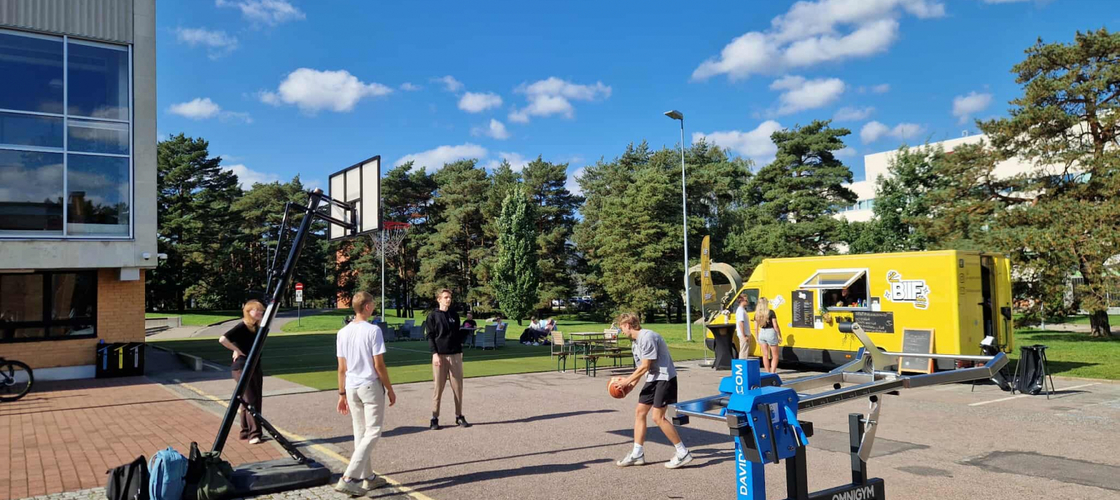
Sustainability Months encourage people to think about sustainability in all areas of life
In the current academic year, from September to May, one sustainability theme is in focus each month. These themes are explored through articles and information, calls to action and events, as well as role models and entertaining competitions, with the aim of raising awareness and inspiring the university community to act more sustainably in everyday life.
The project is led by and the idea originated from Mari Öö Sarv. What makes the campaign special is its systematic approach: themes are addressed as a coherent whole, with each topic in focus for an entire month before moving on to the next. The themes include transport and mobility, climate anxiety, responsible consumption and reuse, waste and packaging prevention, heat and lighting (building energy), responsible water and food consumption, digital cleanliness and e-waste, biodiversity, and physical activity for personal well-being.
All themes are approached in a data-driven manner, and activities are based on a science-based behavior change methodology. Whenever possible, various stakeholders from across the university are involved each month - alumni, student activists and organizations, researchers, support units, and staff members, among others.
The project’s core team consists of university employees from different structural units.
Developing green skills through degree and continuing education
The Department of Materials and Environmental Technology spearheaded degree and continuing education initiatives, as well as public outreach activities, aimed at promoting sustainable development. A working group led by Tiia Plamus launched university-wide courses as early as 2022: Introduction to Circular Economy (in both Estonian and English). Two continuing education courses were also created: Circular Economy and Materials Technology and Applying Circular Economy in the Textile and Apparel Sector. Altogether, more than 110 people participated in these courses.
In addition, in cooperation with the Eesti Keele Instituut (Institute of the Estonian Language), a Terminology Committee for Circular Economy and the Green Transition was established, and a joint seminar titled Terminology of Circular Economy and the Green Transition was organized, with more than 100 participants.
The project was implemented with the help of researchers, experts, and lecturers from across the entire university.
The recognitions were awarded at the ceremony for the 108th anniversary of the Republic of Estonia on 27 February 2026.