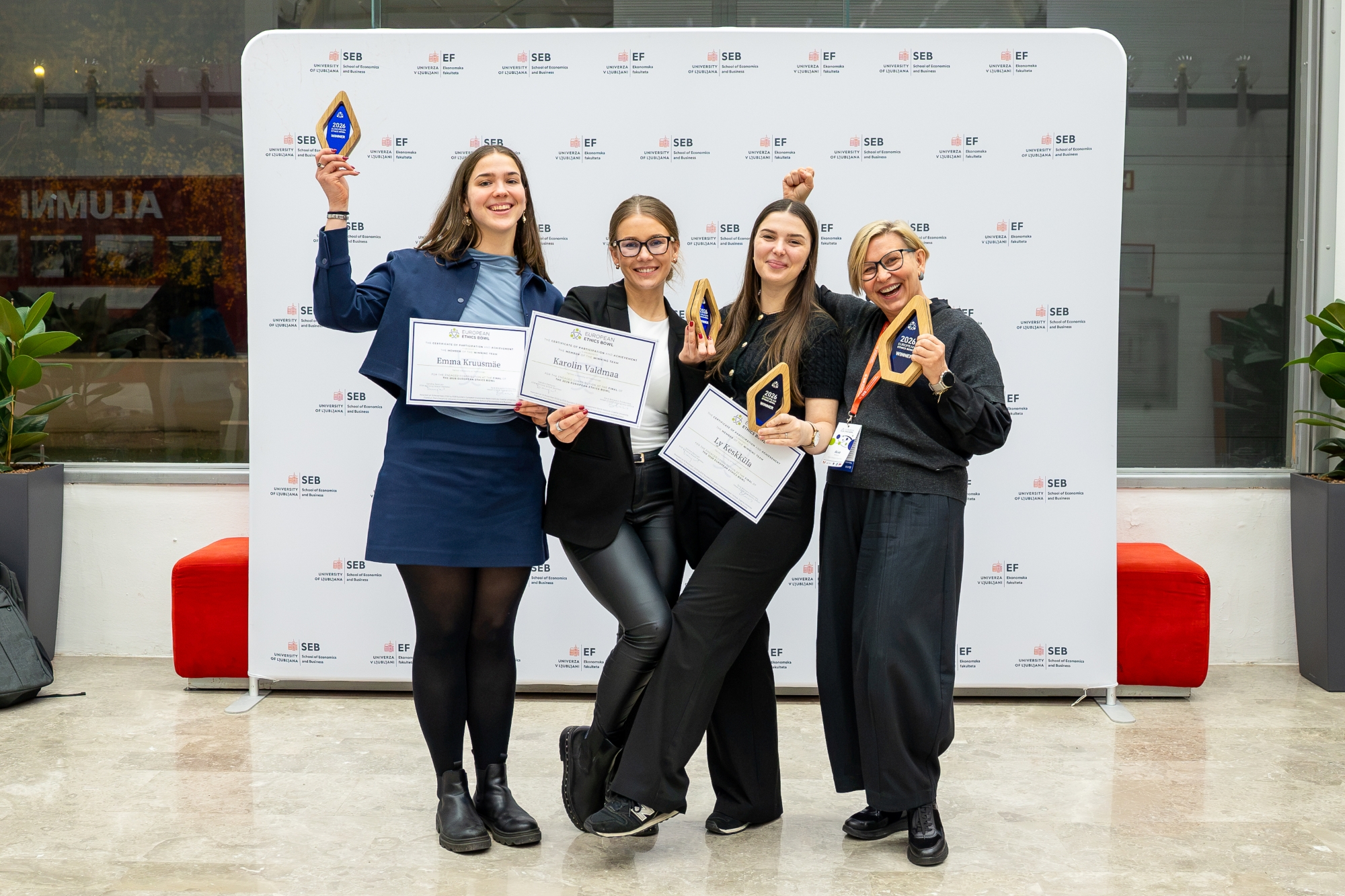
Recent TalTech graduates Ly Keskküla, Emma Kruusmäe and Karolin Valdmaa won the European Ethics Bowl 2026, held at the University of Ljubljana from 13 to 15 November.
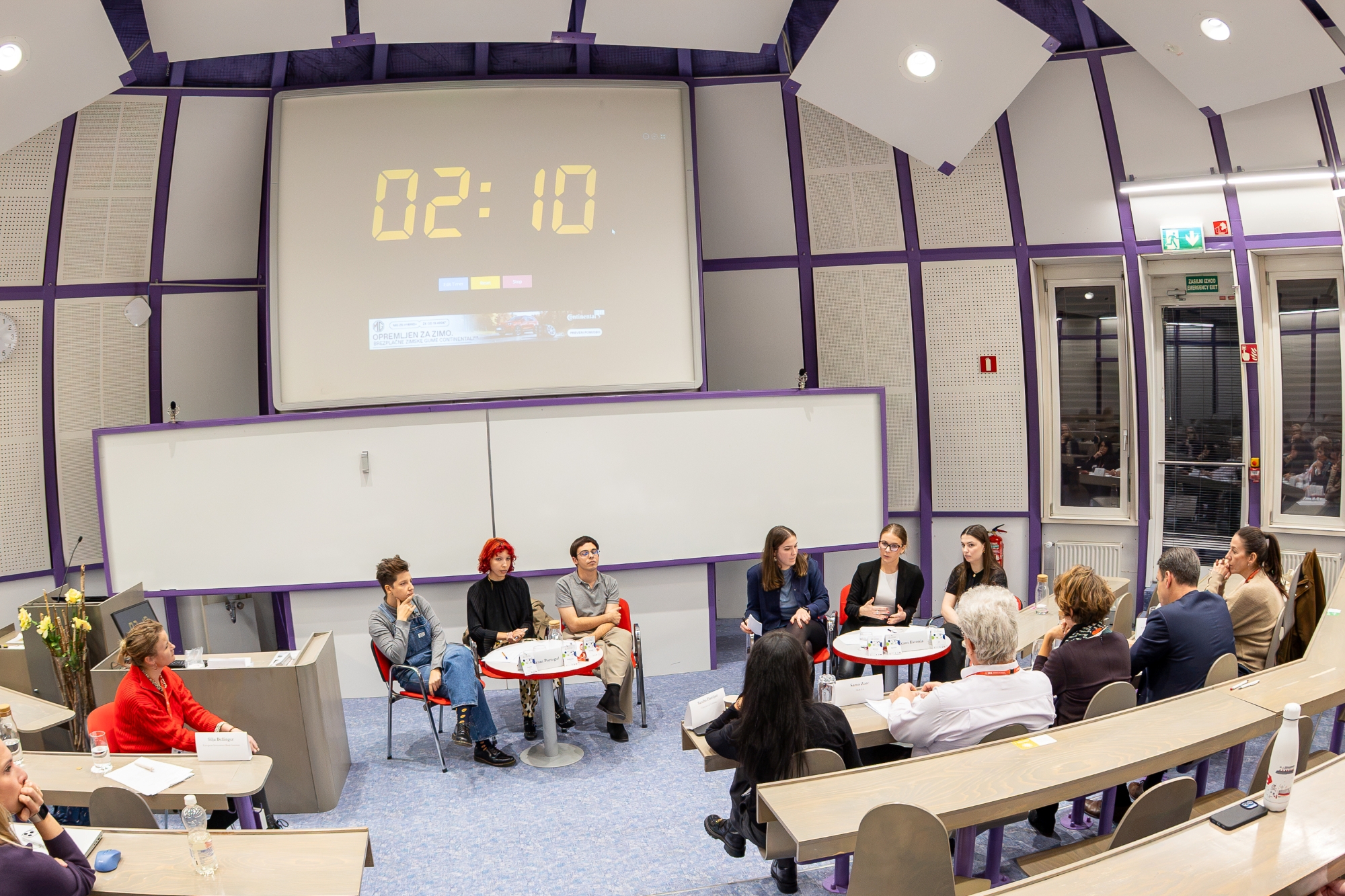
The overall theme of the competition was “Autonomy vs Global Goals”. In the final, the students discussed how companies providing cloud services and artificial intelligence should operate in a country where granting access to health data could contribute to the surveillance of individuals. They had to weigh patient privacy and the benefits of healthcare against corporate responsibility.
The judges highlighted the Estonian team’s clear arguments, confidence and strong teamwork. In their feedback after the first semi-final, they also praised the team’s preparation, the participation of all its members, and their ability to ask and answer questions effectively.
According to Emma Kruusmäe, the competition helped her look beyond the perspectives shaped by her own cultural background.
“Other young people’s views have been shaped by the values of their home countries. Debating ethical dilemmas with them helps us understand that solutions must take different perspectives into account,” she said.
She was surprised by how differently teams could interpret the same case and the conclusions they could reach.
Ly Keskküla described the competition as a wild, challenging and emotional experience that encouraged her to think outside the box. Karolin Valdmaa saw it as a great opportunity to develop her communication and public speaking skills and encourages students to take part in the coming years.
The students were accompanied in Ljubljana by Katrin Arvola, Programme Director at the Department of Business Administration, and Associate Professor Aive Pevkur. Katrin moderated the debates and Aive acted as the judge. According to Katrin, the competition was demanding for the students:
“Several strong teams had already run out of energy by the second round. Our team’s eyes were shining, and they had the energy and enthusiasm to keep going until the end of the final.”
Aive added that although the competition aims to promote a culture of respectful debate, all teams get caught up in the excitement and want to win. The strongest teams are those that can present their arguments clearly and systematically, even under pressure. Our team did an excellent job of this.