
On 18 December 2025, Andres Laasma defended his PhD dissertation at the Estonian Maritime Academy of Tallinn University of Technology (TalTech). The dissertation, “Decarbonization Framework of Estonian Coastal Ferries,” examines how public ferry fleets operating in cold-climate coastal waters can reduce greenhouse gas emissions while maintaining operational reliability, safety, and cost efficiency.
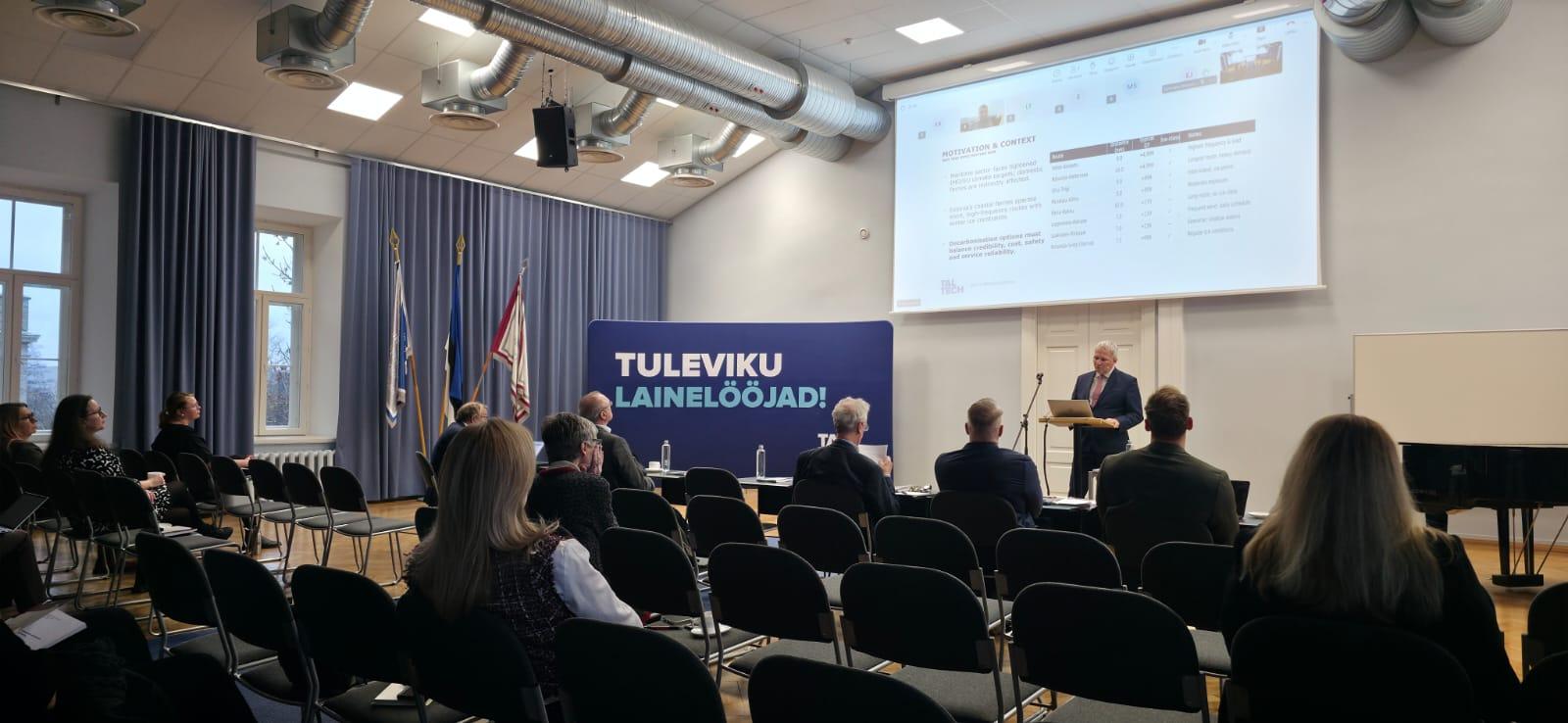
Photo by TalTech
The dissertation was supervised by Professor Dr. Ulla Pirita Tapaninen (Estonian Maritime Academy, TalTech), with Olli-Pekka Hilmola contributing to the supervision of the research. The official opponents were Professor Emeritus Harilaos N. Psaraftis (Technical University of Denmark) and Professor Jani Romanoff (Aalto University). The defence committee also included Professor Pentti Kujala (Estonian Maritime Academy), Professor Gunnar Prause (Ragnar Nurkse Department of Innovation and Governance, TalTech), Professor Wolfgang Gerstlberger (Ragnar Nurkse Department of Innovation and Governance, TalTech; online), and Associate Professor Mihkel Kõrgesaar (Kuressaare College, TalTech).
Addressing decarbonisation under northern operating conditions
The research focuses on a core challenge for maritime transport in Northern Europe: how to decarbonise medium-sized public ferry systems that operate on short routes with tight port turnaround times, winter ice conditions, and high reliability requirements, while simultaneously complying with evolving EU climate regulation.
Although the empirical case study is based on Estonia’s state-operated ferry system, the framework and findings are applicable to similar coastal ferry fleets across Northern Europe and other cold-climate regions.
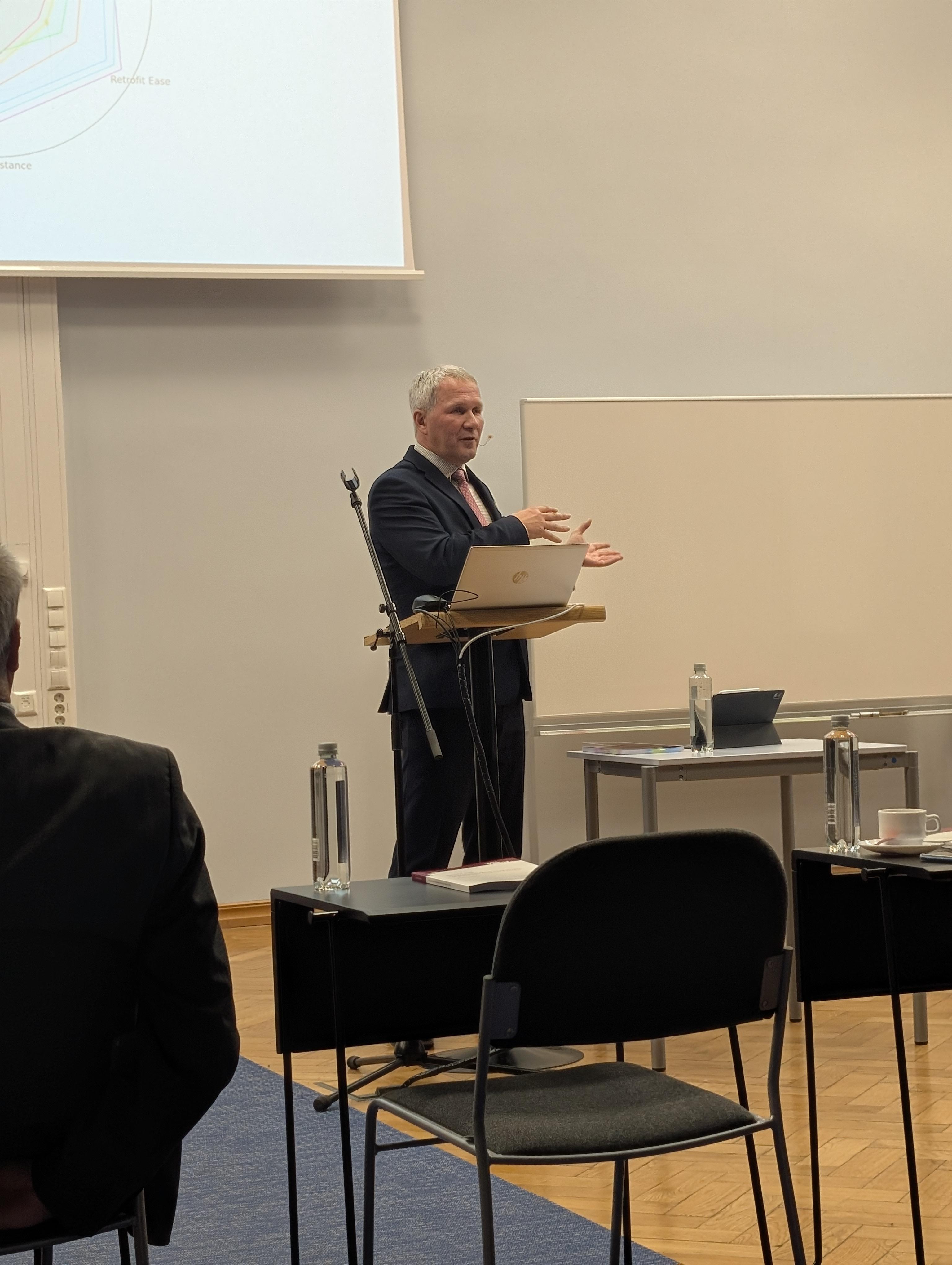
Photo by TalTech
A decision-analytic framework for ferry decarbonisation
The main scientific contribution of the dissertation is a decision-analytic framework that integrates three key dimensions:
- - life-cycle climate performance,
- - operational and technical feasibility, and
- - regulatory compliance.
Rather than promoting a single technological solution, the framework treats decarbonisation as a portfolio problem, where different measures are suitable for different routes and time horizons. This approach helps decision-makers avoid both underinvestment and premature investment in technologies that may not yet be operationally viable under winter conditions.
Empirical evidence from operational ferry data
The empirical backbone of the study consists of multi-year telemetry and operational datasets collected from Estonian coastal ferries. The analysis shows that the most immediate and cost-effective emission reductions are achieved through data-driven operational and digital optimisation, including propulsion control, scheduling adjustments, and refined operating practices.
More capital-intensive measures, such as hybridisation and alternative fuels, can be introduced gradually on routes where energy profiles, safety requirements, and infrastructure readiness allow. The research clarifies why some technologies that appear promising in theory may prove impractical for smaller vessels operating in ice conditions.
Practical relevance highlighted during the defence
The practical applicability of the research was explicitly discussed during the defence. Professor Pentti Kujala asked whether the results of the dissertation could be used in everyday work within the Estonian State Fleet. Andres Laasma responded that they absolutely can, noting that the dissertation is directly and fully linked to his everyday professional work.
This level of direct applicability was highlighted as noteworthy during the discussion, as PhD research is not always designed to be immediately usable in daily operational decision-making.
Supervisor Professor Ulla Pirita Tapaninen also emphasised the depth and quality of the academic discussion during the defence.
Contribution to TalTech’s maritime research
Andres Laasma is the third doctoral graduate in the history of the Estonian Maritime Academy. The dissertation contributes to TalTech’s research profile by providing a scientifically grounded and operationally applicable framework for decarbonising public maritime transport.
The study supports policymakers, fleet operators, and researchers in aligning maritime operations with EU climate targets while respecting the specific constraints of cold-climate coastal shipping.
Andres Laasma's dissertation has been published in the TalTech Digital Library
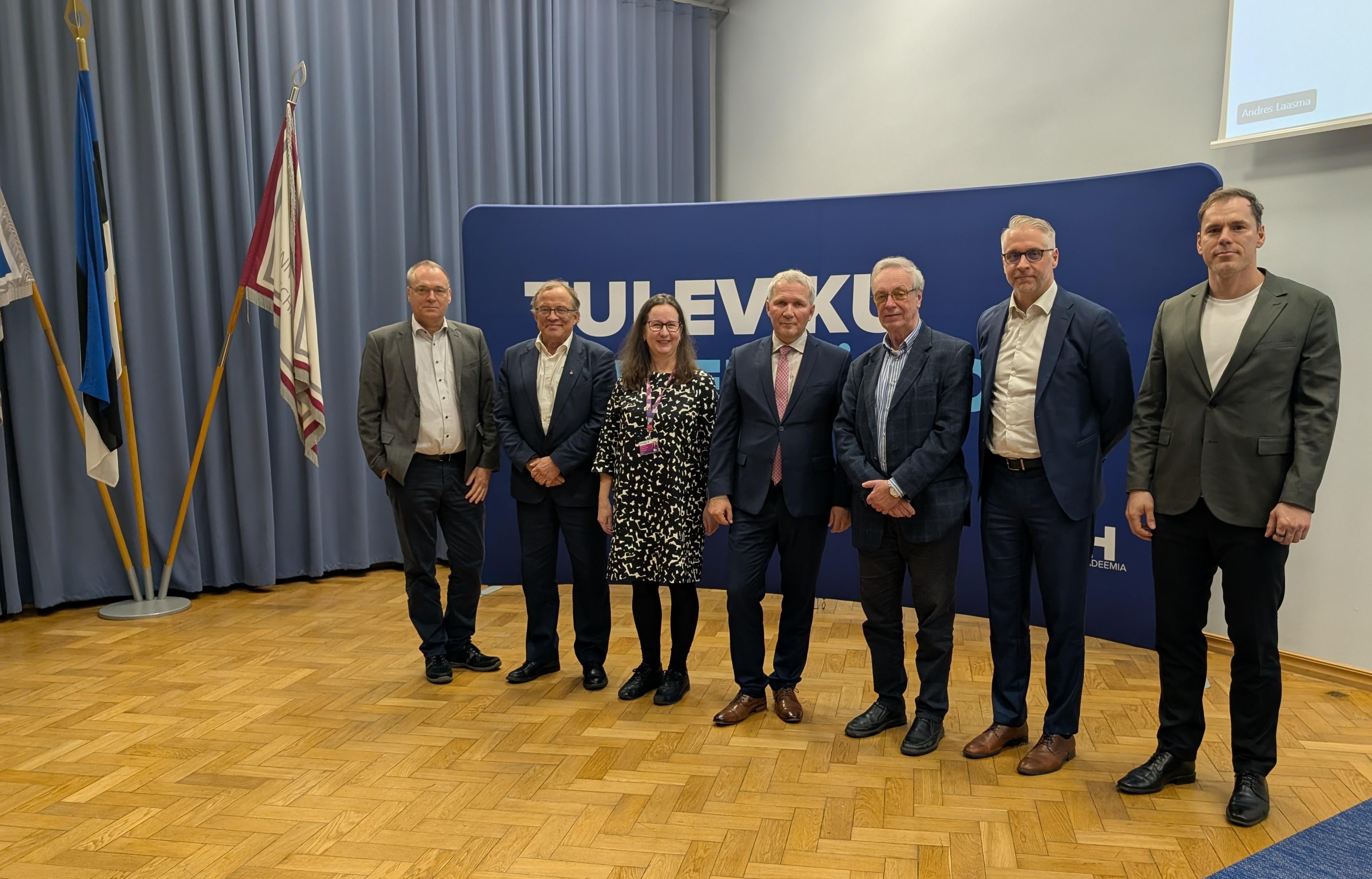
Photo by TalTech