Under ASTRA+ Activity 4, TalTech is strengthening its knowledge transfer capacity by organising events such as Entrepreneurship Day and upgrading research infrastructure, ensuring that research results reach companies and society more effectively than before.
“The goal of ASTRA+ Activity 4 is to strengthen TalTech’s capacity as an applied science university to transfer its knowledge, technologies and research achievements into society and industry,” explained Krister Kalda, Head of TalTech’s Industry Collaboration Centre.
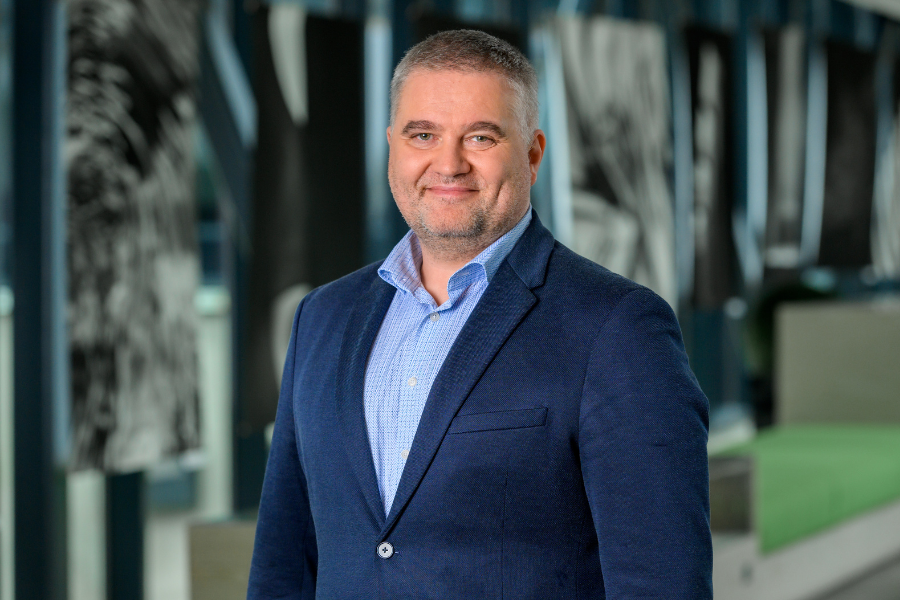
This means that TalTech is no longer focused solely on generating research results, but also on how this knowledge can create real value - whether through new products, services, processes or policy solutions. “We want knowledge transfer to become a natural part of the university not a side project, but an activity equal to research and teaching,” Kalda noted.
According to him, the timing is right: “Estonian businesses need innovation now more than ever to support the digital transition, the green transition and productivity growth. TalTech has a central role to play, as we have a strong research base and domain expertise. ASTRA+ provides an opportunity to develop these structures consciously and strategically.”
Collaboration model that connects science and industry
The new collaboration model brings researchers, the Technology Transfer Office, the Research Administration Office, the AIRE Centre and the faculties into a unified knowledge transfer ecosystem.
“We are moving toward a model where units no longer operate in parallel but function as a single knowledge transfer ecosystem. The Technology Transfer Office and the Research Administration Office provide the structural and support functions, while the focus centres - including faculty institutes and research centres - form the front line of knowledge transfer, where real contact with companies happens,” Kalda explained. “The AIRE Centre contributes international experience and a strong focus on digital transformation, helping us operate as a reliable development partner.”
For researchers, this means a simpler collaboration pathway - less bureaucracy and more support. For support staff, it means clearer roles and stronger cross-unit cooperation. For example, a unified contact point for companies will be created, where the needs of researchers and partners can be mediated more effectively. This reduces fragmentation and speeds up collaboration processes.
Competences in business collaboration: project support, partnership management, intellectual property and contract advisory, will move closer to the faculties. When the necessary expertise and support are within easy reach, collaboration activity and impact naturally grow.
LAB2LIFE programme - another step toward entrepreneurial science
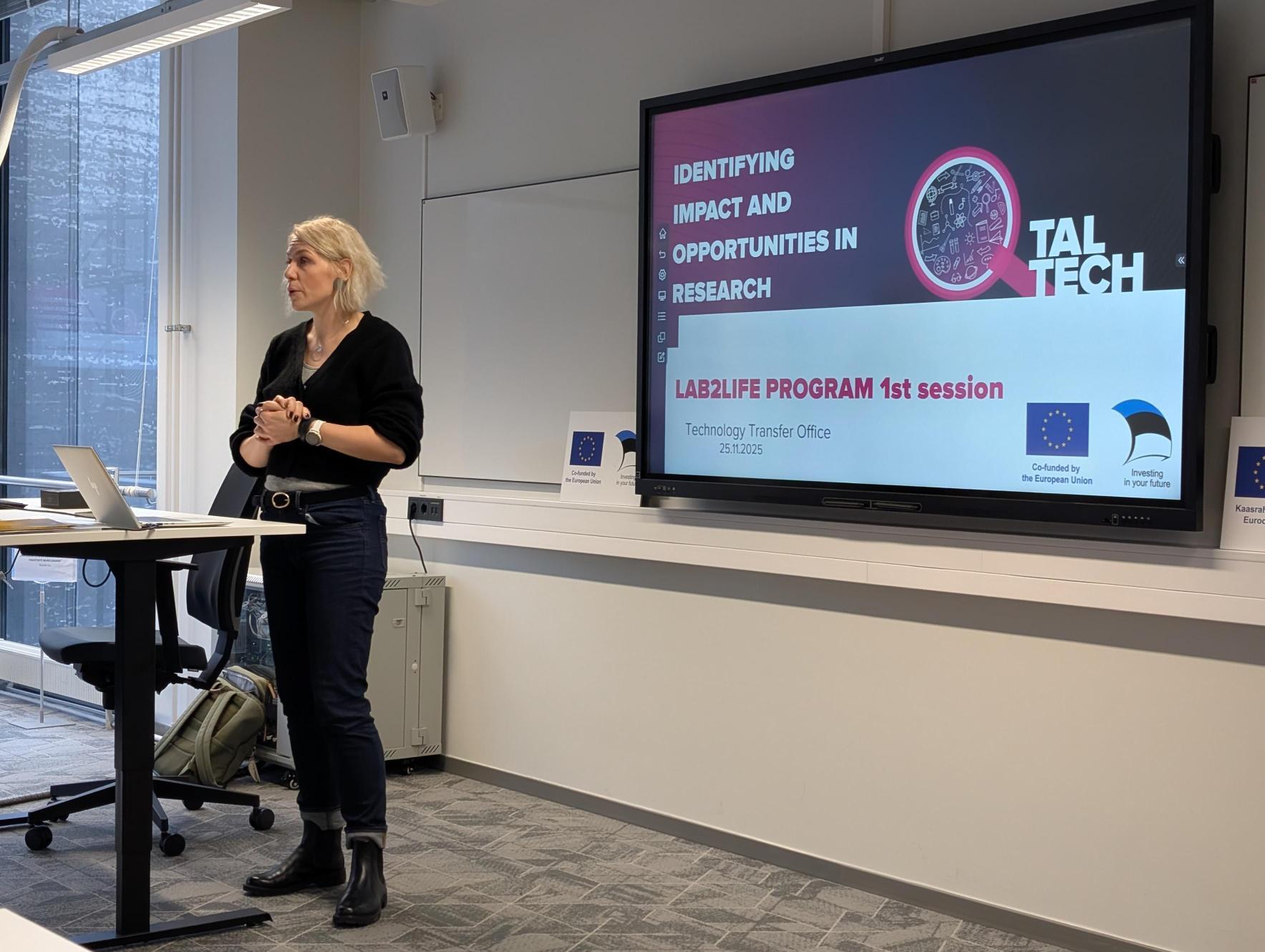
To help researchers apply their knowledge in real-life contexts, the LAB2LIFE programme was launched this autumn under Activity 4 - a development series designed specifically for doctoral students and early-career researchers.
The programme encourages participants to look at their research from a new perspective and understand how to bring ideas and results from the laboratory into real-world applications. Its aim is to support an entrepreneurial mindset and increase awareness of research commercialisation opportunities.
LAB2LIFE consists of four sessions that combine lectures with practical workshops. The speakers include members of TalTech’s technology transfer team and practitioners with hands-on experience in research commercialisation.
TalTech Entrepreneurship Day - a new tradition for connecting science and industry
This autumn, as part of ASTRA+ Activity 4, TalTech hosted its first-ever Entrepreneurship Day - a new platform that brings researchers and entrepreneurs together to foster collaboration and develop knowledge-based solutions.
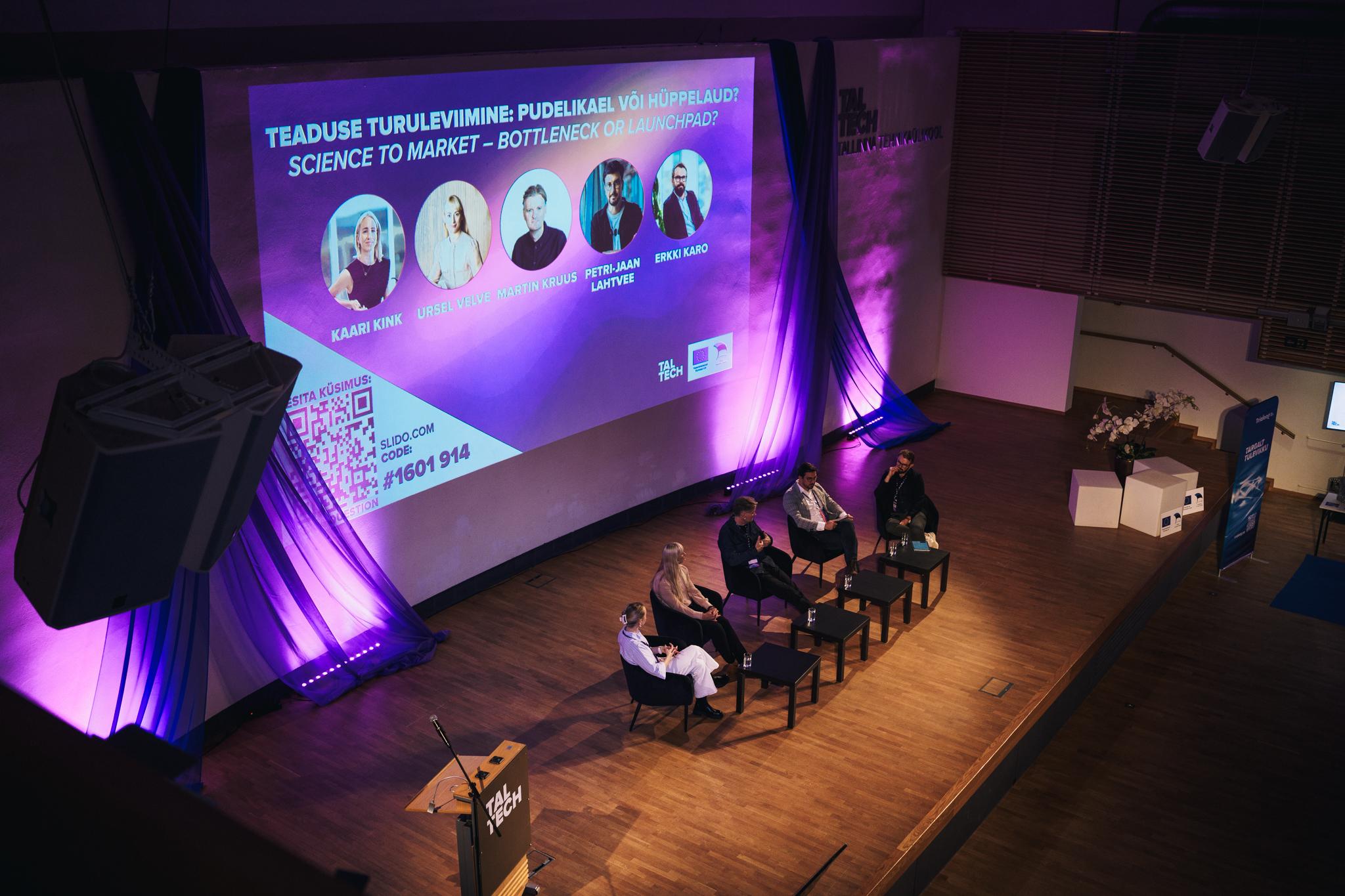
The day brought together researchers, company representatives and developers to share experiences, discuss collaboration opportunities and explore the latest solutions and technologies developed at TalTech. Participants had the chance to discover the work of TalTech’s centres of excellence, visit laboratories, meet researchers in one-to-one matchmaking sessions and learn how university-developed technologies can support business growth.
Entrepreneurship Day marks a step toward closer cooperation between science and industry. Research ideas gain practical pathways, and new collaborations emerge that help strengthen Estonia’s innovation capacity and entrepreneurial mindset.
Research infrastructure receives a strategic boost

ASTRA+ funding is also being used to upgrade TalTech’s research infrastructure. “Tallinn University of Technology has nearly 70 laboratories, nine of which are accredited and therefore closest to offering services to companies,” explained Anu-Mai Levo, Head of Research Infrastructure.
According to her, the support is directed primarily toward developing these laboratories — new equipment and software solutions will enable a broader range of services. “The procurement processes are in their final stages, and the goal is to acquire all planned equipment by the end of this year,” she said.
Levo added that the aim is to ensure that investments in research infrastructure gradually strengthen the university’s research and industry collaboration and create a growth trajectory for developing knowledge transfer services.
“The biggest change is that knowledge transfer is no longer a one-off activity, but a natural part of the university’s DNA”
The impact of strengthening knowledge transfer at TalTech extends far beyond the university itself. It helps reinforce Estonia’s overall innovation capacity and collaboration between academia and industry.
“Estonian companies benefit from TalTech’s strengthened knowledge transfer primarily through faster access to scientific expertise and new technologies,” Kalda explained. “At the same time, trust in collaboration increases, as does mutual learning. At the economic level, this means greater innovation capacity, higher value-added output and more sustainable solutions. In the long term, it supports the shift toward an economy driven by knowledge rather than just labour or price competition.”
According to Kalda, the five-year goal is to build a unified and well-coordinated knowledge transfer system in which researchers, companies and support specialists work together toward shared objectives. “We have strong domain-focused networks: green technologies, circular economy, digital solutions, smart industry, smart sea, smart energy solutions, defence and security technologies, future-focused food and health technologies, and advanced wood processing,” he noted.
“The biggest change is that knowledge transfer is no longer a one-off activity but a natural part of the university’s DNA,” Kalda emphasised. Collaboration with companies no longer depends on individual enthusiasts but is supported by a functioning system. As a result, both researchers and companies see TalTech as a partner capable of creating new value for Estonia and the world.
ASTRA+ Project Activity 4: Strengthening TalTech’s Knowledge Transfer Capacity
Objective: To increase knowledge transfer capacity - including recruitment of personnel, development of support services and enhancement of the environment and infrastructure needed to provide knowledge transfer services (including acquisition of necessary equipment).
Lead institution: TalTech Technology Transfer Office
Focus: Strengthening the university’s collaboration with industry and the research sector, developing a systematic approach to knowledge transfer, supporting researchers in applying their expertise and creating collaboration platforms between companies and researchers.
Outcome: A more efficient and coordinated knowledge transfer ecosystem at TalTech, stronger partnerships with industry and increasing societal and economic impact through science-based innovation in Estonia.