
The pan-European debate competition European Ethics Bowl is a contest where student teams tackle ethically complex topics through structured argumentation. The competition offers students an opportunity to engage with the difficult challenges facing modern societies and strengthens their critical thinking and argumentation skills – exactly the capabilities the digital age demands for the future.
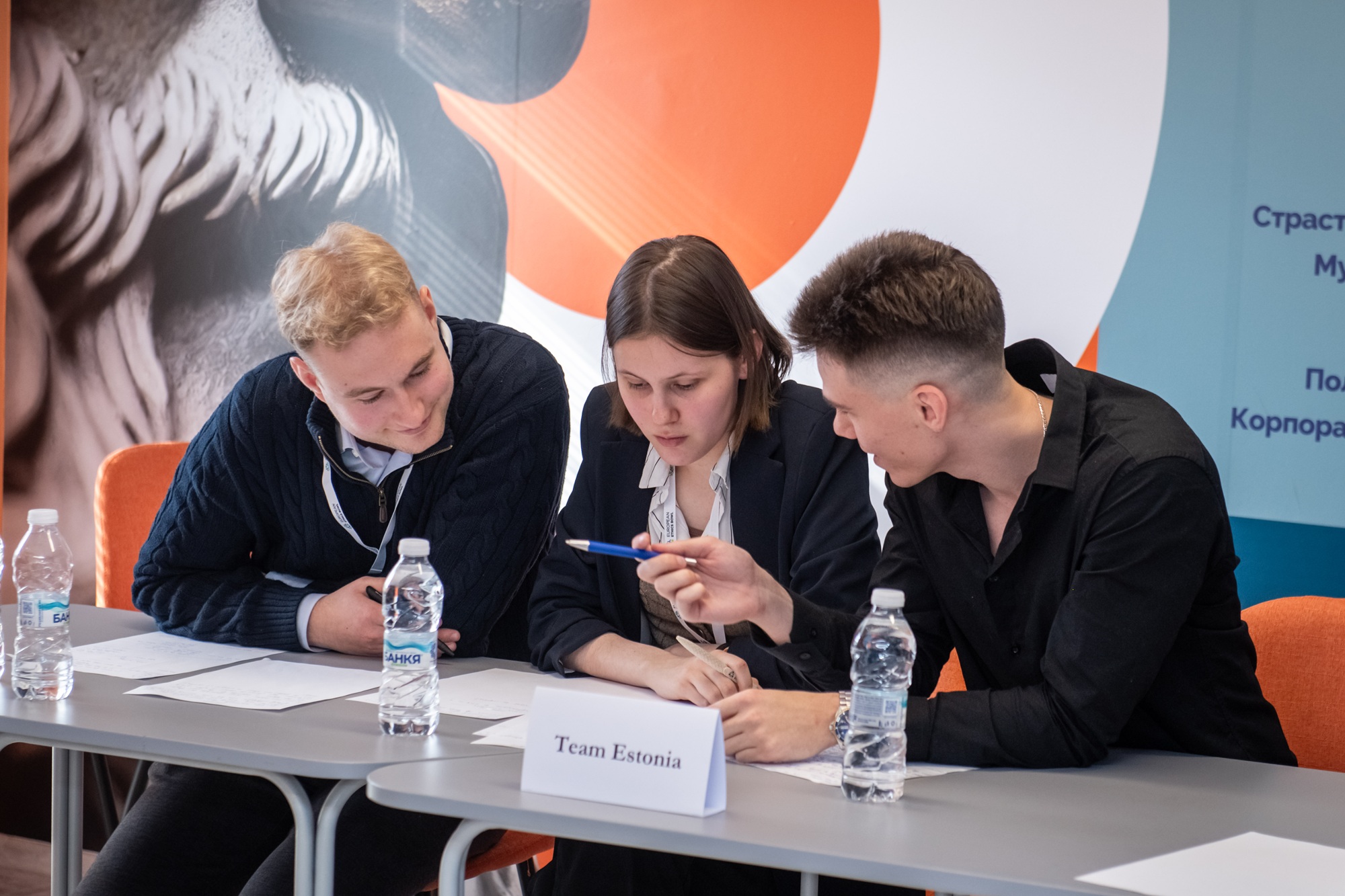
TalTech’s team participated in the competition for the third time, and this year the university was represented by TalTech School of Information Technologies’ students Heli-Anne Kotkas, Mathias Maiste, and Markus Vaikmäe. The event took place on 22–23 November at the Faculty of Economics of Sofia University St. Kliment Ohridski. The team was accompanied by Tairi Tuulik, Communication Officer, and Aive Pevkur, a competition judge, from the Department of Business Administration in the School of Business and Governance.
The competition focused on the ethics of truth and information
The 2025 competition revolved around the theme “The Ethics of Truth and Information.” The preliminary case, “The Rise of Misinformation and Disinformation in the Digital Age,” examined the spread of misleading content on social media, the impact of deepfake technology, and the role of misinformation in health myths, elections, and climate debates. In the semifinals, teams discussed two cases. “Truth in the Age of AI – Ethics on the Edge of Reality” explored how deepfakes and algorithmic amplification shape public opinion. The second case, “The Green Mirage,” focused on how concealing a company’s environmental footprint can undermine both investor trust and the broader green transition narrative. Although TalTech’s team did not reach the final this year, they delivered an excellent performance – including a strong win in their first debate.
Mathias described the experience: "At first there’s uncertainty — you don’t know how strong the other teams are or what angle they’ll take. But as soon as the first debate began, the tension disappeared.”Markus added: "I expected everyone to be extremely professional debaters, but once the others finished their first five minutes, it never felt like we’d have nothing to say.” Heli reflected: “I think the debate format itself was designed to foster a friendly discussion rather than determine which team is right. That reduced hostility and created a supportive atmosphere both during and outside the debates.”
What made the second debate challenging?
Mathias explained: “We had less energy during the second debate. The other teams leaned heavily into economic and legal angles, and those weren’t our strongest areas.” The team members noted that the university’s preliminary round and practice sessions with the university debate club were a great help in preparing for the competition.
The value of international experience
The students highlighted that the most positive surprise was the competition’s open and friendly atmosphere. Mathias noted: “I expected everyone to sit separately on the first evening and quietly observe each other. In reality, conversations started from the very first minute.” Markus confirmed this: “I anticipated a fully competitive mood and that no one would want to reveal their cards at first. That didn’t happen at all.”
For a student with an IT background, the competition offered a welcome change from everyday studies. Mathias remarked: “IT is a very technical field, so I personally enjoy opportunities to do something completely out of the box. I really loved it.”
The social side was just as valuable as the debate itself
Mathias explained that the discussions continued well beyond the formal competition rounds. “The second debate was actually more interesting content-wise than the first, because you could really see how others think. A debate doesn’t end in the room — it continues at the hotel, while talking to people. The themes and conversations just keep going.”
According to Aive Pevkur, our understanding of truth and misinformation shapes the ethical choices that guide both society and technological development. “Young people discuss complex information-ethics dilemmas with remarkable maturity,” she noted.