
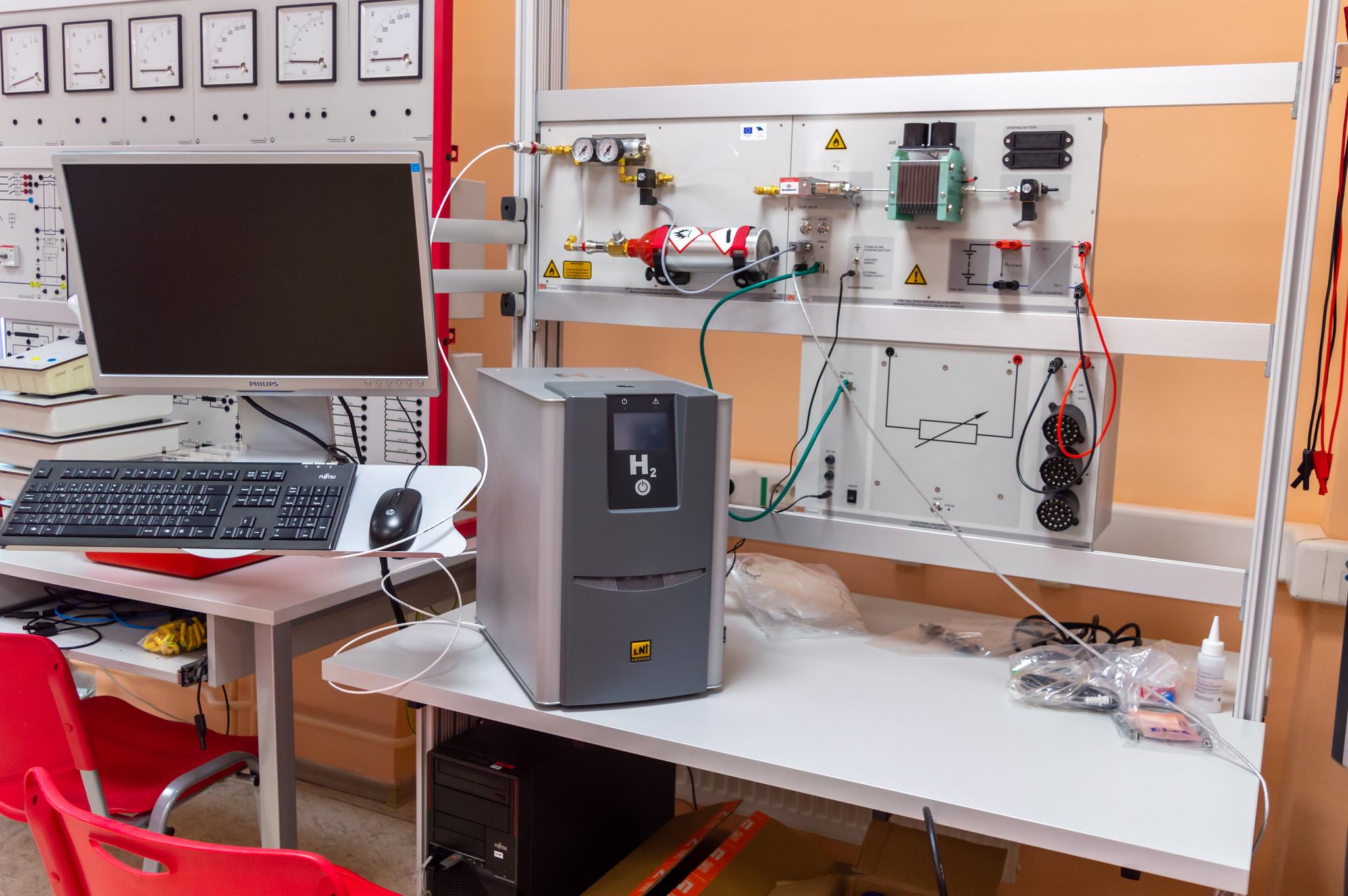
This autumn, TalTech Virumaa College is offering free hydrogen technology courses for the first time. One course provides a broad introduction to hydrogen technologies, while the other focuses in greater depth on hydrogen production and storage.
Hydrogen is expected to play an important role as an energy carrier in future energy systems. At the same time, it has already been widely used as an industrial feedstock for decades.
According to the International Energy Agency, global hydrogen demand exceeded 100 million tonnes in 2025. Most hydrogen is currently used in traditional industries, including oil refining and the production of ammonia, nitrogen fertilisers and methanol. Emerging applications, such as transport, electricity generation, energy storage and synthetic fuels, still account for only a small share of total demand.
Understanding the Bigger Picture of Hydrogen
According to Ando Astor, a lecturer at TalTech Virumaa College, hydrogen could play a greater role in the future, particularly in sectors where direct electrification is challenging, such as industry, long-distance transport and long-term energy storage.
However, hydrogen is not a universal solution. Converting electricity into hydrogen, compressing or liquefying it, and subsequently using it all involve energy losses. As a result, direct electrification is generally more efficient and cost-effective for passenger cars, building heating and many low-temperature industrial processes.
The course “Fundamentals of Hydrogen Technologies” provides an overview of developments in the field, as well as current and potential future applications of hydrogen. It also covers hydrogen properties, safety measures, and the opportunities and limitations associated with implementing hydrogen technologies.
According to Astor, the course may be particularly relevant to employees of energy and industrial companies in Ida-Viru County who wish to expand their knowledge of hydrogen technologies.
No prior knowledge or experience in the hydrogen sector is required.
Two Courses with Different Focus Areas
Of the two hydrogen courses offered this autumn, “Fundamentals of Hydrogen Technologies” is the more comprehensive, covering a broader range of topics. The 40-hour course runs from 15 October to 3 December and introduces the fundamentals of hydrogen technology, hydrogen applications in industry and energy systems, and various practical uses. The course also includes practical group work.
The second course, “Hydrogen Production and Storage Technologies”, takes place from 10 to 26 November and comprises 26 hours of training. It focuses more specifically on hydrogen production methods, purification, storage and transportation. The course also addresses safety considerations, the advantages and disadvantages of different technologies, and their associated costs.
Both courses are delivered in Estonian through in-person instruction. To complete the training successfully, participants must meet the course requirements, including passing a knowledge assessment with at least the minimum required score.
A Wide Range of Free Training Opportunities
The hydrogen courses are part of a broader programme of free continuing education and retraining offered by TalTech Virumaa College with support from the Just Transition Fund. These are the first free hydrogen-related courses organised by the college.
In addition to hydrogen technologies, participants can expand their knowledge and skills in several other fields during the autumn semester, including energy engineering and automation, mechanical engineering, information technology, chemical engineering, management and personal development.
The free courses are intended for adult residents of Ida-Viru County who wish to enhance their existing skills or acquire new knowledge.