
TalTech’s Virumaa College has been participating since December 2025 in a new international research and development project, UrbanBREATH, which aims to measure, model, and reduce air pollution in urban environments.
Clean air is one of the most important components of the urban environment, directly affecting both human health and the surrounding natural environment. UrbanBREATH focuses on creating healthier urban spaces by combining low-cost sensor technology, community engagement, and data-driven policy recommendations. As part of the project, an air quality sensor network will be developed to collect detailed spatial data and monitor air conditions in real time. In addition, open-source tools will be created for processing and visualising environmental data, providing cities with reliable decision-support solutions.
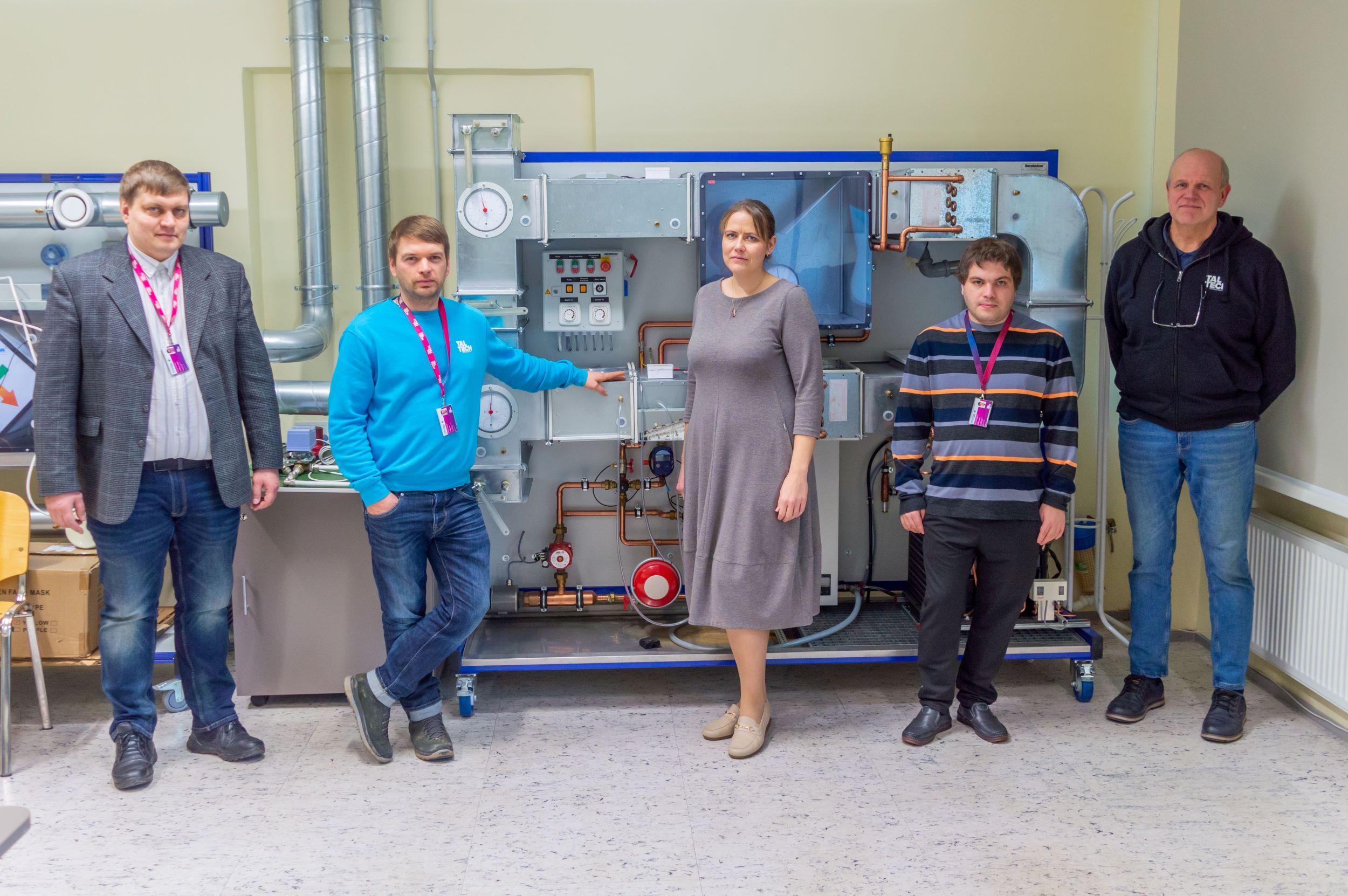
A significant part of the project focuses on ventilation systems, as their performance has a direct impact on indoor and outdoor air quality as well as energy consumption. UrbanBREATH analyses the functioning of ventilation systems across various urban stakeholders, including residents, property owners, infrastructure operators, and utility service providers. According to the project’s scientific hypothesis, air quality data can be used to assess ventilation efficiency and to implement smart automation strategies that improve air quality while simultaneously reducing energy consumption and the carbon footprint of buildings.
Furthermore, a predictive and preventive maintenance system will be developed to help optimise the effectiveness of ventilation filters and reduce air pollution in cities. Real-time alerts enable maintenance teams to respond to filter clogging before problems arise. This approach is particularly important for critical buildings such as hospitals, kindergartens, and prisons, where system reliability is essential. Preventive maintenance reduces downtime, improves energy efficiency, and supports broader initiatives aimed at promoting clean air in cities.
Heiko Põdersalu, Head of the Virumaa Innovation Centre of Digitalisation and Green Technologies and project manager, emphasises:
“UrbanBREATH gives us the opportunity to understand air quality in far greater detail than before and to bring a science-based approach directly into urban management. Thanks to the sensor network and real-time data, we can assess how different buildings and urban structures affect air movement and quality. Our goal is to provide solutions that help residents, businesses, and local governments make better decisions to ensure a clean-air urban environment.”
The UrbanBREATH consortium is led by the Norwegian University of Science and Technology (NTNU). Project partners include TalTech’s Virumaa College, Luleå University of Technology (Sweden), and the companies Naukatek AS (Norway) and SkatKeskus AS (Estonia).

The research is co-financed by the European Union and the Estonian Research Council through the Mobilitas 3.0 programme (MOB3PRT28).