
The election of Academy member Tarmo Soomere to the European Academy of Engineering (EAE), one of the world’s leading engineering organisations, in the field of Civil and Environmental Engineering is a significant international recognition for Estonian engineering.
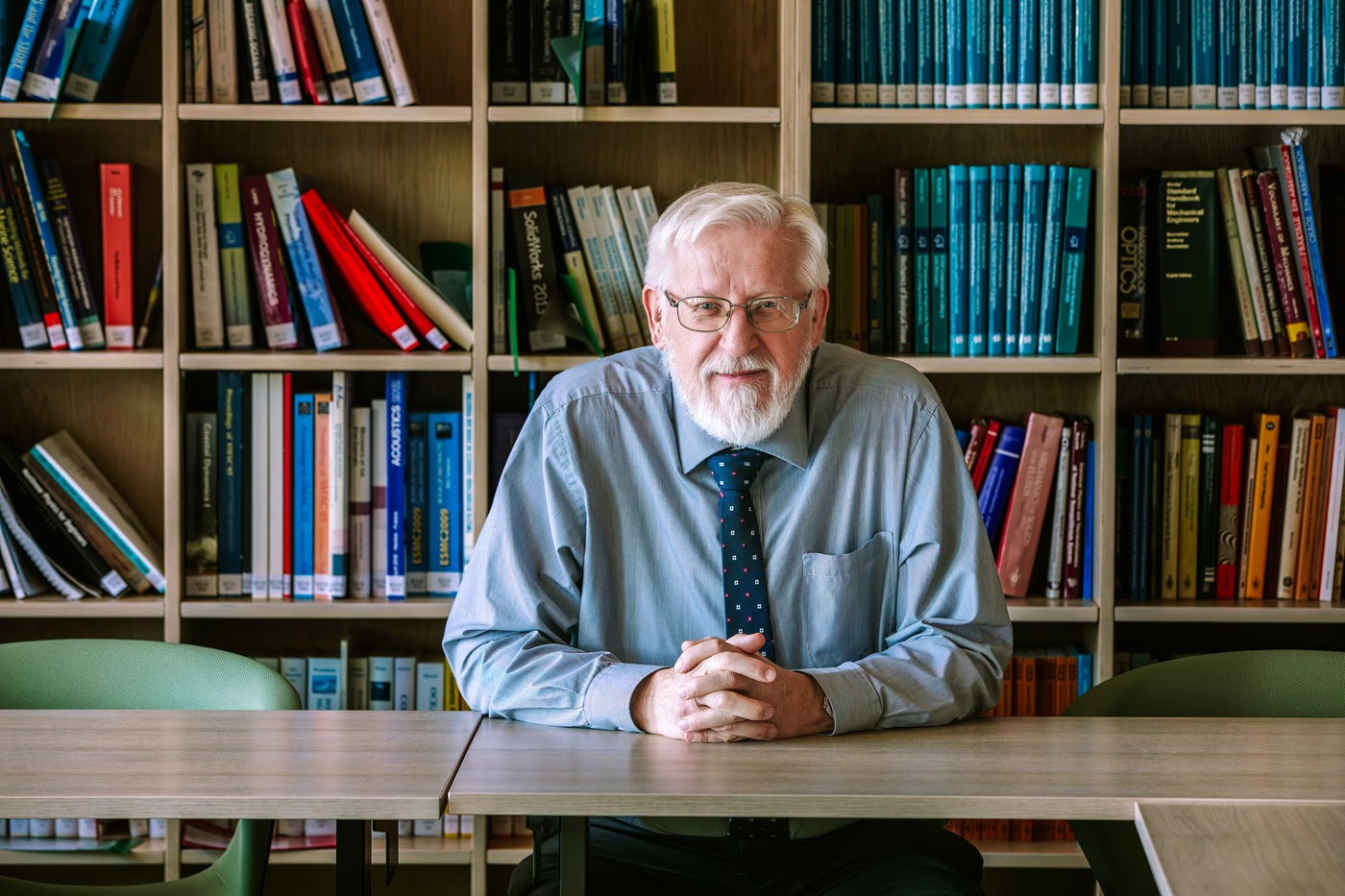
“Of course, I am deeply honoured by recognition,” said Tarmo Soomere, Professor at Tallinn University of Technology and Chairman of the Council of the Estonian University of Life Sciences. “More importantly, it is a recognition of Estonian engineering as a whole. The leading experts and achievements in the field are highly visible in Europe and around the world through outstanding applications.”
According to Soomere, the success story of Estonia’s e-state is only the tip of the iceberg, with a much broader and more substantial foundation beneath the surface. “For example, Ahto Buldas’s work laid one of the foundations for the development of Bitcoin and other cryptocurrencies, while Skype was created and grew here in Estonia.”
For Soomere, the essence of engineering lies in turning knowledge and ideas into tangible value. “Indeed, we must first create value in the sense, but these should be translated into concrete benefits as often as possible,” he explained. “This is a golden rule of engineering and a principle that largely shapes the development of the field.”
Broader and tangible benefits also go hand in hand in Academy member Soomere’s own research in coastal engineering. “More and more people have chosen to live near the sea, while rising ocean levels are placing increasing pressure on coastal areas and waves carry enormous amounts of energy towards the shore,” he said. “This makes coastal management and protection a complex task that requires both a deep understanding of the processes involved and a great deal of common sense.”
The impact of climate change is becoming increasingly evident on the shores of the Baltic Sea as well, with the recent flooding in Pärnu being one example. Academy member Soomere therefore pays particular attention to wave dynamics in coastal engineering and coastal processes, as well as to marine meteorology. He was among the first to recognise the role of ship-generated waves not only as a potential hazard but also as an important source of information.
Tarmo Soomere has previously received international recognition in the field of engineering. In 2022, the International Society for Engineering Pedagogy (IGIP) elected him an honorary member.
President of the Estonian Academy of Sciences Mart Saarma highlighted the exceptionally high calibre of the EAE’s membership. “In 2026, a total of 147 new members from around the world were elected to the Academy, 51 of whom are recipients of major international awards, including the Nobel Prize, Fields Medal, Turing Award, Breakthrough Prize, Wolf Prize and Eni Award. Tarmo Soomere’s election to this distinguished group is a major professional recognition both for him and for Tallinn University of Technology’s achievements in engineering,” he said. “It also strongly supports the Estonian Academy of Sciences’ current strategy of advancing engineering sciences in Estonia and promoting technology transfer from universities to industry.”
“Tarmo Soomere is an excellent example of a scientist who combines profound scientific expertise, an engineering mindset and a sense of responsibility towards society,” said Tiit Land, Rector of Tallinn University of Technology. “This special recognition also demonstrates that research conducted in Estonia is of world-class quality and that our knowledge and experience are valued in Europe’s most influential scientific networks.”
Rector of the Estonian University of Life Sciences Ülle Jaakma emphasised Tarmo Soomere’s dedication and thoroughness in all his roles and endeavours. “We greatly value his work as Chair of the Council of the Estonian University of Life Sciences and his contribution to shaping Estonia’s higher education and research landscape. Equally noteworthy are Soomere’s openness to collaboration, his ability to apply his knowledge across different fields of research and the economy, and his courage in standing by his views,” said Ülle Jaakma.
Founded in Gothenburg, Sweden, in 1992, the European Academy of Engineering brings together leading scientists and experts from around the world. Its aim is to provide independent and authoritative expert advice on global, regional and national issues.
More information about the European Academy of Engineering is available on the EAE website.