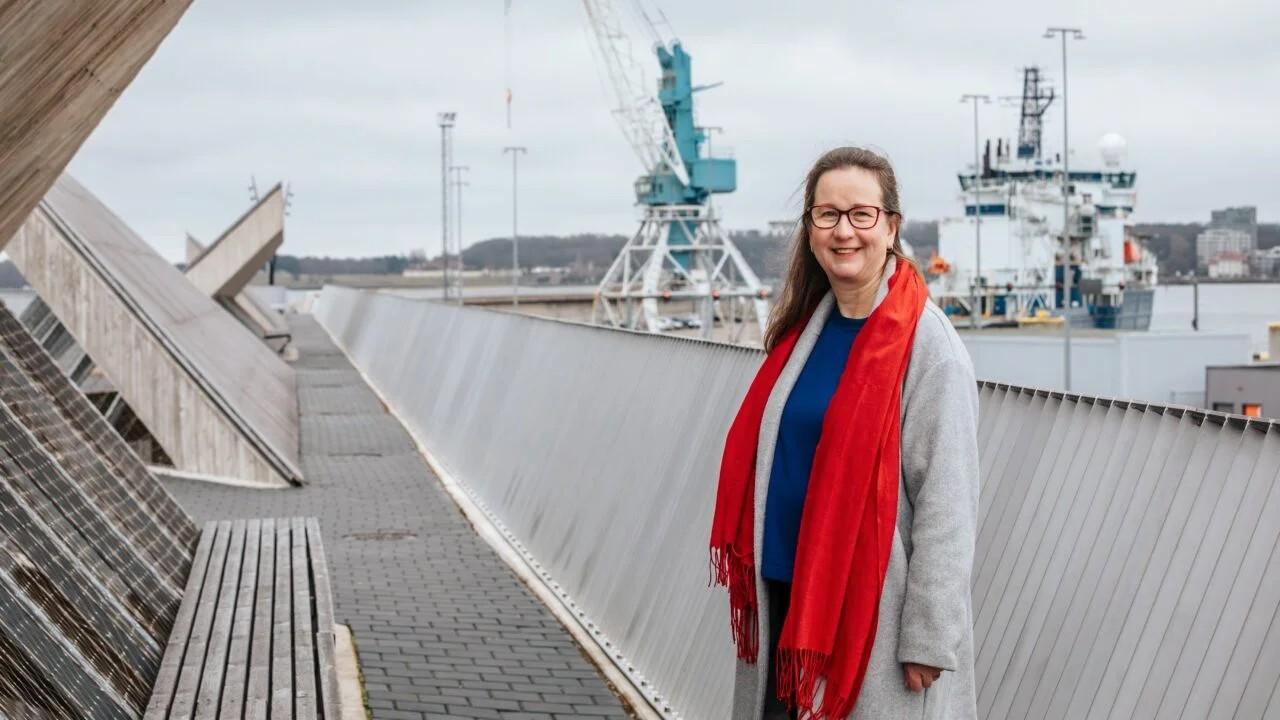
For Professor Ulla Tapaninen, the decision to work at TalTech Estonian Maritime Academy was never simply about moving from Finland to Estonia. It was about finding a place where maritime innovation, digitalisation and real-world cooperation happen fast. Today, she is one of the professors lecturing in the international master's programme Maritime Digital Solutions, which provides students with top-level preparation for developing and leading innovative solutions in the maritime sector.
As a Full Professor of Maritime Transport at Tallinn University of Technology and head of the Maritime Transport Research Group at the Estonian Maritime Academy, Tapaninen has spent years working across the international maritime sector. What drew her to Tallinn was the opportunity to work in an environment where the university, maritime companies and public institutions are closely connected - and where new ideas can quickly become reality.
In this interview, she explains why maritime digitalisation is transforming the global shipping industry, why the Baltic region is becoming a testing ground for innovation, and why international students should look toward Tallinn when planning their future in maritime.
What first attracted you to TalTech Estonian Maritime Academy?
“What attracted me was the atmosphere. Estonia is a small country, but people here are fast-moving and hardworking. When there are targets, actions follow quickly. Things actually happen.
I had already worked with Estonian maritime researchers since around 2007-2008, so I knew the people and the environment. But what convinced me was the feeling that this is a place where you can create new ideas and start new things.
Many universities around the world can be very traditional and slow to change. TalTech felt different. It had a business-minded and fast-growing atmosphere that I was looking for.”
According to Tapaninen, Estonia’s size is actually one of its biggest strengths.
“This is the only maritime university in Estonia and the only technical university in the country. What makes Estonia unique is the direct connection between the university, companies and the public sector.”
She also highlights the important role of the Estonian Maritime Cluster in bringing academia and industry together.
“When the Estonian Maritime Cluster started, it was like a blessing for us because suddenly there was one place where academia and companies could meet naturally and exchange ideas.”
Tapaninen points out that nearly all of her PhD students have worked in Estonian maritime companies before entering academia.
“That means the research is meaningful. They understand where the sector is going and what companies actually need. We constantly discuss real-world problems and practical solutions.”
What has surprised you most positively about working and teaching in Estonia?
“The students,” Tapaninen says immediately.
“Especially master’s students. Most of them already have experience working in maritime companies, shipping, the Navy or cruise operations. They bring real-life perspectives into discussions.
Sometimes students tell me about technologies their companies are testing. Sometimes they challenge my ideas completely and explain why something would never work in practice. That interaction is incredibly valuable.”
She describes Estonia itself as a kind of living laboratory for maritime innovation.
“From my perspective, the whole country is like a small lab. We can test ideas quickly, work directly with industry and see real impact.”
What makes Tallinn an attractive place for international students today?
According to Tapaninen, Tallinn offers international students a rare combination of academic opportunities, strong industry connections and an excellent quality of life.
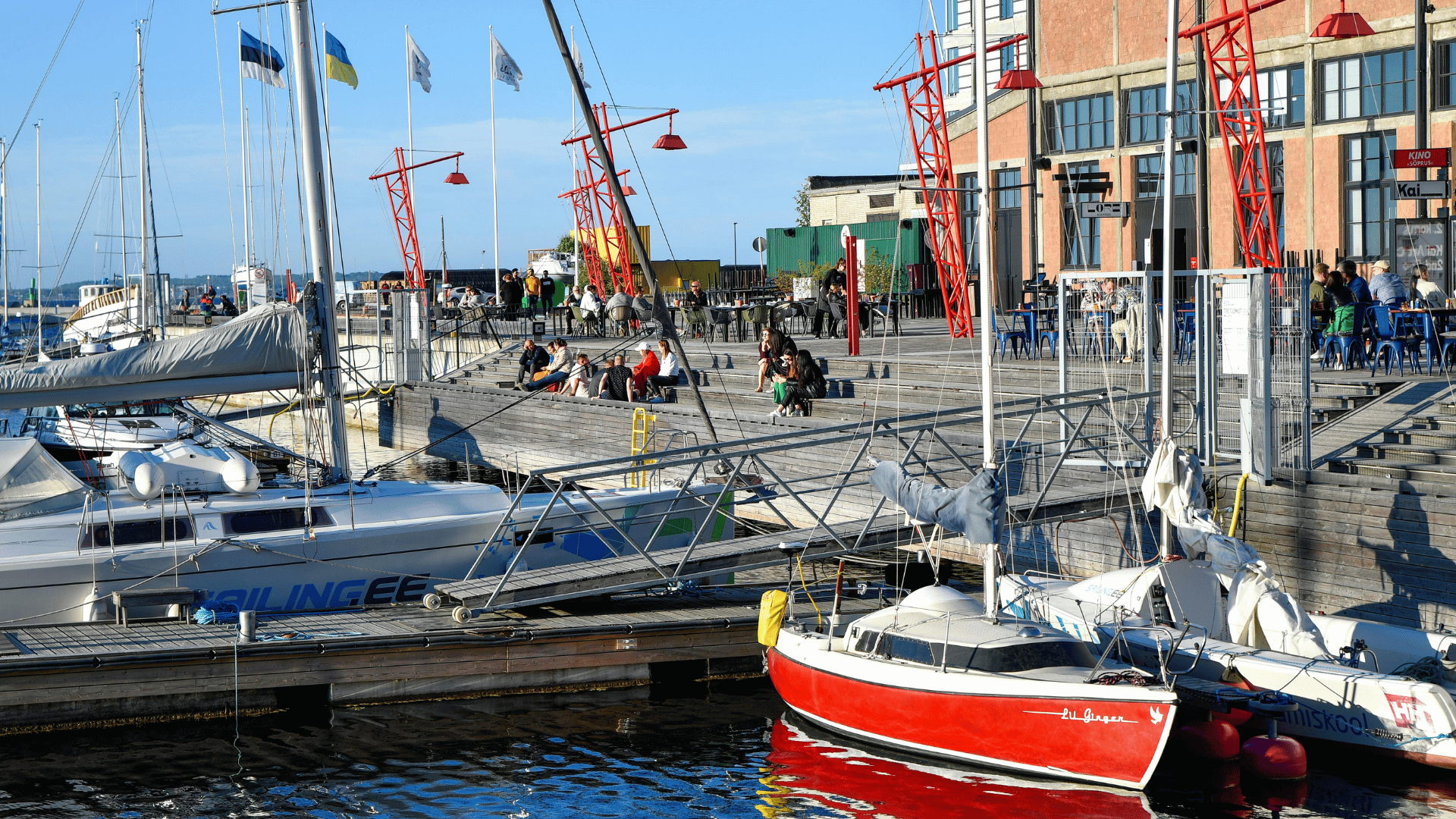
“Tallinn is an incredibly lively city. The cultural life, restaurants, concerts and creative areas like Telliskivi and Noblessner are amazing compared to the cost of living.
If you want a city that is international, easy to navigate and full of opportunities, Tallinn is a very good place to study and live.”
She also encourages international students to actively engage with the local community during their studies.
“You have to be open-minded and active. Join student organisations, hobbies or part-time jobs. Don’t wait for people to pull you in automatically. The more active you are, the more opportunities you create for yourself.”
Tapaninen adds that while Estonians may seem reserved at first, relationships built here are often strong and long-lasting.
Why is maritime digitalisation such an important topic today?
According to Tapaninen, shipping has gone through a fundamental transformation during the last decade.
“For a very long time, shipping was already the cheapest form of transport, so there was little pressure to optimise operations. Fuel was cheap and inefficient systems were accepted.
But everything changed with the sulfur regulations in 2015.”
The new environmental regulations forced shipping companies to rethink efficiency, fuel use and emissions.
“That was the moment when the sector realised we needed smarter systems. Digital tools suddenly became essential.”
She explains that digital systems can dramatically improve efficiency across ports and supply chains.
“With digital applications, the maritime sector has already reduced CO₂ emissions significantly. And this is only the beginning.
Now we are entering the AI era, where we can predict vessel arrivals, optimise supply chains and make shipping far more efficient.”
She shares an example from the Port of Helsinki, where digital systems improved cargo handling efficiency year after year without physically expanding the port.
“That is the power of digitalisation. You improve operations fundamentally without building more infrastructure.”
What skills will future maritime professionals need most?
Tapaninen believes future maritime professionals will need both traditional maritime understanding and modern digital competence.
“You still need to understand the basics - ships, ports, navigation, logistics and regulations. But at the same time, the sector increasingly needs IT specialists, engineers, data analysts, lawyers and sustainability experts.
Shipping is no longer only about working at sea.”
How will AI reshape careers in the maritime sector?
“I see AI as part of a long continuum,” Tapaninen explains.
“Automation has already been transforming maritime work for decades. Engine rooms today look completely different from when I started in the sector.”
Still, she does not believe AI removes the need for people.
“Artificial intelligence is also a kind of ‘stupid intelligence.’ It still needs humans to guide it, define problems and make decisions.
The jobs are changing — becoming more focused on supervising systems, analysing data and designing solutions.”
Why is this a particularly interesting time for young professionals to enter maritime digitalisation?
“We are experiencing a major technological leap,” Tapaninen says.
“It is similar to when personal computers or the internet first changed society. Nobody fully knows yet how AI will reshape the maritime sector, which makes this a very exciting time.”
For students entering the field now, she sees enormous opportunity.
“Young professionals have the chance to grow together with these technologies from the very beginning.”
What makes the Maritime Digital Solutions programme unique in the Baltic region?
Tapaninen believes the Baltic Sea region is one of the world’s most advanced maritime innovation environments.
“We already had strict environmental regulations years before many other regions. That forced companies here to innovate earlier than others.
Many digital and environmental shipping solutions were first developed in this region.”
She describes Estonia as a place where companies are willing to test new ideas quickly.
“We have highly advanced maritime companies, a strong innovation ecosystem and a culture where new ideas move quickly into practice.”
What kind of future can graduates help build?
According to Tapaninen, graduates with digital maritime competence will become increasingly valuable across the entire sector.
“Shipping companies need people who can improve efficiency and reduce costs with digital tools and AI solutions.
But this knowledge is also needed in ports, public administration, technology companies and sustainability projects.”
She sees maritime digitalisation as a future-proof career path.
“The maritime sector is constantly evolving. Shipping companies must continuously adapt, innovate and stay ahead of global competition. That creates continuous demand for innovation and skilled people.”
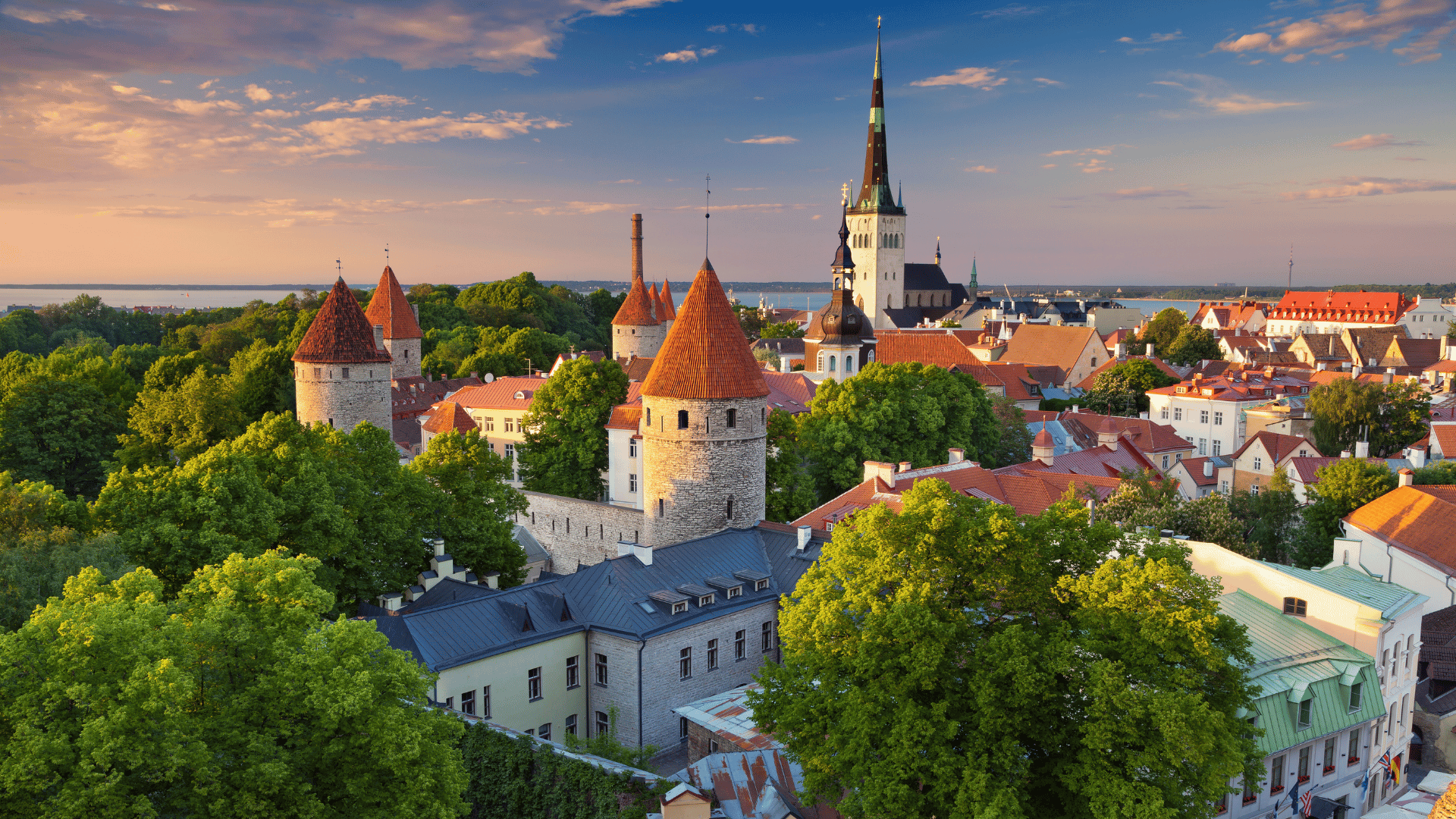
“Tallinn is a lively place.”
If she had to summarise why international students should choose TalTech Estonian Maritime Academy in one sentence, Tapaninen returns to the same idea that first brought her to Estonia herself:
“This is a place where ideas move quickly into practice, where the university and maritime industry are strongly connected, and where students can actively build their future while living in a vibrant international city.”
For students looking toward the future of shipping, sustainability and digital transformation, Tallinn is becoming far more than a study destination - it is a place where the future of maritime is already being built.