
BALTIC ELECTRONICS CONFERENCE 2026
Celebrating 20 Editions of Innovation in Electronics and Embedded Systems

Conference Proceedings Password protected.
BEC2026 UPDATE - September 16: BEC2026 registration is now closed.
BEC2026 UPDATE - September 1: Early Bird registration is now closed. Regular registration is still open until September 15, 2026!
BEC2026 UPDATE – July 21: The free accommodation allocation has now reached its limit. Conference participants are kindly asked to arrange and pay for their own accommodation. Please see the accommodation link!
Accommodation will still be included for participants who will register for a Full Conference Package.
Participants who purchased a conference ticket including accommodation before July 22 have secured 2 nights of complimentary accommodation (October 6–8, 2026). For participants who received a follow-up confirmation request, the accommodation is also considered confirmed once they have received a confirmation email from the BEC2026 Organizing Committee.
Coming Soon – October (5) 6–8, 2026
Doctoral School on “DeepTech Commercialization” – October 5, TalTech Student House (STU), Tallinn, Estonia
Baltic Electronics Conference 2026 (BEC2026) October 6-8 – Tallinn, Estonia
Celebrating 20 Editions of Innovation in Electronics and Embedded Systems
The Baltic Electronics Conference 2026 (BEC2026) marks its 20th edition, continuing a proud tradition as a leading event for electronics and embedded systems in the Baltics-Nordics. For nearly three decades, BEC has been the meeting point for academia, industry, and innovators, driving research and technology that shape the future.
Why Choose BEC2026?
- Legacy & Credibility: With 20 editions behind us, BEC offers a proven platform for scientific exchange and visibility in the electronics community.
- Distinct Regional Focus with Global Reach: Hosted in Estonia, one of the world’s leading digital nations and a recognized IT innovation hub, BEC2026 connects you to top researchers and companies from the Baltic Sea region, Europe, and beyond.
- Interdisciplinary Scope: Present your work across diverse domains: communication and cognitive systems, biomedical systems, cyber-physical and embedded systems, dependability and security, electronics devices and energy conversion technologies, instrumentation and signal processing.
- Strong Academic-Industry Synergy: Engage with researchers, industry, and startups, opening doors to collaborations and technology transfer.
- Impactful Discussions on Sustainability & Reliability: Join conversations that matter—how electronics can enable sustainable, resilient, and intelligent systems for tomorrow.
- Special 20th Edition Highlights: Celebrate this milestone with exclusive sessions and a vibrant social program.
- Focused Opportunities for Emerging Talent: BEC2026 is especially designed to empower PhD students and young professionals through free registrations, dedicated activities, mentoring sessions, and networking opportunities that accelerate careers and foster innovation.
BEC2026 is more than a conference, it is a unique platform to showcase your research, influence future technologies, and be part of a 20-edition legacy of innovation.
Stay tuned for more information!
Contact
Submission Guideline & Paper Format
Submission Guidelines
Prospective authors are requested to submit a full paper of four to six A4 pages, including illustrations and references, in English and in PDF format. Four pages are included in the registration fee; additional pages (up to a maximum of six pages) are subject to an extra charge.
Accepted papers will be published as submitted in the Conference Proceedings that will be provided to all participants at the beginning of the Conference. To have the paper included in the final program, proceedings, and IEEE Xplore, the presenting author must register as a regular attendee (or as a degree student if applicable).
As an IEEE policy, the papers by no-show authors will not be included in the IEEE Xplore.
For further information concerning the scientific program and submitted contribution, please contact Prof. Yannick Le Moullec or Prof. Peeter Ellervee.
Paper Format
The purpose of a conference template is to provide a consistent format for papers appearing in the conference proceedings. IEEE strongly encourages the use of the conference manuscript templates provided below.
IEEE conference templates contain guidance text for composing and formatting conference papers. Please ensure that all guidance text is removed from your conference paper prior to submission to the conference.
Failure to remove template text from your paper may result in your paper not being published.
Submission Site
The submission and reviewer processes will be managed by easychair.org on this: EASYCHAIR LINK
If you have used this system before, you can use the same username and password. If this is your first time using EasyChair, you will need to register for an account by clicking the "I have no EasyChair account" button. Upon completion of registration, you will get a notification email from the system and you are ready for submitting your paper. You can upload and re-upload the paper to the system by the submission due date. In case of any problem, please contact the chair for assistance, or email [email protected]
Topics
BEC2026 is calling for contributions in the following tracks.
Communication and Cognitive Systems
5G/6G technologies; Cognitive networks; Automation of networks (e.g. self-organizing, self-healing, etc.); RF and optical aspects; Jamming, spoofing, and counter-measures; Cognitive Radio and Software Defined Radio; IoT; Sensor networks; Vehicular and aerial communication and networks; Public safety networks; Implementation methods, energy-efficient/low-power platforms; Energy harvesting (incl. transient/approximate computing); Channel Modelling, Coding and Information Theory, Communication Systems, Detection and Estimation, Massive MIMO, Physical Layer Security, Wireless Power and Information Transfer, Cooperative Communication and Networking, Wireless Network Security and Privacy, Machine Learning for Wireless Applications; implementations and demonstrations.
Embedded and Cyber-Physical Systems
Embedded hardware and software systems design, integration, test and validation. Analog, digital and mixed IC design for implementing cyberphysical systems. Simulation, synthesis methods and tools for embedded devices. Secure embedded systems and software, trustworthy integrated circuits. Low power embedded systems. Multi- and many-core systems. Reconfigurable and heterogeneous multiagent and adaptive embedded systems. Real-time applications of cyberphysical systems. Embedded machine learning and artificial intelligence technologies and applications.
Power Electronics and Sustainable Energy Systems
Theoretical and practical aspects of implementation of power converters in industry and transportation. Modelling, simulation and control of power electronic systems. Distributed power generation, integrated renewable systems, smart grids, microgrids, hybrid- and full-electric vehicles. Electrical machines and drives. Mechatronics. Power systems and high-voltage engineering. Emerging photovoltaic technologies and concepts (including tandem, bifacial, semi-transparent etc.) Nano-, micro-, opto-, and thermoelectric, devices: characterisation, modelling and simulation. Sensor- and low power solutions. Wide-band-gap solutions, photonics, thermoelectricity. Energy harvesting.
Sensing, Data Acquisition, and Intelligent Signal Processing
Data acquisition, sensors, signal and data processing, Non-destructive Testing (NDT), Structural Health Monitoring (SHM) and Condition
Monitoring (CM) applications, system identification, image processing, remote sensing, multimedia; navigation and positioning, radar, sonar; instrumentation and measurement devices and systems, hardware-, software- and integration aspects.
Bioinstrumentation, Smart Materials, and Adaptive Automation
Adaptive liquid handling automation; Adaptive automation in bioanalysis/synthesis; Machine learning for image analysis/instrument control; Nanomaterials & smart surfaces in biosensing; Printed electronic sensors/actuators (e.g. jet, screen); Portable platforms (e.g. Lab-on-a-Chip, Point-of-Care devices, wearables); Electrode surface functionalization (e.g. antibody, enzyme, DNA, nanostructure scaffolds)
Cybersecurity
Cybersecurity issues across all the other above topics.
Keynote Speakers
Alexandros K. Pantazis - The Foundation for Research and Technology - Hellas (FORTH)
Alexander Fish - Emerging Nanoscaled Integrated Circuits and Systems Impact Center (EnICS)
Riku Jäntti - Department of Information and Communications Engineering - Aalto University

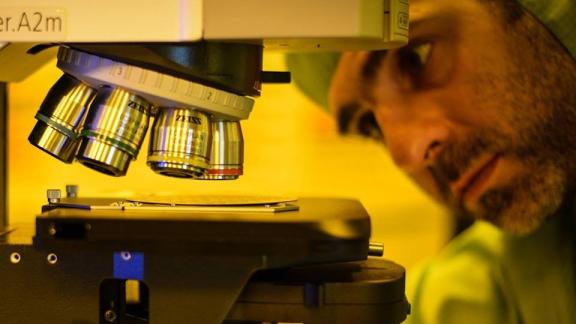
Alexandros K. Pantazis
Alexandros K. Pantazis is an Associate Researcher at FORTH and Product Development leader in biosensors, smart wearables and point-of-care diagnostics. His work spans from device/ product design to system integration, and their development from laboratory prototypes to market-ready solutions.
Alexander Fish
Alexander Fish is the Vice Dean of Engineering for Innovation at Bar-Ilan University and serves as a co-director of the EnICS Impact Center. His research interests include energy-efficient and high-speed digital VLSI chips, biomedical circuits, embedded memories, and cryogenic CMOS circuits.


Riku Jäntti
Riku Jäntti is a Full Professor of Communications Engineering at Aalto University, Finland, and a Senior Member of IEEE. His research interests include machine-type communications, disaggregated radio access networks, backscatter communications, RF sensing and positioning, and quantum communications.
Invited Papers
Patrice Salzenstein
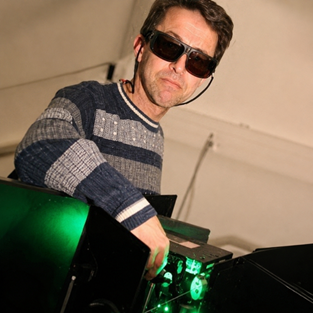
CNRS, Université Marie et Louis Pasteur, FEMTO-ST UMR 6174, 25030 Besançon, France
e-mail: [email protected] ORCID: https://orcid.org/0000-0003-0207-5279
Abstract: The continuous development of advanced electronic and optoelectronic instrumentation has led to increasingly demanding requirements in terms of precision, traceability, and reliability of measurements. In modern metrology systems, uncertainty evaluation has become a fundamental component not only for validating experimental results but also for ensuring comparability among laboratories and industrial measurement platforms worldwide. This paper presents an overview of uncertainty estimation methodologies applied to instrumentation systems in electronics and optoelectronics, with emphasis on phase noise metrology, microwave photonics, and Brillouin spectroscopy measurements. The work is based on several recent studies devoted to the rigorous analysis of measurement uncertainty in complex optoelectronic systems. Particular attention is given to phase noise characterization techniques using phase-detector-based measurement systems and optoelectronic oscillators operating in the microwave domain. These systems are highly sensitive to multiple uncertainty contributors including thermal fluctuations, detector nonlinearities, calibration limitations, frequency drift, environmental perturbations, and data acquisition instabilities. The paper discusses practical approaches for identifying dominant uncertainty sources and for propagating uncertainties according to the framework established in the Guide to the Expression of Uncertainty in Measurement (GUM). A significant part of the discussion focuses on uncertainty evaluation in scanning tandem Fabry-Pérot interferometer measurements used for Brillouin frequency shift characterization. Such measurements are particularly relevant for material science, optical fiber sensing, and microwave photonics applications. The influence of spectral fitting procedures, instrumental linewidth, scanning nonlinearity, and signal-to-noise ratio on the final uncertainty budget is analyzed. The presented methodology demonstrates how reliable uncertainty estimation contributes directly to improving the reproducibility and credibility of experimental observations. The paper also highlights the broader role of international comparisons in maintaining consistency within the global metrology infrastructure. Comparisons between national metrology institutes and research laboratories are essential for establishing confidence in measurement capabilities and ensuring traceability across different technological domains. The relationship between uncertainty analysis and international equivalence of measurements is examined through recent developments in electronic and photonic metrology. Beyond the theoretical aspects, practical recommendations are proposed for implementing uncertainty estimation procedures in laboratory instrumentation systems. Strategies for uncertainty budgeting, calibration chain optimization, statistical treatment of repeated measurements, and long-term stability assessment are discussed. The paper emphasizes that uncertainty evaluation should not be considered as a final administrative step of experimentation, but rather as an integral part of instrument design, measurement strategy, and data interpretation. Finally, perspectives are provided on future challenges associated with emerging high-frequency and photonic instrumentation, including ultra-low phase noise oscillators, integrated microwave photonics, and AI-assisted measurement systems. As instrumentation performance continues to improve, uncertainty analysis will remain central to guaranteeing the reliability, interoperability, and scientific validity of next-generation electronic and optoelectronic measurements.
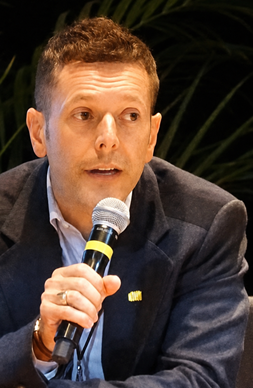
Fabian Vargas obtained the Ph.D. Degree in Microelectronics from the Institut National Polytechnique de Grenoble (INPG), France, in 1995. At present, he is Senior Scientist at IHP - Leibniz Institute for High Performance Microelectronics, Germany, where he works on the design of on-chip sensors, cross-layer resilience and silicon lifecycle management for critical-application systems. Vargas has served as Technical Committee Member and Guest-Editor in many IEEE-sponsored conferences and journals. He holds several patents and published over 300 refereed papers. Vargas was researcher of the BR National Science Foundation from 1996 to 2023. He co-founded the IEEE-Computer Society Latin American Test Technology Technical Council (IEEE LA-TTTC) in 1997 and the IEEE Latin American Test Symposium (LATS) in 2000. He received the Meritorious Service Award of the IEEE Computer Society for providing significant services as chair of these groups. Vargas is Golden Core Member of the IEEE Computer Society and Senior Member of the IEEE.
Summary:
This talk addresses the background mechanisms impacting resilience of ICs. It shows how silicon lifecycle management (SLM) closes the loop when combined effects are unknown or untestable. Shrinking nodes and stacking heterogeneous dies do open many new failure modes (thermal, EMI, aging, SEU, process variation, PDN/noise coupling, electromigration, cross-talk, TSV/interposer faults) and many combined effects simply cannot be exhaustively predicted before deployment.
This tutorial discusses such failure modes and proposes mitigation solutions. Such techniques are based on: (a) the massive deployment of on-chip cross-layer sensors that are placed in strategic points of the chiplets and interposer, (b) a data wrapper interface & management hub that is responsible to process and store the collected data from the sensors in a way to create an in-mission history of events, and (c) an on-chip analytics engine.
In this scenario, this talk illustrates the deployment of SLM in embedded memory IPs. It presents a closed-loop approach to memory aging management that couples a fleet of on-chip aging sensors with a Built-In Self-Repair (BISR) strategy for 5nm FinFET-based SRAM IP cores. The aging sensor detects memory response time degradation before a functional error manifests. This solution represents a complete detect-and-repair framework for silicon lifecycle management (SLM).
Tutorial & Special Sessions
Panel Discussion: Intelligence from Edge to Silicon: IoT, AI and Chip Design
Join us on October 6 for a panel discussion exploring the connections between the Internet of Things, artificial intelligence and chip design.

Panelists: Ander Allas, Andres Mellik, Arno Kolk, Huber Flores, Jaan Raik and Vahur Kampus.
This panel is supported by the EU co-funded project TEM-TA138, Sustainable Artificial Internet of Things (SAIoT).
NATO Science for Peace and Security project - Passive Radar Observation and DeTECTion of UAVs via Cellular Networks (PROTECT)
On October 7, as part of the BEC 2026 Conference, a tutorial will be organized under the NATO Science for Peace and Security project — Passive Radar Observation and DeTECTion of UAVs via Cellular Networks (PROTECT). This will bring together leading international researchers and experts to discuss emerging technologies for UAV monitoring, mmWave sensing, and drone detection using cellular networks. The PROTECT project focuses on identifying drones operating through cellular networks in both cooperative and uncooperative scenarios using AI-driven techniques, passive radar systems, and broadcast signal analysis. The project also addresses the detection of individual drones and drone swarms for applications in security, defense, law enforcement, and public safety. The tutorial features Prof. Maurizio Magarini (Politecnico di Milano, Italy), Prof. Rizwan Ahmad (National University of Sciences and Technology – NUST, Pakistan), and Prof. Muhammad Mahtab Alam (Tallinn University of Technology, Estonia).
Followed by the tutorial, there will be a panel discussions with the industry experts and policy makers from NATO-SPS.
Special Session: TAICHIP – Boosting TalTech’s Capacity in Reliable and Efficient AI Chip Design
“TAICHIP – Boosting TalTech’s Capacity in Reliable and Efficient AI Chip Design” is a Horizon Europe Twinning action funded by the European Union. The topic and format of the special session will be announced later.
Important Dates
- The conference will take place on October (5) 6–8, 2026, in Tallinn, Estonia.
- Deadline for papers submission -
May 25, 2026June 3, 2026(ENDED) - Notifications -
June 20, 2026July 5, 2026.Postponed for a few days.Sent on July 7 - Final papers - August 31, 2026
- Deadline for early bird registration - August 31, 2026
- Deadline for regular registration -
September 18, 2026September 15, 2026 - October 5, 2026 - “DeepTech Commercialization” for PhD students in TalTech Student House (STU)
- October 6-8, 2026 - Conference
Conference fees and registration
Accommodation
Conference participants are asked to make their hotel reservations and pay for their accommodation at any hotel.
For our guests in the conference center, we have a special rate at Nordic Hotel Forum:
Nordic Hotel Forum, a modern four-star superior business hotel and the conference venue, is located in the heart of Tallinn, next to the UNESCO-listed Old Town. The hotel offers 258 spacious and comfortable rooms. Guests enjoy unlimited access to the 8th-floor leisure center with city views, a pool, sauna, steam bath, Jacuzzi, and a 24-hour gym. Dining, shopping, and entertainment are within walking distance. The hotel proudly holds the Green Key eco-label, reflecting its commitment to sustainability. Lennart Meri Tallinn Airport is located just 4 km from the hotel.
Bookings with special rate can be made via online link (please click). Special price is subject to availability.
In case of any questions please contact us by phone +372 6222 999 or e-mail [email protected]
Please mention code "BEC2026"
You can use the special rate a few days before and after the conference dates
Venue
The 20th Biennale of the BEC2026 will be held in charming Tallinn, the capital of Estonia, which is one of the best-preserved medieval cities in Europe. The Baltic Electronics Conference is organized by the Tallinn University of Technology (TalTech).
The event venue is Nordic Hotel Forum (****), a unique, non-chain, cozy and modern, nature-friendly hotel promoting anti-allergy concepts and renovated in 2021.
Address: Viru väljak 3,Tallinn, Estonia
Please note the changes in the traffic and public transportation in Tallinn City center. Go to the section: Plan Your Trip!
The venue is centrally located in the heart of the downtown with access to Old Town just behind the corner.
Plan Your Trip
Travel information, arrival in Tallinn, and how to get around here, are well described on the Visit Tallinn portal "Plan your trip".
One also finds updated advice on the events, eating out and other important details to make the most of your stay in Tallinn and prolong your stay before or after the conference.
Visit Tallinn: Arrival & departure - Visit Tallinn.
Public transport:
from the airport to the city center (about 30 min):
Bus no 2, detailed info -> Journey planner; Airport info
from the harbor to the city center (about 30 min):
Bus no 20A, detailed info -> Journey planner; Harbour info
Navigation and traffic for drivers: Waze
Tallinn helpline: 14 410
https://www.tallinn.ee/en/vanasadamatramm
Networking at Lennusadam – The Seaplane Harbour
Join us at Lennusadam – the Seaplane Harbour for a memorable networking event. Connect with participants, speakers, and industry leaders in a unique seaside setting, and explore new collaborations in a relaxed atmosphere.

Sponsors
Organization of the BEC2026 would not be possible without corporate supporters and technical sponsors.
If you are interested in supporting the event please contact [email protected] for options.
GOLD SPONSORS:

SILVER SPONSORS:

BRONZE SPONSORS:

SUPPORTERS AND PARTNERS

We are very grateful for your help and will make sure that it is noticed!
Project:
Cooperation between universities to promote doctoral studies (2021-2027.4.04.24-0003) is co-funded by the European Union.

History
- Baltic Electronics Conference 2024
- Baltic Electronics Conference 2022
- Baltic Electronics Conference 2020
- Baltic Electronics Conference 2018
- Baltic Electronics Conference 2016
- Baltic Electronics Conference 2014
- Baltic Electronics Conference 2012
- Baltic Electronics Conference 2010
- Baltic Electronics Conference 2008
- Baltic Electronics Conference 2006
- Baltic Electronics Conference 2004
- Baltic Electronics Conference 2002
- Baltic Electronics Conference 2000
- Baltic Electronics Conference 1998
- Baltic Electronics Conference 1996