
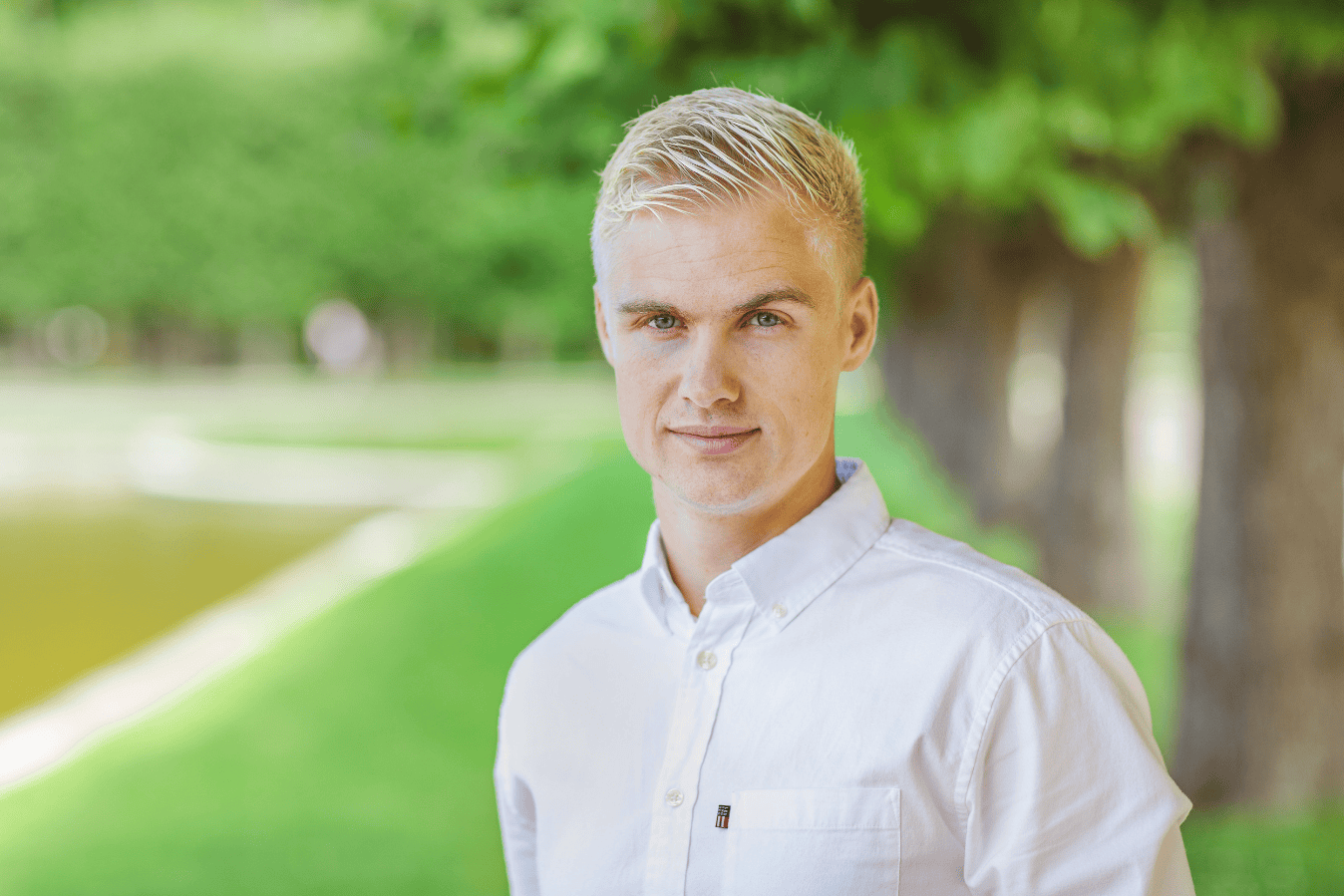
Alvian Hints is a first-year Entrepreneurial Management MBA student at the School of Business and Governance. Born, raised and educated in Tartu, he spent the ten years following his master's degree working as a civil engineer in Sweden. He currently works at the international company COWI. “In my free time, I stay active by playing sports. When I'm at home, my eight-year-old daughter helps me to quickly shift my focus back to family life after work,” he says.
You previously graduated from the Estonian University of Life Sciences with a degree in Civil Engineering. What motivated you to pursue a degree in entrepreneurship and management for your second master's?
Throughout my career, I have found myself in project management roles, which require an entrepreneurial mindset. At the same time, I have always wanted to build and develop my own company in the future. I believe that the knowledge I gain from these studies will enable me to make clearer and more precise decisions, and give me the confidence to implement them despite the uncertainty that often accompanies future choices.
Why did you choose the MBA in Entrepreneurial Management at TalTech for your second master's degree? Were there any other programmes you considered?
From a national perspective, I am interested in Estonian entrepreneurship. Several years ago, I first read about TalTech’s MBA programme in Postimees. The idea stayed with me, gradually maturing until I finally decided to apply.
I believe in the quality of Estonian education. This has enabled me to move abroad and compare it to other education systems. TalTech’s School of Business and Governance was therefore a logical choice for me, as it offers the opportunity to study in my home country while benefiting from the university’s strong international reputation and high prestige.
The demanding admission requirements and the programme's international AMBA accreditation — placing it among the top two percent globally, and making it the first AMBA-accredited programme in Estonia and the Baltics — ultimately confirmed my decision.
How satisfied are you with your choice so far?
Six months on, I am still very happy with my decision. I value my fellow students, the collaborative environment, and the highly competent and impressive lecturers. The pace of the studies and the level of knowledge encourage you to adopt the right mindset and take personal development seriously.
What has your experience with your fellow students been like?
I have spent much of my career working in Sweden, and sometimes I feel that I have become somewhat unfamiliar with Estonian work culture. However, my core values have remained unchanged, and I have always been transparent about my motivation for collaboration.
The students on the programme come from diverse backgrounds and are highly motivated and ambitious. They are the future leaders (CEOs) of industry, which makes discussions particularly meaningful and engaging.
How did you manage to combine working in Sweden with studying in Estonia? What has been the biggest challenge during your studies?
Like many other students, I have combined work and studies. I work at around 90 per cent capacity and dedicate the rest of my time to my remote studies. Travel is part of the experience, just as it is for others. Some live in Finland, some in France and some in Tartu. But we all come to study here.
Since I live in Stockholm, flights to Estonia are very frequent and convenient. I am accustomed to working across borders and communicating with colleagues in countries such as Lithuania and India, who are in different time zones. Therefore, working remotely does not present any obstacles for me. When I am in Estonia, I stay in a hotel-style dormitory near TalTech, which makes logistics particularly simple.
Balancing work and studies has helped me develop important skills such as time management and prioritisation, as well as the ability to accept that results are not always perfect. All areas of life — work, studies, the personal life and sports — require attention, so I have learned to take things one day at a time. I see this period as temporary and do not set myself excessive expectations in other areas of life.
Initially, the biggest challenge was adapting linguistically and operating in multiple languages at once while acquiring new vocabulary. However, I have found the learning process engaging and interesting, and these difficulties have gradually become less noticeable over time.
Which subjects or topics have caught your attention so far? Have you been able to apply anything directly to your daily work?
I have recently been thinking a lot about leadership topics, and I appreciate how all the subjects are logically connected. I feel that I am gradually developing the right mindset.
In my current role, I apply new knowledge daily in both internal and external communications. I also enjoy the economics and finance modules. Given my background, I compare them to structural mechanics. These are fundamental principles that you always need to rely on.
One advantage of working in a large organisation is that practical assignments allow me to immediately see how things work — or don't work — in real life. This alignment with reality enhances the value of knowledge and deepens understanding.
Coaching is also part of the programme. How has it contributed to your professional development?
Coaching has provided valuable feedback on my future direction and areas of focus, including skills that should be further developed. The personal development plan that has been created sets clear goals that are difficult to ignore.
Do you plan to participate in any extracurricular activities related to the programme?
Although I currently live in Sweden and have not yet had the opportunity to participate in networking events, I believe that networking is one of the most valuable aspects of an MBA programme. My goal is to take part in these events whenever possible and develop my professional network systematically.
Next year, the programme includes a study trip, which will be a valuable opportunity to expand my existing connections and meet students from the next cohort.
What advice would you give to a prospective MBA student who is still hesitating?
Definitely give it a try! Even if you already have an established career and are reading business books and news, as well as attending individual courses, an MBA is the most effective way to develop a leadership mindset and learn the right mechanisms for action.
I hesitated for several years myself, but now, six months into my studies, I feel the necessary “mental transformation“ is truly taking place every day. I believe that understanding fundamental principles, being aware of the ethical dimension of decisions and assessing risks consciously helps reduce future mistakes and provides both speed and confidence that you are moving in the right direction.
Applications for the Entrepreneurial Management programme and other programmes are open from 1 March 2026.
Explore the programme and apply now: taltech.ee/entrepreneurial-management