
Priit Eek has been appointed Assistant Professor of Structural Biology as of 1 September 2026.
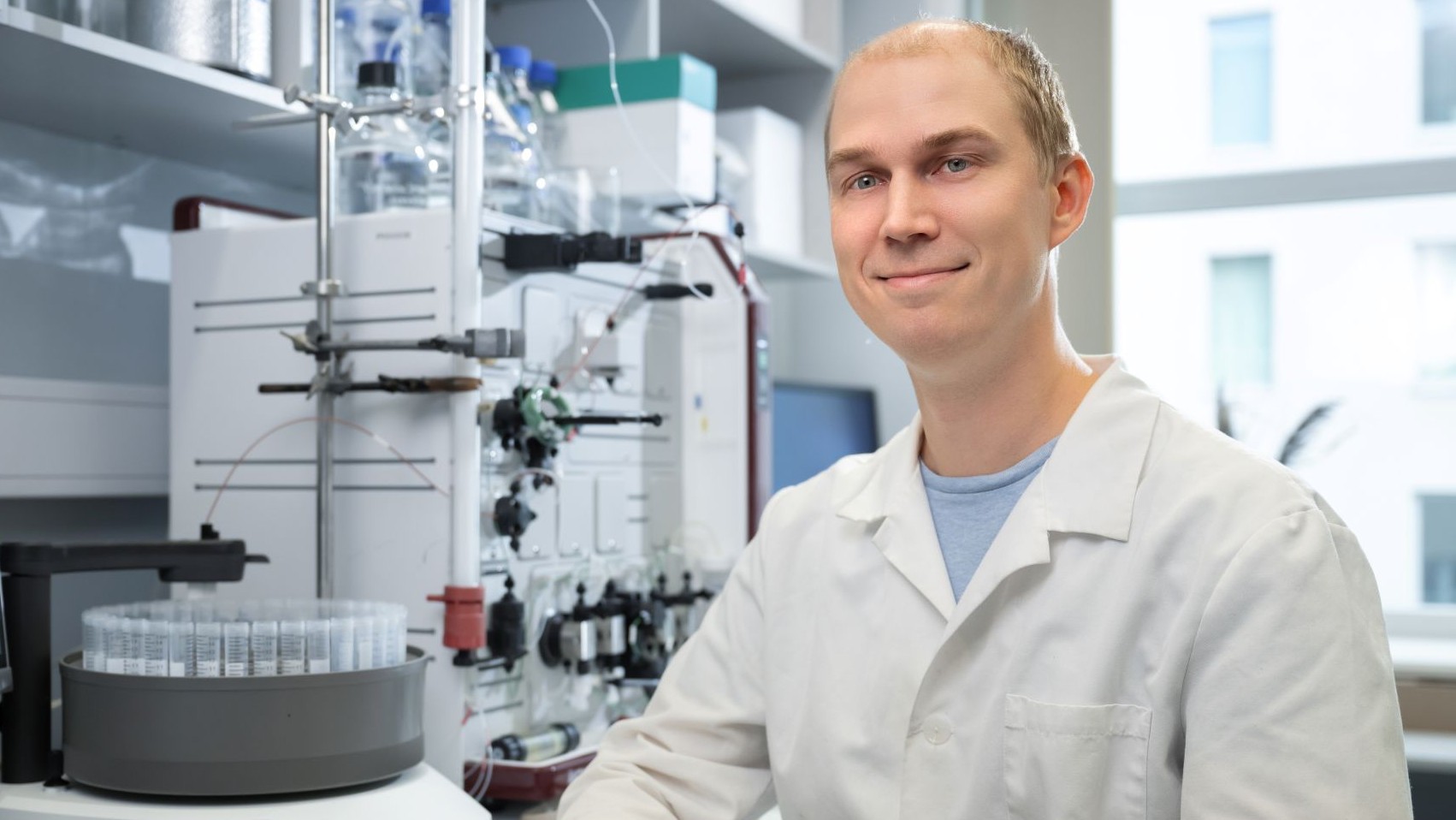
Please introduce yourself
I like to call myself a structural biologist because the field encompasses an interest in all living things, and more specifically in how proteins, nucleic acids and complexes of these large biomolecules are built at the molecular level. The precise structure of a molecule determines its properties, so understanding it helps us comprehend how life works. Ever since I was a child, I have enjoyed taking things apart, putting them back together and figuring out how they work. I try to carry that childlike curiosity with me every day.
I lead the Protein Design Research Group at the Department of Chemistry and Biotechnology. Our work is at the forefront of modern structural biology, focusing on ways to systematically and efficiently improve protein properties and create new proteins that can perform industrial functions in an environmentally sustainable way.
Which of your experience and expertise will be valuable in your role as a professor?
I was among the first researchers in Estonia to work on protein crystallography. During my master’s studies, I went to Louisiana State University in the United States to learn the method from a research partner. After returning to Estonia, I helped establish the country’s first protein crystallography laboratory at TalTech.
During my postdoctoral research, I focused on another important structural biology method – cryo-electron microscopy – using it to study mechanisms of gene regulation at Pennsylvania State University. At the same time, I expanded my expertise in computational algorithms for predicting and modifying protein structures. This field has also made enormous advances in recent years, driven by the rapid development of machine learning.
I have also gained experience in the private sector, working at AS TFTAK on the development of precision fermentation for proteins. This experience has given me a better understanding of the needs of Estonian entrepreneurs and industry.
I enjoy collaborating with other scientists, and I believe I have built a strong network of contacts both in Estonia and internationally. In addition to the work of our own research group, we currently have several collaborative projects underway, and I am always open to new ideas.
What would you like to achieve as a professor?
As an enthusiast of structural biology, I would like protein structure analysis to become more accessible and for our researchers to have better opportunities to expand their research into this field. Protein crystallography has historically had an intimidating reputation because sample preparation, crystallisation and the analysis of X-ray diffraction data are complex and time-consuming, and the outcome of an experiment has often been difficult to predict. Modern approaches, however, have made the crystallography workflow considerably easier, and it is no longer quite as daunting as it once was. In addition, computational tools have emerged – for example, AlphaFold for protein structure prediction – that can provide fairly reliable structural information within minutes, without even having to leave your computer.
My second goal is to establish expertise in protein design at TalTech to support our research and development activities in bioengineering and biotechnology. Nature provides us with many proteins, such as enzymes, that can be used in industrial biotechnological processes. However, these proteins are often not stable enough to withstand the demanding conditions found in industrial reactors. This is where protein design can help: it allows us to improve the properties of existing proteins and to create entirely new proteins with properties suited to industrial applications.
Has anything surprised you in your new position?
Since I have been associated with TalTech throughout my entire higher education journey, it would be difficult for the university to offer me any major surprises. Looking back, however, I have been pleasantly surprised by how smoothly I have settled into my role as a faculty member. This is a good opportunity to thank all my former lecturers, many of whom have since become valued colleagues. Thanks to them, taking on new responsibilities has never felt overwhelming, nor have I ever felt that I had to deal with my concerns on my own.