Aida Danielyan’s story reflects a transition from clinical medicine to digital innovation. With years of experience as a neonatologist caring for newborns in intensive care, she developed a strong foundation in healthcare while actively engaging with the community through education and outreach. Seeking a broader impact and a more balanced lifestyle, she chose to shift into the field of digital health. Now pursuing her MSc at TalTech, Aida is applying her clinical expertise to innovative solutions, including a startup aimed at improving neonatal care at home and strengthening communication between families and healthcare providers.
Please introduce yourself and tell us what was life like before coming to Estonia?
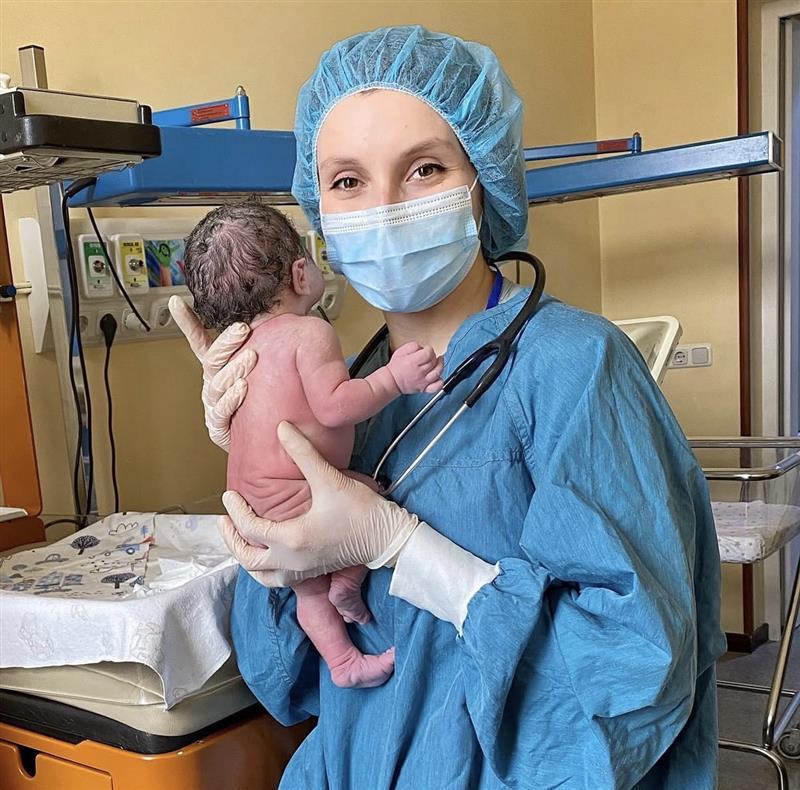
I am a medical doctor by profession, and before moving to Estonia, I worked as a neonatologist in a neonatal intensive care unit. I spent 3 years in clinical residency in neonatology, followed by around 4 years working as a senior neonatologist.
A neonatologist is a doctor who cares for and treats sick or premature newborns, as well as monitors healthy newborns. I have always loved neonatology and still do. I deeply appreciate its nature, even within the medical field, as it has always stood apart from other specialties.
Alongside my clinical work I ran an Instagram blog about the life of a neonatologist and newborn care, where I shared evidence-based medical information with the public. I also organized several meetings for expectant parents, where I introduced key aspects of newborn care, as I believe it is very important to go to the maternity hospital well-informed.
In general, I am a very active person with many interests, which have always been difficult to combine with my lifestyle - singing, doing sports and participating in various educational and fun activities. But above all, I have always loved and valued spending time with my family, especially considering that my shifts were 24 hours long.
As we know you have Estonian roots, tell us more about. Did it play a role in deciding to come study in Estonia?
Yes, my grandmother is Estonian, and I have always considered Armenia my homeland (fatherland) and Estonia my “motherland”.
We visited Estonia quite often to see relatives, but my decision to move here was not directly related to that. I remember about four years ago, during one of our visits my sister and I were walking past TalTech, and she was telling me what a great university it is and what programmes it offers. At that time, I wasn’t even planning to study a new field.
Why did you choose to study Digital Health MSc? Were there any other programmes or universities you considered besides TalTech?
About 2,5 years ago I started feeling the need to change something in my life. Even though neonatology had always been my dream profession, I had never planned to work so many shifts, being constantly exhausted and feeling like I was missing out on life forever.
I started looking for another opportunity within the healthcare field where I could have a more global impact. By chance, I found the Digital Health MSc programme on Google and to my surprise, it was in Tallinn, at TalTech.
I felt like it was destiny. As Master Oogway says in Kung Fu Panda, “There are no accidents.” So I decided to apply to the Digital Health programme at TalTech.
At that time, I only considered this programme, but if I were applying now, I might also consider Medical Technology and Physics at TalTech.
Tell us more about the app you have been developing. How could it be used in practice?
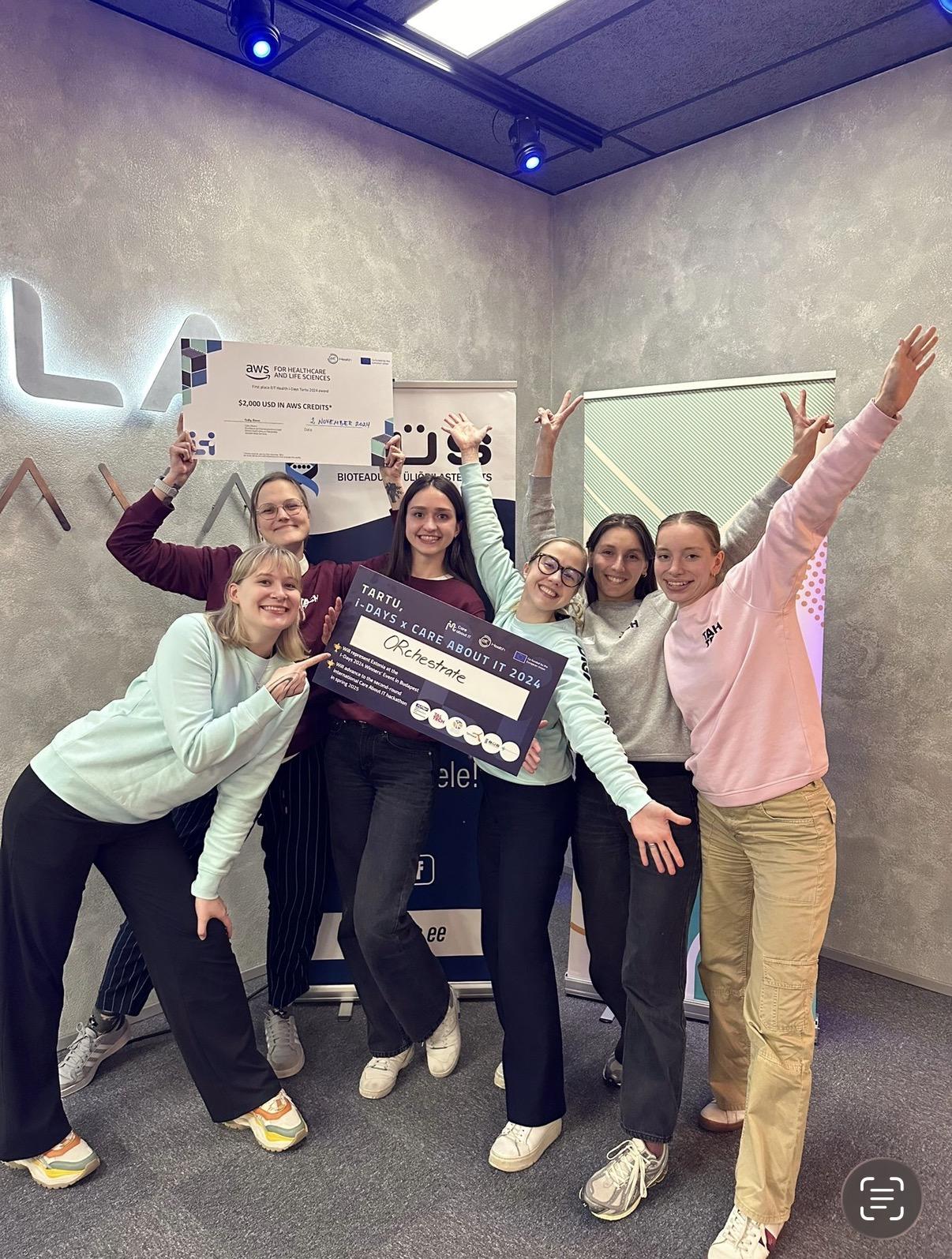
During my studies, together with my coursemate at the Semester Project course, we started working on our startup called Biluminate.
It is a combination of a mobile application and a dedicated device - a transcutaneous bilirubinometer, designed to optimize the monitoring of neonatal jaundice at home and maintain communication with the hospital.
In practice, it would allow parents to monitor their newborn’s bilirubin levels at home while staying connected to healthcare providers.
What were your expectations before coming to Estonia? Have they been met?
I wanted to receive a new, high-quality education and expand my knowledge in the healthcare field. Studying at TalTech has created many opportunities for that, even out of study room and my expectations have been more than met.
Is there a large Armenian community in Tallinn? Do you have an opportunity to connect and meet new people?
Yes, there is quite a large Armenian community in Estonia. Before moving here, I didn’t expect there to be so many Armenians. Even my Medical Ethics amazing lecturer at TalTech is Armenian. We have made great Armenian friends here.
What surprised you the most? Tell us about few similarities and differences with Armenia.
Since I have visited Estonia many times, there weren’t many things that surprised me. Perhaps the long, dark days during the autumn–winter season were the most noticeable, they can be quite challenging and even a bit stressful.
However, it is well known that, compared to Armenians, Estonians may initially seem more reserved and introverted. But once you get to know them, you discover how warm, active and genuinely friendly they truly are.
Would you recommend taking a similar step to others to study at TalTech, and why?
Of course, I would recommend studying in Estonia, especially at TalTech.
This is my second higher education, and the differences in education quality, student life, and opportunities are significant. Here I am gaining a completely different experience.
And we should remember that Estonia’s public education system is among the best in the world, offering excellent opportunities for international students.
What are your plans after graduating?
This is one of the most difficult questions.
More specifically, I am very interested in working at the intersection of healthcare and digital health, further developing our startup, and exploring academic and research opportunities. I would also like to improve my Estonian language skills.
With time, I will understand my path more clearly.
Do you want to study an international programme?
You can get more information about TalTech study programmes, admissions, and deadlines on the international admissions page. Also, You can learn more about studying at TalTech during the upcoming Online Info Session on May 7 at 18:00 (EEST). This is a great opportunity for all future students to e-meet TalTech staff and international students and ask them questions.