
In 2014, Tallinn University of Technology received its own Act, which defined it as the leading promoter of engineering sciences in Estonia. The Act provided for the university’s autonomy: specific features of the bases and organization of its activities compared with other public universities. In order to fulfil its leading role in technical education and research, and to ensure the next generation of engineers and technical scientists, the Act required the university to establish professorships in engineering sciences.
About the Professorships
In Europe and also in Estonia, there is an understanding that a knowledge-based economy increasingly needs well-trained engineers as well as expanding partnership between enterprises and universities. In these matters, Estonia’s only university of technology, Tallinn University of Technology, has a special responsibility before society.
This was also the understanding in 2014, when Tallinn University of Technology received its own Act. The Act positioned the Tallinn University of Technology as the leading promoter of engineering sciences and educator of engineers in Estonia. In order to fulfil the leading role of engineering education and research, and to ensure the next generation of engineers and engineering scientists, eight professorships in the fields of engineering and technology were established on the basis of the Act. In selecting them, account was taken of the impact of the professorships founded in the public interest on Estonia’s important economic sectors: energy, construction, industry, including mining and manufacturing, such as wood, metal, machinery and chemical industry, etc. The impact of these economic sectors on the Estonian economy is very large: the annual output of manufacturing alone is comparable to the volume of the Estonian state budget.
The task of the professorships in engineering and technology is to address the immediate challenges of engineering and technology and to support society with knowledge services. For this purpose, strong research groups have been established at these professorships. These research groups carry out high-level research, ensure the sustainability of Estonian-language teaching at all three levels of higher education, are successful in supervising final theses and doctoral theses, and develop strong partnerships with enterprises in order to fulfil public tasks in serving society.
The evaluation results of the professorships founded on the basis of the Act and in the public interest are public; the report can be consulted here.
Professorships established with targeted state funding are subject to targeted evaluation at least once every five years. Targeted evaluation is an external evaluation of research and development, which is organised for the preparation of strategic development plans for research and development, or other research policy decisions and measures, or for the assessment and analysis of their impact and implementation.
The objective of the professorships evaluated in the targeted evaluation is to ensure the sustainable development of engineering science and higher education teaching in the field, including Estonian-language teaching at the first and second levels of higher education, and the development of Estonian-language teaching materials and field-specific terminology.
This also includes popularising their field in society, developing field-specific terminology, participating in the preparation of development plans contributing to the development of the field, such as ENMAK2030 and MAK2030, participating in working groups preparing technology roadmaps and in professional standards committees, and taking the role of spokesperson for engineering sciences and engineering topics.
Concerning the professorships of the public interest of Estonia, the Panel was asked to:
- evaluate the quality of research and development in Estonia within the framework of TalTech professorships compared to the international level;
- evaluate the societal and professional activities undertaken in the field by TalTech professorships;
- assess the organisation of research in TalTech;
- assess the quality and relevance of the doctoral studies carried out by doctoral study centres/professorships.
Furthermore, the Panel was tasked to make recommendations concerning the further development and financing of research and development activities and doctoral studies within the field and the performance of necessary changes in Estonia.
In summary, the assessment by the evaluation team is that:
- For all of the 8 professorships / research groups evaluated, it is considered that their research is planned for and carried out in good agreement with TalTech’s Academic Strategic Plan and its primary objectives.
- Research within the 8 professorships is generally well organised, where the evaluation team assessed that in many cases, the infrastructure available to groups was impressive, with modern lab facilities and equipment of a high standard.
- Research Quality was not consistent across the groups and varied between being “Good” through to “Excellent”, dependent on the particular Professorship / Research Group being evaluated.
- Similarly, Public Outreach also varied within the range from “Good” to “Excellent”.
- The International level of activity and engagement was generally very encouraging, ranging from “Good” to “High” for the research groups.
From the interviews with PhD students at the 8 professorships carried out during the evaluation, it was ascertained that:
- PhD students generally have good and frequent access to their supervisors;
- PhD students are predominantly happy with their supervisors / supervision;
- a friendly and positive atmosphere is apparent, where there appears to be a strong team spirit between PhD students within many of the research groups;
- the contacts with supervisors are regular but often of an informal nature, although regular “formal” meetings, e.g. on a weekly basis, are held only by some of the research groups;
- annual evaluation of the PhD students’ progress is carried out at least in some of the research groups.
The final English-language report of the targeted evaluation can be consulted here.
An important part of the report consists of recommendations — for the professorships, the university and the state — as valuable input for planning improvement activities.
Recommendations for TalTech
School-level operational plans: The university has an Academic Strategic Plan including 5 focus areas, where the activities of all the professorships / research groups are consistent with this plan. It is recommended that there should be, in every school, an operational plan for research and development, where the school will set objectives and make plans for future research and other activities. The university should promote these core areas.
Increased level of high-quality scientific journal articles: Research staff should be encouraged to publish in well-known scientific journals to achieve higher quality and recognition. It is understood that each doctoral thesis can include 3 conference papers and possibly one journal article, as normal practice — the university should consider changing this to include at least two refereed journal publications. The university should also encourage post-doctoral researchers and senior research staff to carefully select the location of publications more strategically. Overall, the general approach should be to raise the target level of publications proportionally to the academic experience of the main author(s). Publications in open-access journals with high impact factors should be given financial support.
Increase of industrial and societal collaboration: More efforts should be invested in R&D projects financed by industry and the EU. The strong international networks of the research groups could be used to apply for additional funding from the EU, where it is considered that higher-quality papers would enhance this.
The university and industry should have a common understanding of how the cooperation works that benefits both partners. Intensive discussions with industry on collaborative projects and funding should persist. To facilitate these processes, the university should establish an initiative, such as a cluster or research centre, where regional industrial and governmental players become permanent members. Brokerage events, interdisciplinary workshops and industrial keynote lectures could be used as primary activities of such an initiative.
Organisation of PhD studies and supervision: According to university rules, each doctoral candidate, in cooperation with his or her supervisor, shall draw up the doctoral candidate’s action plan in the study information system. An action plan consists of the following parts: (1) main information on the doctoral thesis: the topic of the doctoral thesis in Estonian and in English and an annotation of the doctoral thesis; (2) a research plan, which must cover the entire period of doctoral studies, and an overview of the literature; (3) an annual report on the implementation of the action plan, which shall include the supervisor’s assessment of the report and the activities planned for the next period. Doctoral candidates are evaluated annually based on their action plans.
The suggestion is that there could be an enhanced doctoral school, either one at the whole university or one within each school, where it is proposed that this would enhance cooperation and cohort building between the generally small PhD student groups contained within different research groups. The organisation of common basic studies for the PhD students would also reduce the workload of academics. Within this “doctoral school” there could be common seminars, e.g. once a year, and other arranged activities.
Funding: From 2016, the university requires that all doctoral candidates studying full-time be guaranteed an income of at least 1,100 euros net. Of this, 660 euros is the state doctoral allowance, which is guaranteed by the university to all doctoral candidates during the nominal study period. The remaining income must be provided to the supervisor either as a salary or a scholarship. From 2022, according to national laws and the rules established at the university, all doctoral candidates working as early-stage researchers must be guaranteed a salary at least equal to the Estonian average salary. No action is required here, but in order to raise the prestige of scientists and lecturers, alongside the prestige and competitiveness of the professorship positions internationally, it is recommended to raise the salaries of senior teaching and research staff in Estonian higher education institutions. They should be competitive not only with respect to the Baltic region, but also within Northern European countries. If this would be the case, the professorships of national significance could become even stronger in Estonia through the attraction of international talent.
Professorships in technical sciences are
Field/Technological Focus
- Civil engineering
- Structures
- Fire resistance
Short description
The professorship focuses on the development of building structures through teaching, research, development, innovation and testing. The focus research topic of the Professorship of Structural Engineering is timber structures and their load-bearing capacity. Including the fire resistance of wooden structures and wooden bridges.
Relation to national priorities
The professorship directly contributes to the strategic objectives of TAIE 2035 through the following focus areas:
- Knowledge-based and high value-added economy – development and application of modern, safe and optimized structural solutions.
- Valorization of local resources – to achieve carbon neutrality goals, wood can be used as a material of the future. It stores carbon in smart and energy‑efficient wooden buildings and, after the end of the product life cycle, continues to be used through cascading use in new materials and products.
- Integration of science and business – applied research, industrial PhD programmes, and shared infrastructure enable effective knowledge transfer from academia to industry.
- Human capital and research capacity development – strengthening engineering education and doctoral training, supported by international research collaboration.
Key competencies
- Evaluation of the strength and stiffness of load-bearing structures
- Development of wooden structures and their joints
- Fire resistance of wooden structures
- Fire resistance of coating and insulation materials
- Bond line integrity of engineered wood

Contact
Alar Just, Tenured Full Professor
E-mail: [email protected]
Introduction
Alar Just is a professor of Structural Engineering at Tallinn University of Technology and a recognized researcher in the field. He specializes in timber structures and fire resistance. Alar Just is actively involved in European standardization work (CEN TC250 SC5), being one of the leaders in the development of the next generation timber structure design standard. He is an active partner for European wood industry companies and contributes to the development of engineering education and scientific successors.
Research profile
ORCID 0000-0002-8001-401X
Google Scholar: https://scholar.google.com/citations?user=a7IrO74AAAAJ&hl=en&oi=ao
Researcher ID B-8015-2019
ETIS: https://www.etis.ee/CV/Alar_Just
Research and development focus
Main research and development topics
- Development of fire design methods for engineered wood materials (I-joists, glulam, cross-laminated timber);
- Development of a classification test method for adhesives used in engineered wood structures;
- Development of the European fire design method for timber frame assemblies;
- Development of the fire design parameters for clay and lime plasters;
- Development of the Separating Function Method for fire design;
- Development of probabilistic models of steel elements in fire.
Concrete problems addressed
- How to use wood optimally in load-bearing structures
- How to ensure the fire resistance of structures using calculation methods
Collaboration and usage models
Basic and applied research; development of materials and structural solutions, including testing; industrial doctoral studies.
Main target partners
Estonian and European industrial companies including associations; state institutions and public sector organizations; international research and development partners and research infrastructures (e.g. European cooperation networks and research centers).
Infrastructure and capacity
Key laboratories and equipment
Testing lab for structures, incl:
- Strong floor testing area 8 × 23 m. Network of anchoring points: 1,2 × 1 m. Maximum permissible load for one point 250kN
- L-shaped (5 × 4,25 m), 5,4 m high reaction wall. Network of anchoring points: 1 × 1. Maximum permissible load for one point 250kN
- The system for two bidirectional hydraulic test cylinders EPZ-D with capacities of ±200kN and ±400kN, stroke 250mm. Cylinders can be controlled independently or synchronized by force or displacement
- The electromechanical universal testing machine 600kN with parallel grips
Services for partners
- Expert assessments, engineering advisory
- Testing of different strength and stiffness properties in non-standardized tests in the lab or at customer
- Testing of fire resistance
Impact and results (last 3–5 years)
- International research and development projects (including FIRENWOOD, 5G-Timber, RAW, Drastic) that have solved practical issues of pan-European or global importance and increased Estonia's visibility and credibility in the international research space.
- Participation in research work in the preparation of a new generation standard for wooden structures, which has resulted in increased TalTech's visibility and credibility in the international research community.
- Using production residues in the production of new engineered wood, which has resulted in increased resource efficiency.
Post-growth and education
Number of doctoral students (approx)
6 PhD theses defended
Role in doctoral studies and curricula
Supervision of PhD students at TalTech and at international partner universities; development of structural engineering curricula; integration of research-based learning and industry collaboration.
Industrial PhD
Yes
Field/Technological Focus
- Electrical engineering
- Electronics
- Circuit theory
- Electromagnetic compatibility and power quality
- Electromagnetic interference
Short description
The Electrical Engineering professorship at Tallinn University of Technology activities are related to applications of electrical phenomena within and around the electrical and electronic circuits. The professorship’s research and development work focuses on the study of phenomena arising in the electromagnetic environment and the assessment of influences propagated through the EM environment. The specific focus of the Electrical Engineering professorship is on electric power supply systems and research, development, and teaching related to the associated technical operating conditions.
Relation to national priorities
- The Education Sector Development Plan 2021–2035 emphasizes the importance of the systematic implementation of top-level curricula in engineering fields, which is in line with the objectives of the professorship. The most recently published OSKA sector report states that the sector lacks approximately 5,000 competent employees, including specialists with higher education in topics directly related to electrical engineering. From the strategic perspective of the state, the professorship in electrical engineering supports stable development through its significant contribution to developing the education of engineers in the field and providing training.
- The strategic objectives of TAIE 2021–2035 include ensuring the basic capacity of the research system necessary for the functioning of society, under the research system direction. The professorship in electrical engineering focuses on increasing the impact of research and researchers and on applying research results to address Estonia’s development needs. The TAIE 2021–2035 development plan also separately highlights the knowledge transfer direction, in which engineering, including professorships related to electrical engineering, is of key importance in strengthening the competitiveness of Estonia’s economy and research.
The objectives set out in the development plans regarding energy security, increasing the impact of research and researchers, developing knowledge transfer, and ensuring top-level curricula are directly related to the core functions of the professorship in electrical engineering. Therefore, the professorship in electrical engineering is directly linked to Estonia’s national development objectives.
Key competencies
- principles of electrical circuits, measurement and design methods;
- operating conditions of electric power supply systems, their reliability and continuity;
- measurement and assessment of power quality, and analysis of related phenomena;
- electrical transients, analysis and descriptions of transient processes;
- analysis of supply voltage and load current waveforms and their decomposition into harmonics, harmonic analysis methods;
- measurement and analysis of electromagnetic fields in open environments;
- electromagnetic phenomena associated with the operation of electric equipment;
- development of measurement methods for electromagnetic interference and measurement of interference.
Contact
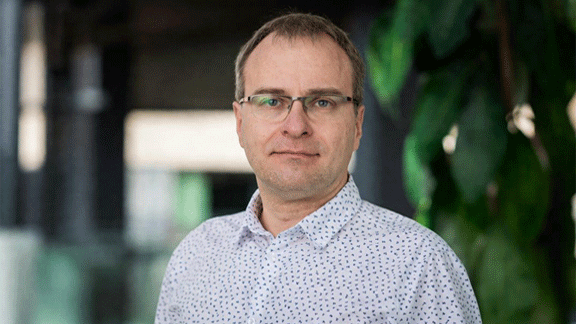
Lauri Kütt, Tenured Associate Professor
E-mail: [email protected]
Introduction
Lauri Kütt has a background in electrical engineering, where in 2012 he defended the PhD thesis in Tallinn University of Technology on the topics on sensors for power line transients. From 2013 until 2015 he was working as a postdoctoral researcher in Aalto University School of Electrical Engineering on the topics of harmonic distortions in the distribution grids due to electrical vehicle charging and thermoelectric generators’ applications. Since 2016 he has been working in Tallinn University of Technology as senior lecturer and professor in electrical engineering.
Research profile
ORCID: 0000-0003-1353-0396
Google: Lauri Kütt
ETIS: https://www.etis.ee/CV/Lauri_K%C3%BCtt/eng/
Research and development focus
Main research and development topics
- Electrical engineering
- Electrical circuits
- Power quality
- Electromagnetic compatibility
- Electromagnetic environment
Concrete problems addressed
- Ensuring technical conditions for connecting renewable energy sources to the distribution network.
- Measurement and analysis of electromagnetic fields emitted by energy conversion devices.
Collaboration and usage models
The research group offers expert and measurement services in the fields of power quality and electromagnetic compatibility, as well as electromagnetic field measurement.
Supported by professional laboratory measuring equipment, the group provides power quality measurement services as well as pre-compliance testing for requirements in the field of electromagnetic compatibility
- Measurement of power quality parameters
- Consultations and expert services in the field of power quality
- Conducting electromagnetic compatibility tests
- Expert assessment and consulting in electromagnetic compatibility
- Measurement and analysis of broadband interference
- Measurement of electric and magnetic field strength
- Assessment and measurement of industrial electromagnetic fields
- Electromagnetic compatibility measurements in installations and field locations
Infrastructure and capacity
Key laboratories and equipment
An accredited measurement laboratory body Electrical Technologies Measurement Centre (EAK certificate L302), operating under the research group, is a provider of accredited electromagnetic field measurement services in the frequency range of 10 Hz to 3 GHz. An example of service offered is determining the intensity of electromagnetic fields in workplaces, including industrial environments, and evaluation of electromagnetic fields present in residential and living environments.
The capability is ensured by:
- Low-frequency electric and magnetic field sensor
- Sensor with frequency- and axis-selective measurement capability for measuring electric and magnetic field strength in industrial and residential environments;• Medium- and high-frequency measurement antennas and analyzers
- Upper frequency range limit of 6 GHz;
- Measurement equipment for measuring both disturbances and electromagnetic field levels at specific locations;
- Conducted disturbance measurement equipment for coupling to both DC and AC power supply interfaces
- Measurement capability both in laboratory and field conditions;
- Measurements in systems with a continuous current of up to 100 A;
- In AC power circuits with a nominal voltage of up to 400 V;
- In DC power circuits with a nominal voltage of up to 1500 V;
- Three-phase power quality analyzers
- Capability compliant with EVS-EN IEC 61000-4-30 Class A;
- Complete measurement of a three-phase system, including 4 current values and 4 voltage values;
- Verification of characteristic conditions according to EVS-EN 50160.
Services for partners
- Measurement of power quality parameters
- Power quality consulting and expertise
- Conducting electromagnetic compatibility tests
- Electromagnetic compatibility expertise and consulting
- Measurement and analysis of broadband disturbances
- Measurement of electric and magnetic field strength
- Evaluation and measurement of industrial electromagnetic fields
- Electromagnetic compatibility measurements in installations and outdoor locations
Post-growth and education
Number of doctoral students (approx)
4
Role in doctoral studies and curricula
Fundamental education in electrical engineering is a central cornerstone in the modern fields of electrical energy generation, transmission, and applications. In the education of first-cycle students, the Research Group of Electrical Engineering Fundamentals provides teaching on the fundamentals of electrical engineering, mechatronic systems, and electrical circuits. Foundational knowledge is also provided within general courses on the principles of general electrical power supply systems.
Teaching is carried out in the following courses:
- Fundamentals of Electrical Engineering and Electronics (ATE3140, ATE3150, ATV0240)
- Applications of Electrical Engineering and Electronics (EEM3010, EET3010, ISC0100)
For second-cycle students, the following course is taught:
- Electromagnetic Compatibility (EEV5010)
In teaching, the emphasis is on developing practical skills in the field and, consequently, on laboratory work.
In the field of electrical engineering fundamentals, approximately 6–8 bachelor’s theses are defended each year, in addition to 1–3 master’s theses.
Industrial PhD
The research group offers the opportunity for industrial doctoral students.
Field/Technological Focus
- e-Government
- e-Democracy
- e-Governance
- Information Systems
Short description
Estonia has an international reputation as a leader in digital society technologies. However, due to the tremendous speed and opportunities of emerging new ICT paradigms, this leadership is severely challenged. Over two decades, TalTech was deeply involved in designing Estonia’s digital assets. The mission of this professorship is to contribute to TalTech in further gaining and keeping a leading role in ICT system architecture and design of the next generation of digital society ICT, including large-scale ICT systems, ICT system landscapes, ICT ecosystems, and information exchange platforms.
Relation to national priorities
The professorship directly supports the following strategic goals of “Estonia 2035”:
- A Caring, Cooperative, and Open Society
- A Strong, Innovative, and Responsible Economy
- An Innovative, Reliable, and People-Centered Country

Key competencies
- Cloud technologies
- Software-defined networks
- Internet of Things
- Blockchain technology
- Data exchange platforms
- Machine learning platforms
- Business intelligence platforms
- Collective intelligence platforms
- Enterprise architecture modeling
- Business process modeling and re-engineering
Contact
Dirk Draheim, Tenured Full Professor
E-mail: [email protected]
Introduction
Dirk Draheim is professor in Information Society Technologies at Tallinn University of Technology. Dirk holds a PhD from Freie Universität Berlin, Germany, and a habilitation from University of Mannheim, Germany. He is head of the Information Systems Group, serves as academic director of Vice Rector Ingrid Pappel’s Next Gen Digital Society Group and is founding member and scientific co-director of TalTech’s eID Competence Center. Dirk is committed to e-Estonia and to educate the leaders and experts of the next generation digital society. Dirk’s current research focus is the utilization of emerging AI-technologies in today’s organizations and societies. Dirk is co-founder and co-chair of the International Conference on Next Generation Information Systems Engineering. Dirk has (co-)authored over 200 publications in international journals and conference proceedings, four Springer books and ranges among the Elsevier 2024 world ranking top 2% scientists.
Research profile
ORCID 0000-0003-3376-7489
Google Scholar: https://scholar.google.com/citations?user=-BXfUWsAAAAJ&hl=en
ETIS: https://www.etis.ee/CV/Dirk_Draheim/
Research and development focus
Main research and development topics
- Future governance – research and development focused on technological change (in particular the development and uptake of ICT) and related changes in patterns of human behaviour and international developments affecting the state’s role in society and expectations for public policies and services.
- Dependable IT solutions – reliable and attack-resistant IT systems and services, sustainable development of critical IT infrastructure, energy efficient IT systems and data processing methods. Trust and confidence of users and society in the IT services and guaranteeing privacy.
Concrete problems addressed
- How to design effective, efficient and pro-active e-government services?
- How to support e-democracy accurately by ICT technology?
- How to establish intra-organizational and cross-organizational e-governance?
- How to utilize emerging AI-technologies in today’s organizations and societies?
Collaboration and usage models
- Design science
- Action design research
- Design thinking
- Case study research
- Comparative case studies
- Delphi studies
- Action learning
- Strategic benchmarking
Main target partners
- International research and development partners and research infrastructures
- European cooperation networks and research centers
- Estonian and European industrial companies and business associations
- State institutions and public sector organizations

Infrastructure and capacity
Key laboratories and equipment
Services for partners
- Expert opinions
- Targeted projects
- Targeted workshops
- Topic-specific think tanks
Impact and results (last 3-5 years)
- 2021 to 2025: 100 publications in peer-reviewed international journals and conference proceedings.
- General Chair of the 1st International Conference on Next Generation Information Systems Engineering
- General Chair and Programme Committee Chair of the 2nd International Conference on Next Generation Information Systems Engineering
- Programme Committee Chair of the 11th International Conference on Digital Economy
- Doctoral Consortium Chair and Industrial Panel Chair of the 2026 International Conference on Information Resources Management
Case studies
- In 2022, our industrial research partner Guardtime implemented the feasibility study of the digital Euro for the European Central Bank, with a technology that has been designed on the basis of TalTech/Guardtime’s scalable KSI permissioned blockchain technology (Ahto Buldas, Dirk Draheim, et al. An Ultra-Scalable Blockchain Platform for Universal Asset Tokenization: Design and Implementation. IEEE Access, vol. 10, pp. 77284-77322, 2022. (https://doi.org/10.1109/ACCESS.2022.3192837)
- Until 2025, our team has created a framework for the assessment of eIDAS-conformant eID implementation schemes at EU national level (Silvia Lips, Valentyna Tsap, Nitesh Bharosa, Robert Krimmer, Tanel Tammet, Dirk Draheim. Management of National eID Infrastructure as a State-Critical Asset and Public-Private Partnership: Learning from the Case of Estonia, Information Systems Frontiers, vol. 25, 2023, pp. 2439–2456. (https://link.springer.com/article/10.1007/s10796-022-10363). The research is an example of interplay of complex research questions from law, policy making and technology. The research results impact the daily routine of the Estonian eIDAS contact point, the outlook of the Estonian eID strategy and beyond of other countries in and outside the EU.
Post-growth and education
Number of doctoral students (approx)
- 14 successfully defended doctoral theses
- 6 current doctoral student supervisions
Role in doctoral studies and curricula
- Supervision of doctoral students at TalTech and partner universities
- Integration of research-based learning and industrial collaboration
- Member of the steering committee of TalTech’s study programme https://egov.ee/
- Starting from October 2020, leading the project Digiriigi Akadeemia. The goal of the project has been to increase the knowledge about the digital state, e-services, IT security, AI and data processing available.
Industrial PhD
The research group offers the opportunity for industrial doctoral students.
Field / technological focus
- Chemical technologies, properties and applications of materials and chemicals
- Energy and resource efficiency
- Environmental technologies
Short description
The professorship focuses on the design, modelling and optimisation of chemical industry processes and materials, building on developments in the field both in Estonia and internationally. Since 2017, the professorship has been part of the Department of Energy Technology, integrating process engineering, thermodynamics and the development of sustainable industrial solutions. It also supports environmental technology innovation in Estonian companies.
Relation to national priorities
The Professorship of Chemical Engineering is aligned with the Estonia 2035 strategy, the Research, Development, Innovation and Entrepreneurship Strategy, energy and climate policy development plans, the education sector development plan, and industrial and circular economy strategies. The professorship supports a sustainable economy, engineering education and knowledge-based innovation.
The professorship supports energy security through the valorisation of local and renewable energy resources and the development of thermal energy storage technologies.
The activities of the professorship contribute to emission reduction and the development of resource-efficient and environmentally friendly industrial solutions.
The professorship strengthens cooperation with industry by providing Estonian companies with applied chemical and environmental technology solutions.
The professorship advances engineering education and trains specialists whose skills meet labour market needs.
Through international cooperation, the professorship increases the international visibility and competitiveness of Estonian research.
Key competences
- Separation processes
- CO₂ capture
- Thermal analysis of materials
- Measurement of thermodynamic properties of substances
- Machine learning for predicting material properties
Contact
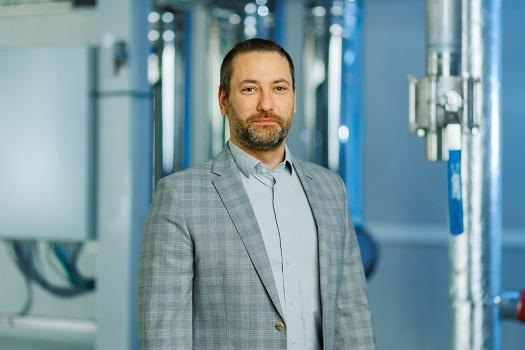
Oliver Järvik, Tenured Associate Professor
Email: [email protected]
Introduction
Oliver Järvik is an Associate Professor at the Department of Energy Technology of Tallinn University of Technology, Head of the National Professorship of Chemical Engineering, and Programme Director of the Environmental, Energy and Chemical Engineering curriculum at Tallinn University of Technology. His research combines fundamental thermodynamics with applied industrial solutions, focusing on chemical engineering processes related to energy and environmental technologies, the thermal processing of oil shale and biomass, low- and high-temperature thermal energy storage solutions, and the determination of the physicochemical properties of substances formed or used in these processes. Oliver Järvik is also the 50,000th alumnus of Tallinn University of Technology.
Research profile
ORCID: 0000-0001-8530-2582
Google Scholar: https://scholar.google.com/citations?user=zuVPjG0AAAAJ&hl=en&oi=ao
ETIS: https://www.etis.ee/CV/Oliver_J%C3%A4rvik/eng/
Research and development focus
Main research and development topics
- Chemical engineering processes in energy and environmental technology applications
- Thermal processing of biomass and oil shale
- Measurement of physicochemical properties of multicomponent mixtures
- Machine learning for predicting material properties
- CO₂ capture and emission reduction
- Low- and high-temperature thermal energy storage
- Ionic liquids and deep eutectic solvents and their applications
- Process modelling
Concrete problems addressed
Development of machine learning models for evaluating material properties and using these models to identify substances with properties suitable for different technological applications.
Reduction of the environmental impact of existing fossil-based production units and technologies.
Collaboration and usage models
Research collaboration; applied research; joint development projects; industrial PhD programmes; testing of pilot solutions.
Main target partners
Estonian industrial companies of different sizes; companies engaged in research and development; government agencies and public sector organisations; international research and development partners and research infrastructures.
Infrastructure and capabilities
Key laboratories and equipment
Laboratories of the Department of Energy Technology
Services for partners
- Technological consulting and advisory services
- Measurement of material properties
- Process modelling
Case study
Classified
Post-growth and education
Number of doctoral candidates and researchers (approx)
- Number of defended doctoral theses: 3
- Number of supervised postdoctoral researchers: 1
- Number of doctoral candidates currently under supervision: 11
- Number of postdoctoral researchers currently under supervision: 2
Role in doctoral education and curricula
- Supervision of doctoral candidates
- Mmanagement and development of the Environmental, Energy and Chemical Engineering curriculum
- Integration of research-based teaching and industrial collaboration
Industrial PhD
Opportunity for industrial doctoral students.
Field / technological focus
- Metals engineering
- Ceramic-based composite materials
- Metal-matrix composites
- Cermets
- Hardfacing
- Wear resistance
- Recycling
- Durability
Short description
The Metals Engineering Professorship focuses on teaching, research, development, innovation and testing in materials engineering. Its main focus is metallic and ceramic materials, composites based on these materials, and manufacturing technologies for products made from them. Research and development focuses primarily on wear-resistant composite materials and coatings, their manufacturing technologies, characterization of material structure and properties, and recycling.
Relation to national priorities
The professorship directly supports the strategic objectives of RDIE 2035 and other Estonian development strategies in the following focus areas:
Knowledge-based and high-value-added economy – developing new wear-resistant composite materials, hard coatings and manufacturing technologies helps improve the quality, reliability and service life of industrial products.
Resource-efficient and sustainable industry – mechanical recycling of materials and products, together with reducing the use of critical raw materials, supports smarter use of resources.
Integration of research and industry – applied research, prototyping, materials testing and industrial PhD cooperation create effective knowledge transfer from research to business.
Development of human capital and research capacity – doctoral education, engineering education, supervision of early-career researchers and international research cooperation strengthen the field’s competence base.
Key competences
Materials and manufacturing technologies, including powder metallurgy, additive manufacturing, heat treatment and joining technologies, for producing tools and wear-resistant structural components.
Thick and thin hard coatings for extending product service life.
Mechanical recycling technologies for materials.
Research on material composition, microstructure and properties.
Tribology, including the analysis of friction and wear.
Mechanical characterization of materials.

Contact
Fjodor Sergejev, Tenured Associate Professor
Email: [email protected]
Introduction
Fjodor Sergejev is an experienced academic leader, researcher and educator with a strong background in materials and mechanical engineering. He holds the Chartered Mechanical Engineer occupational qualification certificate (EstQF level 8, no. 151506; EstQF corresponds to the European Qualifications Framework, EQF). He received his PhD from TalTech in 2007, with doctoral research focused on the mechanical behaviour, fatigue and fracture mechanics of hardmetals and metal-matrix composite materials. His current research includes the application of high-entropy alloys in metal-matrix composite structures and the development of additive manufacturing technologies. He has supervised four PhD students and several master’s students.
Research profile
ORCID 0000-0002-6417-7791
ETIS: https://www.etis.ee/CV/Fjodor_Sergejev/eng/
Research and development focus
Main research and development themes
Wear-resistant ceramic-based composite materials, with a focus on eliminating or reducing the use of critical raw materials (CRMs) and carcinogenic, mutagenic and reprotoxic (CMR) substances.
Wear-resistant thin and thick hard coatings.
Mechanical recycling technologies for materials and products.
Characterization of materials and products, including composition, microstructure, mechanical, chemical and tribological properties.
What specific problems does the professorship solve?
How to develop wear- and corrosion-resistant composite materials and hard coatings while reducing or eliminating the use of CMR substances and critical raw materials.
How to apply mechanical recycling of materials and products, such as electronic and textile waste, in ways that improve resource efficiency.
Collaboration and usage models
- Research collaboration, including applied research
- Postdoctoral and industrial PhD cooperation
- Product prototype manufacturing
- Testing and characterization of materials and products
Main target partners
Estonian companies and research partners, including AS Norma, the Institute of Physics at the University of Tartu, NPM Silmet OÜ, the National Institute of Chemical Physics and Biophysics, Elcogen AS and others; international research and development partners, including Fraunhofer Institute for Ceramic Technologies and Systems IKTS (Germany), UAB Dangu Inženerijos Centras (Lithuania), Fraunhofer Institute for Materials Recycling and Resource Strategies IWKS (Germany) and others.
Infrastructure and capabilities
Key laboratories and equipment
Powder Metallurgy Laboratory.
Thick and Thin Coatings Laboratory.
Research and Experimental Laboratory for Materials Recycling.
Prototyping Laboratory, also known as the Additive Manufacturing Laboratory.
Tribology Laboratory.
Materials Research Laboratory.
Mechanical Testing and Metrology Laboratory.
Services for partners
Consulting within the professorship’s field of expertise.
Testing and characterization of materials and products.
Fabrication of material and product prototypes.
Professional development training.
Impact and results (last 3–5 years)
In recent years, companies have shown growing interest in ceramic-based wear- and corrosion-resistant composite materials that are free from metals harmful to human health and the environment, such as cobalt and nickel, which are also classified as critical raw materials in Europe.
Interest in material and product recycling technologies has clearly increased, especially in solutions that improve resource efficiency and reduce waste.
Post-growth and education
Number of PhD students (approx.)
3
Role in doctoral education and curricula
- Supervision of doctoral students
- Integration of research-based teaching
- Research collaboration.
Industrial PhD
Yes, the professorship has previous experience in supervising industrial PhD students and has continued readiness and interest in developing this cooperation model.
Field / technological focus
- Wood
- Wood science
- Wood technology
- Veneer
- Eood based composite materials
Short description
The professorship focuses on the development of the processing and recycling of wood-based composite materials and multimaterials through educational, research, development, innovation, and experimental activities. The more specific research areas of the Wood Technology professorship include the hygrothermal and chemical modification of wood in order to develop wood–polymer composite materials for use in furniture, transport equipment, and construction.
Relation to national priorities
The professorship directly contributes to the strategic objectives of TAIE 2035 through the following focus areas:
- Knowledge-based and high value-added economy – development and application of modern sustainable wood composite materials in transportation, furniture and construction sector.
- Valorization of local resources – to achieve carbon neutrality goals, wood can be used as a material of the future. It stores carbon in smart and energy‑efficient wooden buildings and, after the end of the product life cycle, continues to be used through cascading use in new materials and products.
- Integration of science and business – applied research, industrial PhD programmes, and shared infrastructure enable effective knowledge transfer from academia to industry.
- Human capital and research capacity development – strengthening engineering education and doctoral training, supported by international research collaboration.
Key competences
- Improving wood veneers surface properties, bondability, and finishability
- Investigation of the properties of layered wood composites produced from different wood species and adhesives.
- Durability of wood polymer composites based on wood and other natural raw materials under outdoor environmental conditions, including UV radiation, moisture, and temperature.
- Effects of cracks on the airthightness and hygrothermal properties of cross‑laminated timber (CLT).
- Valorisation of wood residues in fire‑resistant mycelium composite materials.
Contact
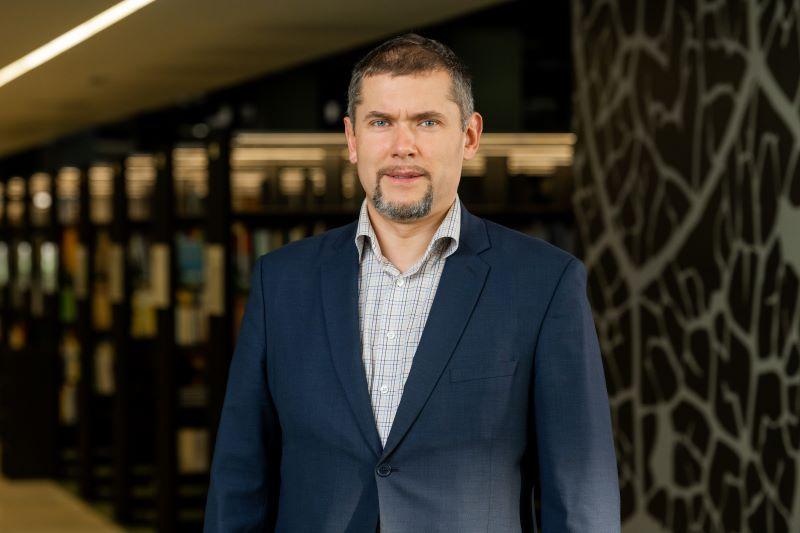
Jaan Kers, Tenured Associate Professor
E-mail: [email protected]
Introduction
Professor Jaan Kers is a tenured Associate Professor at Tallinn University of Technology (TalTech), where he leads the national professorship in Wood Technology (established in 2014 pursuant to the TalTech Act) and serves as Head of the Laboratory of Wood Technology. He is also Programme Director of the master’s programme in Wood, Plastic, and Textile Technology. His research and development activities focus on the processing of low‑quality wood and wood–polymer composites, chemical and hydrothermal modification of wood, weather resistance of wood‑based composites, and cascade utilisation of wood residues. Professor Kers has extensive experience in the valorisation of wood‑based and multi‑materials, the promotion of industrial innovation, and the development of research‑based education and industry collaboration. He has participated in and led numerous national and international research and development projects in the field of bioresource valorisation. He has successfully supervised five doctoral dissertations and forty‑four master’s theses, and has developed wood technology curricula and courses at the bachelor’s, master’s, and doctoral levels. His contribution has significantly increased TalTech’s visibility and credibility in the international wood technology research community. Professor Kers is an active cooperation partner for Estonian and European wood industry companies and contributes to the development of engineering education and the next generation of researchers.
Research profile
ORCID 0000-0003-0024-3451
Google Scholar: Jaan Kers
Researcher ID K-4239-2012
ETIS https://www.etis.ee/CV/Jaan_Kers/eng/
Research and development focus
Main research and development themes
- Improving the microstructure, surface properties, bondability, and finishability of veneers from various wood species.
- Investigation of the properties of plywood produced from different wood species and adhesives.
- Durability of wood polymer composites based on wood and other natural raw materials under outdoor environmental conditions, including UV radiation, moisture, and temperature.
- Effects of cracks on the hygrothermal and airthightness properties of cross‑laminated timber (CLT).
- Valorisation of wood residues in fire‑resistant mycelium composite materials.
What specific problems does the professorship solve?
- How to utilize and add value to low‑grade hardwood in veneer‑based products, and how to optimally use wood‑based materials in furniture, construction, and transport applications; cascading use of wood
- Chemical and hygrothermal modification of wood, including densification, to improve strength and fire‑retardant properties
Collaboration and usage models
- Basic and applied research
- Development of wood and composite materials including testing
- Industrial doctoral studies.
Main target partners
Estonian and European industrial companies including associations; state institutions and public sector organizations; international research and development partners and research infrastructures (e.g. European cooperation networks and research centers).
Estonian companies and research partners, including AS Norma, the Institute of Physics at the University of Tartu, NPM Silmet OÜ, the National Institute of Chemical Physics and Biophysics, Elcogen AS and others; international research and development partners, including Fraunhofer Institute for Ceramic Technologies and Systems IKTS (Germany), UAB Dangu Inženerijos Centras (Lithuania), Fraunhofer Institute for Materials Recycling and Resource Strategies IWKS (Germany) and others.
Infrastructure and capabilities
Key laboratories and equipment
Testing lab for woodbased materials and furniture products, incl:
- Furniture and wood products stability and strength testing under standard and non standardized product testing methods.
- Climate chamber for testing of various surface and strength properties under standard and non standard tests, as well as under cyclic UV, temperature, and humidity conditions.
The Wood Technology Laboratory houses a laboratory veneer peeling and plywood production line that is unique in Estonia. This line enables the production of veneers and plywood with very high precision and quality under controlled conditions, allowing the determination of different production parameters and material properties.
- The electromechanical universal testing machine 50kN with tensile grips and 3-point and 4-point bending tests in maximum 1,2m length of test specimens.
Impact and results (last 3–5 years)
International research and development projects (including WoodLCC, 5G-Timber, Virtual Wood University Master program, BIOCEB) that have solved practical issues of pan-European or global importance and increased Estonia's visibility and credibility in the international research space.
Participation, within the public-legal entity framework of research activities, for the Ministry of Climate Affairs: ‘Roadmap for the Chemical and Microbiological Valorisation of Wood’ (2025); ‘Roadmap for the Production of CO₂‑Free or Low‑Emission Fuels’ (2025). Within the 5G‑Timber project, development of a technological roadmap and policy recommendations aimed at reducing wood waste and structural health monitoring; participation in the Ministry of Economic Affairs and Communications case study ‘Actions Required to Promote the Symbiotic Valorisation of Waste: A Case Analysis of the Wood and Furniture Industries.’ As a result, TalTech’s visibility and credibility in the international research community have increased.”
Using production residues in the production of woodpolymercomposites, which has resulted in increased resource use efficiency.
Post-growth and education
Number of PhD students (approx.)
5 defended doctoral theses and 5 currently under supervision
Role in doctoral education and curricula
Supervision of PhD students at TalTech and in industry; development of discipline‑specific courses in Wood Technology (wood materials, biocomposites, veneer‑based materials) within the main specialization ‘Chemical, Materials and Energy Technology’ of the Faculty of Engineering doctoral programme, and participation in curriculum development; integration of research‑based education and industrial collaboration.
Industrial PhD
SekMo industrial PhD Maarja-Mirjam Rajasaar (RMK), supervisors Jaan Kers, Targo Kalamees
Field / technological focus
- Thermochemical processing of oil shale and other fuels and materials (combustion, pyrolysis, gasification),
- CO₂ capture and utilization (CCUS),
- emission reduction,
- valorization of oil shale ash and residues,
- process modeling and measurements.
Short description
The Oil Shale Technologies Professorship at Tallinn University of Technology is a central research and development center for Estonia's energy security and resource efficiency, developing technologies that reduce the environmental impact of oil shale (and increasingly also biomass and waste-based fuels) and support the circular economy. The activities combine cutting-edge scientific research and applied research with solutions based on industry needs - from fuel conversion kinetics and reaction mechanisms to new uses of CO₂ separation, emission control and residues (ash, semi-coke, etc.). The professorship operates in the oil shale technologies direction of the Institute of Energy Technology, relying on the capabilities of the institute's accredited testing laboratory (fuels/ash/sediments, air emissions, thermal engineering measurements).
Relation to national priorities
The professorship supports energy security and climate goals through:
- reducing emissions and environmental impact in existing production chains,
- demonstrating the possibilities of CO₂ capture and utilization,
- circular valorization of industrial waste,
- ensure engineering education and future generations.
Key competences
- Fluidized bed technologies and thermal oxidation, co-combustion/co-pyrolysis (oil shale + biomass/waste streams)
- CCUS (incl. oxyfuel, separation, capture/utilization of cleaner CO₂ streams)
- Material utilization and sorption properties of oil shale ashes, semi-coke and other residues
- Fuel and emissions analytics, standardized measurements and QA/QC
- Process modeling, scaling and technology roadmaps
Contact
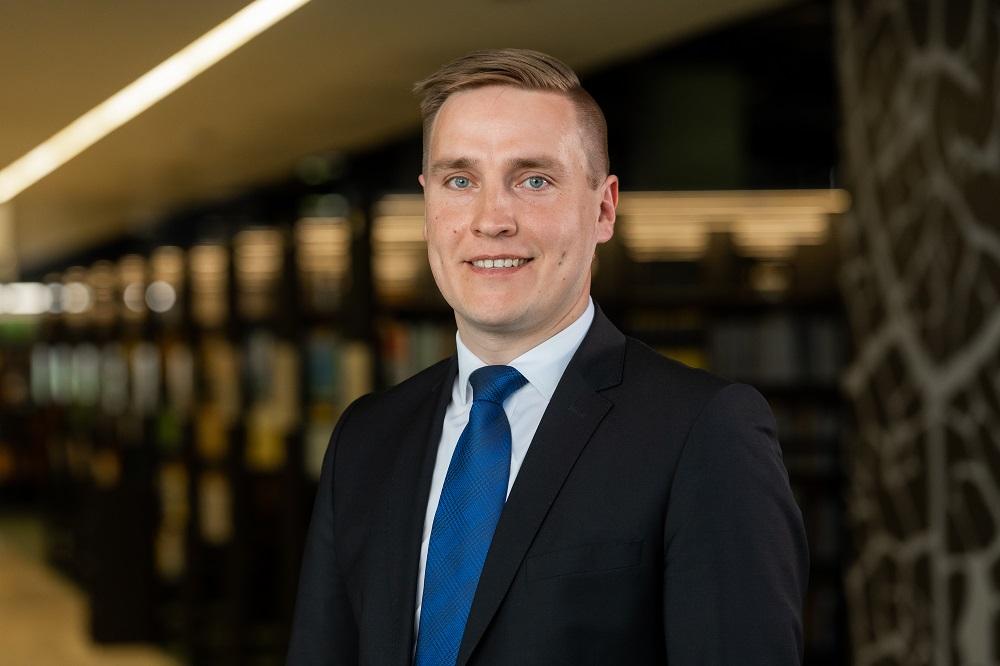
Alar Konist, Tenured Full Professor
E-post: [email protected]
Introduction
Alar Konist is a professor and director of the Institute of Energy Technology at Tallinn University of Technology. His research and development work focuses on sustainable energy, cleaner energy production, research into thermochemical processes in oil shale, CO₂ emission reduction, and the use of solid residues, including ash. He works closely with partners in the energy and industrial sectors and has represented Estonia in international energy networks.
Research profile
ORCID 0000-0001-5492-248X
ETIS: https://www.etis.ee/CV/Alar_Konist/eng/
Research and development focus
Main research and development themes
The research focuses on upgrading oil shale into higher value-added raw materials, reducing emissions and capturing CO₂, and linking oil shale use to the circular economy and alternative carbon sources. For example, chemical looping approaches are being developed, which allow the separation of concentrated CO₂ streams from oil shale and biomass processing and create the basis for CCUS applications.
Collaboration and usage models
- Scientific cooperation and applied research
- Joint development projects
- Industrial doctorate
- Testing and measurement services
- Technology assessments (including feasibility and cost-effectiveness)
- Piloting on laboratory and test equipment
Infrastructure and capabilities
Key laboratories and equipment
The work of the professorship is supported by the Energy Technology Laboratory as a thermochemistry teaching and research laboratory, where it is possible to study combustion, pyrolysis and gasification processes, kinetics and the resulting gaseous/solid products and emissions. Important test systems are 60 kWth CFB and BFB pyrolysis test equipment and diverse analytical and measurement equipment, which allows serving both scientific and industrial projects.
Impact and results (last 3–5 years)
The professorship provides science-based input into energy policy and technology transfer decisions, develops emission reduction and residue valorization solutions applicable to industry, and increases Estonia's international visibility in the field of energy technology and CCUS.
Post-growth and education
Role in doctoral education and curricula
The professorship integrates research into bachelor's, master's and doctoral studies, supervises final and doctoral theses, and develops field-specific terminology and Estonian-language engineering education through practical laboratory work and project-based learning.
Industrial PhD
Yes
Field / technological focus
- Manufacturing Systems Design and Optimization
- Digital Manufacturing and Industry 4.0/5.0 Solutions
- Manufacturing Automation
- Prototyping and Manufacturing of Complex Products
- Industrial Innovation and Technology Transfer
- Sustainable Manufacturing
Short description
The professorship focuses on the development of the processing and recycling of wood-based composite materials and multimaterials through educational, research, development, innovation, and experimental activities. The more specific research areas of the Wood Technology professorship include the hygrothermal and chemical modification of wood in order to develop wood–polymer composite materials for use in furniture, transport equipment, and construction.
Relation to national priorities
The professorship directly supports the strategic objectives of TAIE 2035 in the following focuses:
- Knowledge-based and high-value-added economy – development and implementation of production engineering, digital manufacturing and automation solutions.
- Integration of science and entrepreneurship – applied research, industrial doctoral studies and use of shared infrastructure create an effective knowledge transfer from science to industry.
- Green and digital revolution – resource-efficient, flexible and sustainable production systems support the achievement of climate goals.
- Development of human capital and research capacity – strengthening engineering education and doctoral studies and raising the next generation through international research cooperation.
The professorship also supports national priorities through the development of strategic research infrastructure, primarily under the leadership of the Smart Industry Centre (SmartIC), which acts as a platform for the digitalization and science-based innovation of Estonian industry.
Key competences
- Manufacturing Systems Design and Optimization
- Digital Manufacturing and Industry 4.0/5.0 Solutions
- Manufacturing Automation
- Prototyping and Manufacturing of Complex Products
- Industrial Innovation and Technology Transfer
- Sustainable Manufacturing
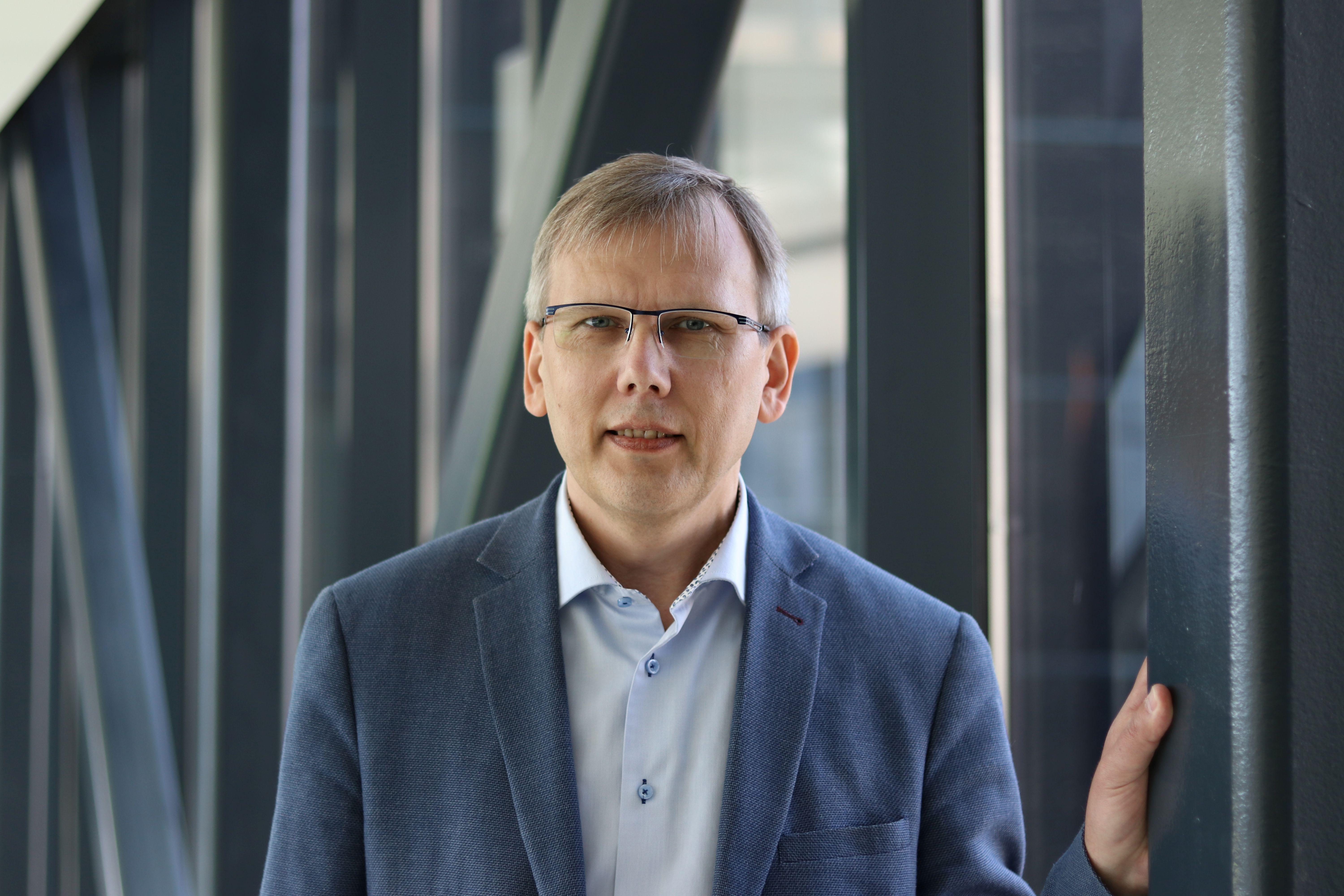
Contact
Tauno Otto, Tenured Full Professor
E-mail: [email protected]
Introduction
Tauno Otto is a professor of Manufacturing Engineering at Tallinn University of Technology and a renowned researcher in the field of manufacturing systems and digital manufacturing. At the university, he also leads the Estonian Science Roadmap initiative Smart Manufacturing Core Infrastructure (SmartIC). His work combines research and industrial application, focusing on manufacturing automation, sustainability and knowledge transfer. He is an active collaborator with Estonian and international industrial companies and contributes to the development of engineering education and scientific talent.
Research profile
ORCID 0000-0003-2349-0340
Google Scholar Profile
Researcher ID F-3444-2018
ETIS https://www.etis.ee/CV/Tauno_Otto/eng/
Research and development focus
Main research and development themes
- Digital and autonomous manufacturing systems
- Applications of industrial robots and collaborative robots
- Production automation and flexible manufacturing systems
- Prototyping and manufacturing of complex products
- Sustainable and resource-efficient manufacturing techniques
What specific problems does the professorship solve?
- How to increase the productivity and flexibility of small and medium-sized industrial companies through automation and digital solutions.
- How to implement digital twins and robotics in complex and reconfigurable production systems.
Collaboration and usage models
- Applied research
- Joint development projects
- Industrial doctorate
- Pilot testing
- Shared R&D infrastructure
Main target partners
Estonian industrial companies (including small and medium-sized enterprises); state institutions and public sector organizations; international research and development partners and research infrastructures (e.g. European cooperation networks and research centers) including the European Union's strategic industrial and research networks and partnerships (e.g. Made in Europe, ManuFuture, EuroXR).
Infrastructure and capabilities
Key laboratories and equipment
- Manufacturing engineering and robotics laboratories
- Digital manufacturing and virtual factory environments
- Automated production lines
- Prototyping and testing infrastructure
- CERN and SmartIC infrastructures
Services for partners
Technological consulting; prototyping and testing; analysis and optimization of production processes; piloting of digital manufacturing and automation.
Impact and results (last 3–5 years)
International research and development projects (including 5G-Timber, iFAST, VLFT and CERN-related initiatives) that have linked manufacturing technology, digital manufacturing and large-scale infrastructures and increased Estonia's visibility and credibility in the international research space.
Smart Manufacturing Core Infrastructure (SmartIC) as a collaboration platform for the development and implementation of smart manufacturing systems and digital twin solutions with Estonian industrial companies, resulting in improved productivity, quality and transparency of production processes.
Post-growth and education
Number of PhD students (approx.)
11 defended doctoral theses
Role in doctoral education and curricula
Supervision of doctoral students; development of an integrated technologies and manufacturing engineering curriculum; integration of research-based learning and industrial collaboration.
Industrial PhD
Yes
Virtual tour
You can visit our laboratories and campus virtually!