
Liisbeth Tatter’s story is an inspiring example of how determination, curiosity, and the courage to try new things can lead a young professional to the heart of Estonian industry. Liisbeth’s journey has taken her from her student days in Tartu College and her time at a Croatian university to a position as a responsible process engineer. Her story vividly illustrates that engineering is not just about formulas on paper, but is also a dynamic and creative world.
Liisbeth’s interest in technology arose from a desire to understand both the world of engineering and IT. When she began choosing a university, she looked for a curriculum that would combine these two fields. TalTech seemed like a logical choice—it offered the necessary resources, strong faculty, and broad opportunities for growth.
A Leap into the Unknown
Liisbeth’s journey began at the Tartu College of TalTech, where she earned a bachelor’s degree in Smart Systems and Applied Information Technology. Although the main campus in Tallinn offers a wider range of majors, Tartu College offered her something else — a strong sense of community and a supportive environment.
Known as a student city, Tartu allowed her to actively participate in student life, interact with students from various fields, and even try elective courses from other universities. Liisbeth recalls that she quickly felt at home at the college and has many fond memories from that time.
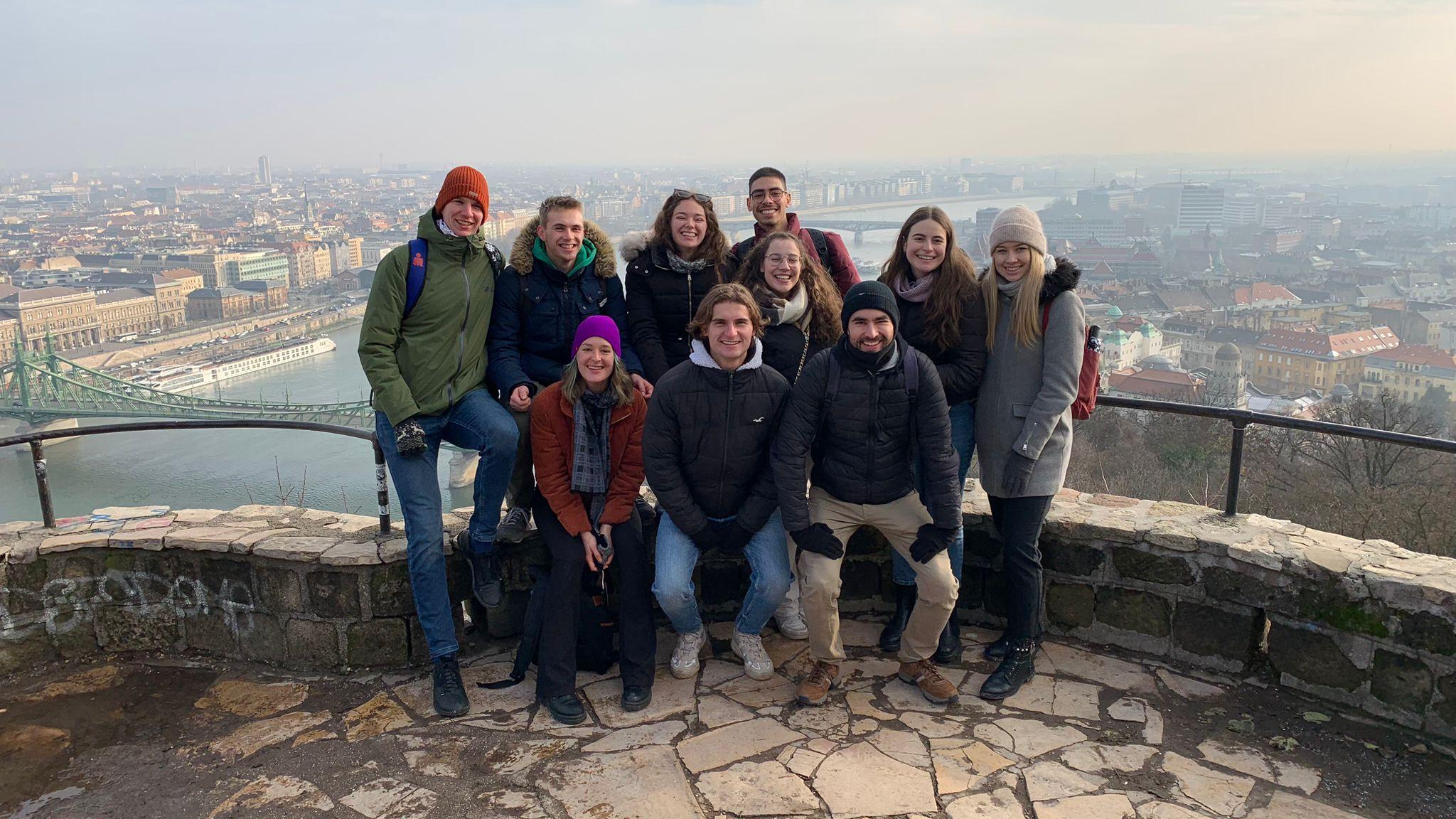
The real test, however, came during her third year of study when Liisbeth decided to go on an exchange program to the Faculty of Electrical Engineering and Computer Science at the University of Zagreb in Croatia. The decision wasn’t made on a whim — she had wanted to study abroad for a while even before the university.
The start of the exchange semester was challenging. A new country, a new environment, and dorm life meant a major change. Lectures were held in English, while everyday life was surrounded by a completely different language and culture. She had to adapt to many new situations.
Looking back, Liisbeth considers this experience very valuable. “I became more independent, broadened my horizons professionally, and made several lifelong friends,” she recalls the experience positively.
A Process Engineer is a Creative Problem-solver
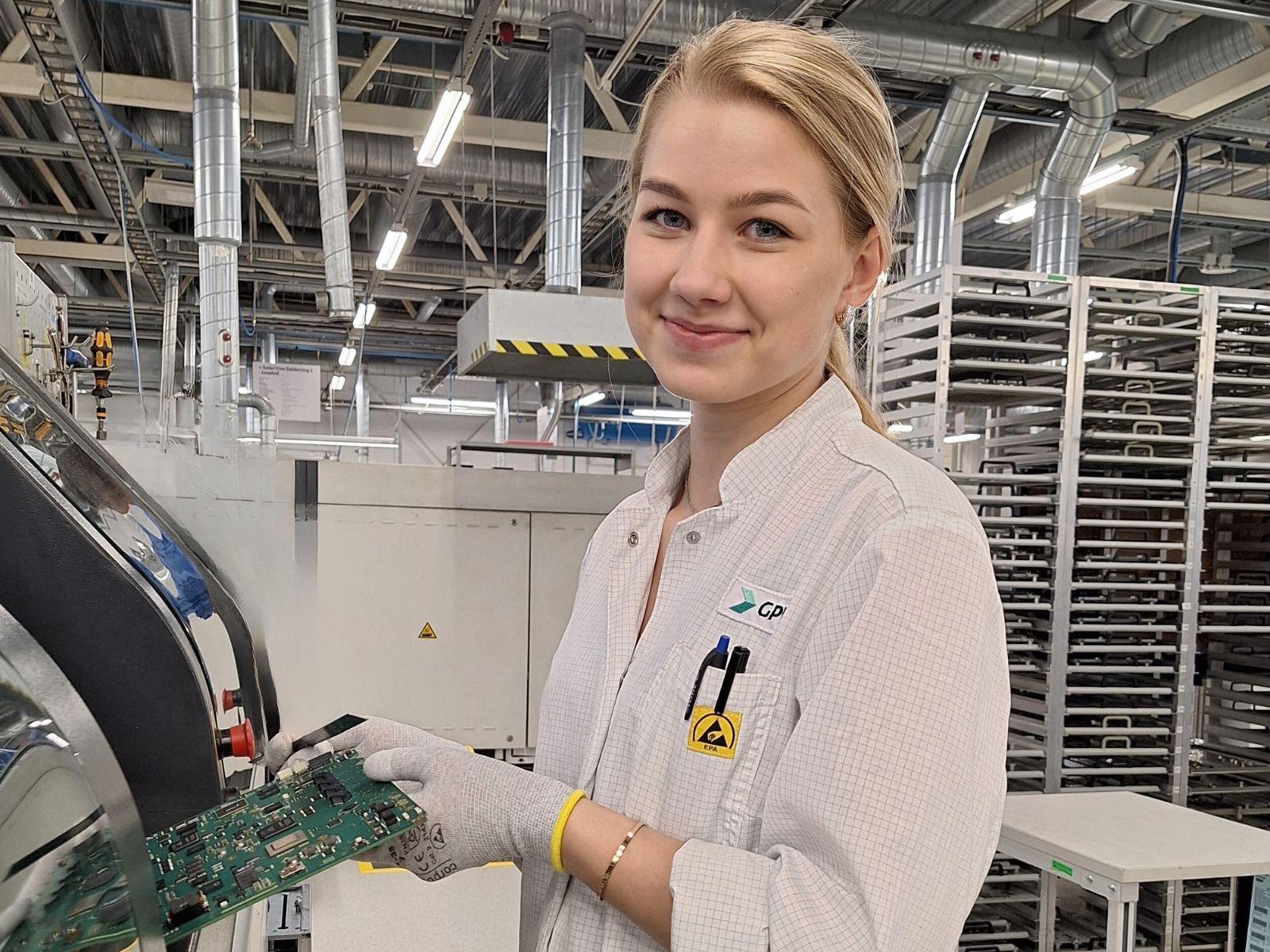
Today, Liisbeth works as a process engineer. It’s a job where every day is different and ready-made solutions aren’t provided.
A process engineer’s work involves both technical analysis and constant collaboration with others. In a single work week, there may be planning and implementing process improvements, introducing new products, conducting quality analyses, as well as a lot of communication with colleagues — both other engineers and production staff.
This is exactly the kind of work that characterizes modern engineering. It is not just technical calculation, but constant problem-solving, communication, and decision-making.
Although day-to-day engineering work may require creativity, a strong theoretical foundation is essential in engineering studies. Mathematics and physics are fields that you really need to understand and analyze systematically.
Liisbeth says that consistency and collaboration are what help most in these subjects. “It’s hard to do it alone, but it’s easier together — whether it’s studying or solving complex problems,” she emphasizes. The supportive network formed with students and colleagues is important both at university and in professional life.
At TalTech, she particularly values this sense of belonging. Studying and discussing together, as well as events organized by student organizations, create an environment where learning is not just an individual effort, but a shared journey.
Self-confidence in the Engineering World
As a woman in the engineering field, Liisbeth has not felt that she was treated differently during her studies. At the same time, she has noticed that doubts about the competence of female engineers can sometimes arise.
This means that women sometimes need to be even more self-confident and ready to prove their skills. At the same time, experience shows that when a woman chooses a career in engineering, she does so with full awareness and dedication.
Engineering is a field where there can be no compromises on competence. Solving problems requires precision, responsibility, and consistency — qualities that are not dependent on gender.
Why Pursue a Master’s Degree?
Continuing her studies toward a master’s degree in Industrial Engineering and Management was a logical step for Liisbeth. Although earning a master’s degree had been a goal of hers for some time, it wasn’t a definite plan immediately after she finished her bachelor’s degree.
However, life brought new opportunities and career developments. Her first internship led her into the industry, and the experience she gained there confirmed that this was the field in which she wanted to move forward. So it seemed natural to continue her studies at the master’s level in the same field.
TalTech’s master’s program is designed to be compatible with a full-time job. Many courses are directly related to Liisbeth’s daily work and provide a theoretical background for the problems she encounters in the industry. For example, she particularly remembers the courses on quality management and management psychology, the knowledge from which she was able to apply immediately at work.
In her master’s thesis, Liisbeth focuses on a complex challenge in industrial electronics manufacturing: the risks associated with the coexistence of lead-containing and lead-free processes. Although traditional lead-based soldering ensures better product reliability under harsh operating conditions, it is more harmful to both health and the environment. From a production perspective, this creates additional challenges.
Liisbeth’s research seeks technically and economically sound solutions for reducing the proportion of lead-containing products and the associated manufacturing risks, without compromising product quality. Her work goes beyond theoretical discussion; it supports a real-world decision to invest in a new selective soldering machine, which will significantly improve production efficiency and environmental sustainability.
Balancing work and studies, however, requires great dedication. Liisbeth works full-time in Tartu County while studying in Tallinn. This often means long drives and a tight schedule. At the same time, she considers maintaining balance important—even with a fast-paced life, one must find time to rest and recharge.
Advice for Future Engineers
Liisbeth looks to the future with a clear goal of contributing to the development of Estonian engineering and industry. At the same time, she wants to be a role model for the next generation of young people who are just beginning to consider a career in engineering.
The values that matter most to her are honesty, transparency, and the courage to take responsibility. These are qualities that help her make good decisions, whether she’s working as part of a team or solving complex problems.
For high school students who are still weighing their options, she offers a simple piece of advice: don’t be afraid to go to the university. If you choose a field that truly interests you, studying becomes much more exciting.
She also recommends seeking practical experience as early as possible. Internships, projects, and solving real-world problems help solidify knowledge and build confidence when entering the job market.
Liisbeth emphasizes that engineering isn’t just theory. It’s a path that leads from formulas to the real world — where engineers’ decisions and solutions shape our daily lives.