We all probably know that movement is the foundation of health and wellbeing. Despite this, 30% of adults and 81% of young people do not get enough physical activity (WHO estimates). Since movement benefits both body and mind, the final month of the “Sustainability Months” initiative focuses on mobility for wellbeing – in other words, moving for yourself.
Movement supports cardiovascular health, improves muscle strength and mobility, helps relieve stress and tension, supports mental balance and mood, and improves sleep and concentration. All of this is free and requires just one decision: I get up and go.
However, WHO studies show that physical activity declines in inverse proportion to economic growth – due to changes in transportation methods, increased use of technology, cultural values, and sedentary lifestyles. In 2022, one in eight people worldwide was obese, and in 2024, 35 million children under the age of five were overweight.
Movement supports cardiovascular health, improves muscle strength and mobility, helps relieve stress and tension, supports mental balance and mood, and improves sleep and concentration. All of this is free and requires just one decision: I get up and go.
However, WHO studies show that physical activity declines in inverse proportion to economic growth – due to changes in transportation methods, increased use of technology, cultural values, and sedentary lifestyles. In 2022, one in eight people worldwide was obese, and in 2024, 35 million children under the age of five were overweight.
Physical activity helps prevent cardiovascular diseases, cancer, and type 2 diabetes, reduces symptoms of depression and anxiety, and improves brain health. Physical inactivity, on the other hand, kills: it is one of the leading causes of disease and death worldwide. Preventable lifestyle diseases also place a heavy burden on economies through healthcare systems, costing globally about 27 billion dollars per year – and this does not even include significant indirect costs such as reduced productivity caused by inactivity. According to WHO, 4–5 million deaths per year could be prevented simply by increasing physical activity.
What exactly happens in the body when it moves?
Movement increases adrenaline levels, which speeds up breathing and makes the heart beat faster. The heart pumps more oxygen through the body with the blood. The body’s systems begin to convert stored fat or glucose into energy, generating heat. Released endorphins improve mood. In addition to strengthening muscles, bone density also increases.
Compared to muscles, neurons in the brain need about three times more oxygen to function. No fresh air, no brilliant ideas – so go outside for a walk!
The effect of movement on anxiety is quick and effective. For most people, symptoms decrease within 5–15 minutes after starting exercise and remain reduced for 2–4 hours after finishing.
Spending 20 minutes moving in a natural environment lowers stress hormone levels. In cases of mild depression, regular activity in nature can be as effective as antidepressants.
Exposure to natural daylight during the day makes it easier to fall asleep in the evening and improves sleep quality, as it helps regulate your circadian rhythm.
Nature also helps restore concentration and attention. Give yourself time away from artificial environments and you will be better able to focus afterwards.
Walking, especially in the afternoon or early evening, can help you relax and improve sleep quality, particularly REM sleep.
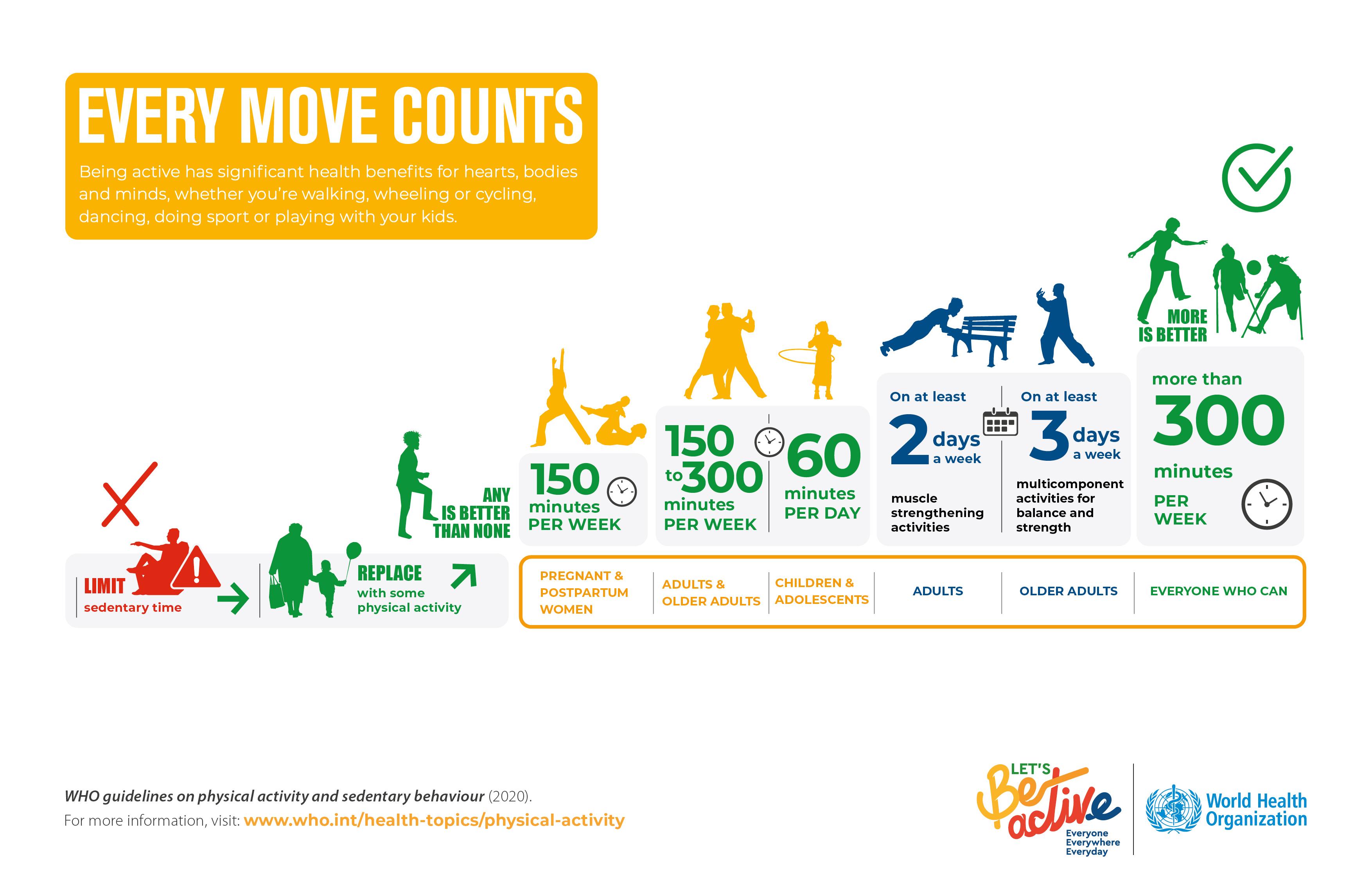
What matters is not intensity, but consistency. Every movement counts.
What everyone can do for their wellbeing:
- Move at least 60 minutes every day.
- If getting off the couch is difficult, find a step buddy or invite an old friend for a longer walk each week – you can also catch up while moving.
- Explore new routes instead of your usual ones – take a different path to the bus or shop, or take a walk in the biodiversity-rich campus forest after lunch. Discovering something new is good for your brain!
- Plan at least one hiking or health trail each week. You can find RMK hiking trails and Estonian health trails online.
- Do not forget strength training:
- Outdoor movement helps you stay in better shape, as your body constantly adapts to changing conditions, making it work more than in a stable indoor gym environment.
- If you take the bus, get off 1–2 stops earlier and walk the rest of the way.
- If you drive, park farther away from your destination – on a nearby street or at the far end of the parking lot.
- Use the elevator only when necessary – for example, if you have many items, many floors to climb, or heavy winter clothing. For just a few floors, you do not even save time by taking the elevator!
- Walk 10–15 minutes to lunch (see campus dining options HERE) or take 1–3 laps around the building after eating indoors.
- Combine movement with daily activities:
- stand while working for one hour a day
- replace coffee meetings with walking meetings
- take longer phone calls while walking
- put on your shoes standing up
- move between buildings on foot or by TalTech campus bikes
- …
- find your own movement bits and share them with others
- stand while working for one hour a day
- Relax with the Nature Museum’s audio-guided Path of Mindfulness and Peace.
- Plan your summer with the Estonian Fund for Nature conservation holiday calendar – you get fresh air and movement, nature gets support.
- Find here 14 ways how giving up your car improves your life.
- Watch the programme “On the Trails of Health” on Jupiter.
- Take Yale University’s course on the Science of Well-Being – it is free and open to everyone.
- Listen to Vikerraadio’s daily exercise programme (in Estonian - find a companion) at a fixed time every workday – set yourself a reminder and/or join as a group!
What we can do together at TalTech:
Take part in the inter-school step challenge.
Join the TalTech 10K run on 29 May – run or walk, compete or chat with friends, the main thing is to move!
Join the WhatsApp group, where we’ll share one daily activity prompt throughout May.
Let’s hold as many meetings as possible outdoors!
Print and place stretching guides in your kitchen area and near printers (example HERE).
Organise a step challenge or plank challenge with your colleagues (example HERE).
Do not forget to use the physical activity benefit in Stebby! Try different sports, participate in community events, or simply go to the nearest gym.
Find a suitable event in the Estonian Olympic Committee’s national movement calendar.
In May, walking meeting routes will be marked on the Mustamäe campus: two outdoors and one indoors.
52.8% of Estonians aged 16–64 are overweight or obese. Be sensible! Come by foot, bike, or bus. Explore campus cycling routes HERE.
If you are a lecturer, include stretching, breathing, or yoga breaks in your lectures. Sample exercises can be found HERE.
- Be prepared – in May, surprise trainers may visit your office! Take part in short guided exercise sessions.