
TECHNOLOGY TRANSFER
We help researchers develop, protect and bring new technologies to market

What is technology transfer?
Technology transfer at TalTech means granting rights or usage rights based on knowledge and research results created at the university from the university to businesses. The goal is to put research outcomes into practical use and support their journey to the market and society.
Technology transfer includes:
- Intellectual property rights, such as patents and patent applications, invention disclosures, research results, software, trademarks, trade secrets, and design rights
- Tangible assets, including equipment and materials related to the development or implementation of technology
University spin-off is a company that has grown out of TalTech and is established to commercialize technology, research results, or intellectual property developed at the university. These companies are typically founded by TalTech researchers, academic staff, or research employees and are based on research and development conducted at the university. TalTech may become a founding shareholder of a new spin-off in accordance with applicable rules and agreements.
In the case of a spin-off, the university receives equity in exchange for intellectual property, typically 5–10% at the company’s founding stage (with 90–95% belonging to the authors and co-founders).
The mission of the Technology Transfer Centre is to help bring research into business.
TALTECH’S SPIN-OFF SUPPORT JOURNEY:

Science-based spin-offs
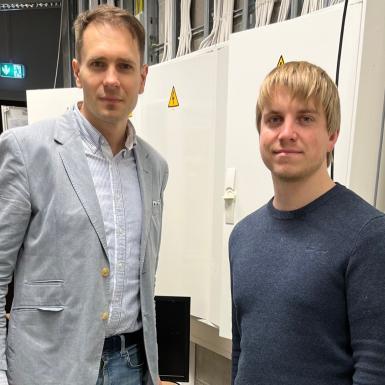
Success story of TalTech spin-off DCR Technologies
DCR Technologies is developing a power electronics platform that enables today's AC-powered devices to operate on future DC power grids without requiring hardware replacement. This allows existing equipment to remain compatible as energy systems increasingly transition towards direct current (DC) networks.
 More
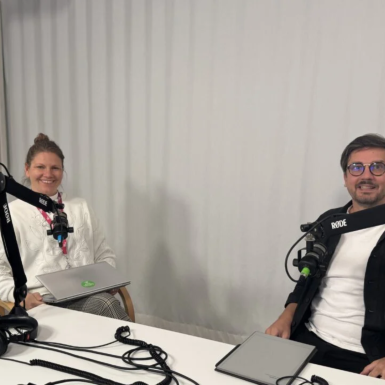
MoreSuccess story of TalTech spin-off ÄIO
The company’s goal is to valorize local by-products, such as sawdust, to create an environmentally friendly alternative to palm oil while also strengthening food security.
 More
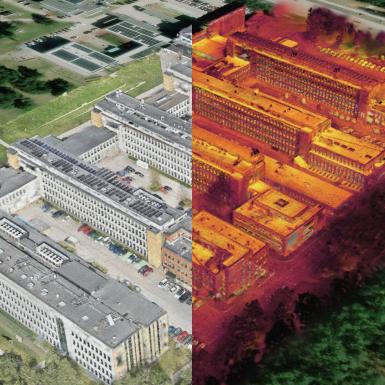
MoreSuccess story of TalTech spin-off C2GRID
The TalTech research spin-off C2Grid develops digital twins based on drone video, enabling training for crisis situations and the planning of battlefield operations.
 More
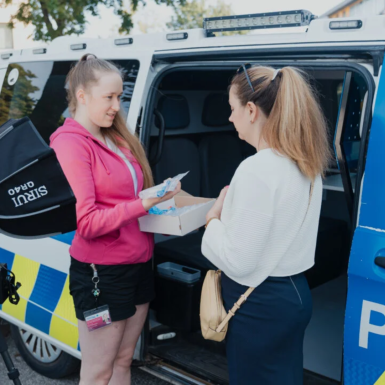
MoreSuccess story of TalTech spin-off SafePas
SafePas is developing a drug detection device called Drug Hunter, a portable analyzer that can determine the possible composition and quantity of illicit substances from a saliva sample in just a few minutes.
 More
MoreSuccess story of TalTech spin-off MindChip
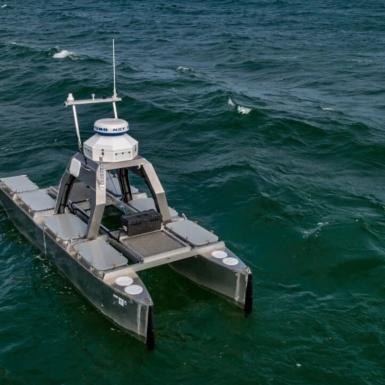
Estonian deep tech company MindChip, TalTech’s first official spin-off, is developing an AI-based autonomous captain - an intelligent system capable of independently navigating a vessel, assessing situations, and responding to the surrounding environment.
 More
MoreSuccess story of TalTech spin-off e-Pavement
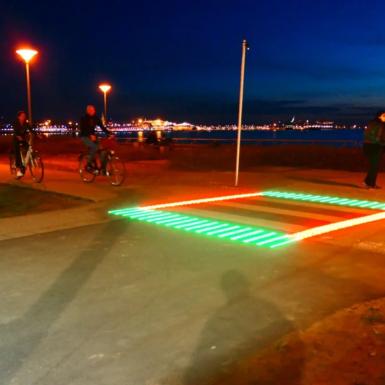
TalTech spin-off e-Pavement OÜ is dedicated to making pedestrian and micromobility paths safer and smarter.
 More
MoreASTRA+ Activity 3
The objective of ASTRA+ Activity 3 is to support research groups in assessing and increasing the market readiness of their research results. The project funds activities that help develop both technological and business maturity, including customer need validation, prototyping, business model testing, and intellectual property protection.
In the first call for proposals, 18 TalTech projects received funding.
Short summaries of ASTRA+ Activity 3 projects
Lignin generated as a by-product of the Kraft process is an abundant yet underutilized component of biomass, most often burned for low-value energy. At the same time, industry - for example manufacturers of carbon fibers, composite materials, and anode materials - requires lignin with very low ash content and a controlled chemical composition. However, existing lignin purification technologies are limited in efficiency, expensive, or unable to sufficiently remove metals and inorganic residues. As a result, the high-value applications of lignin remain largely untapped and its market potential unrealized. The DeAshLignin (DAL) technology for Kraft lignin purification, developed at Tallinn University of Technology, offers several advantages over existing technologies.
The aim of the project is to increase the commercialization potential and market value of the DAL technology.
Funding: €74,999.96
Europe is facing difficulties in ensuring the security of supply of basic chemical products - imports of chemicals into the EU have grown rapidly over the past 20 years (€325 billion in 2023), while domestic production has declined (since 2004), increasing dependence on third countries (Eurostat data). One critical group of basic chemicals is aliphatic dicarboxylic acids (DCAs), which mainly originate from China and are used to produce plasticizers essential for the plastics industry. Plasticizers improve the processability of polymer materials and the properties of end products. For example, PVC (polyvinyl chloride), the third most widely used polymer, is naturally rigid and brittle and practically unusable, but becomes flexible and moldable when plasticizers are added.
The tangible objective of this project is to develop and produce samples of plasticizers made from dicarboxylic acids derived from local raw materials and to determine their key properties. This will enable assessment of the target market and the need for intellectual property protection, as well as increase the team’s expertise in the field. The project focuses exclusively on civilian applications of plasticizers, such as in plastics, lubricants, construction materials, cosmetics, and similar products.
Funding: €74,999.92
Droplet microfluidics is an emerging technology where traditional laboratory tubes and microtiter plates are replaced with much smaller nanoscale “test tubes” in the form of water-in-oil emulsions. Each droplet functions as an individual test tube, enabling the study and screening of biomolecular activity at the single-cell level. Droplet microfluidics–based screening is a less resource-intensive alternative to conventional screening technologies: it is more cost-effective due to lower reagent use, faster because reactions occur in smaller volumes, and space-saving since the equipment fits on a benchtop.
The aim of the RAKUSÕEL project is to develop a service platform for screening biotechnologically important cells based on the sorting of water-in-oil droplets created using microfluidics. In collaboration with companies, this platform can be used to develop cells with new properties (bacteria, yeasts, animal cells, etc.), which can be applied to produce substances needed in the food industry, molecules required for biomedical diagnostics, or potential drug candidates.
Funding: €75,000.00
Droplet microfluidics is a potentially breakthrough biotechnology tool, as droplets enable highly multiplexed yet precisely controlled biotechnological workflows, such as detecting cell aggregates and variants, including specialized yeast strains for bioproduction or pathogenic bacteria, while using less reagent and energy than pipetting or continuous-flow analysis. However, the entry barrier for researchers is currently high: before starting value-creating work with new droplet-based biotechnology applications, researchers must invest more than €100,000 or spend one to two years developing a custom hardware system.
Limited equipment availability is a key bottleneck in droplet-based biotechnology. This diverts time and resources away from developing high-value biotechnological applications. Our technology aims to provide an integrated platform for generating and detecting droplets containing cell aggregates and variants. However, the current functional prototype lacks the usability features required for operation by a biologist end user, which is necessary for further commercialization. Before broader market entry, our intellectual property protection must also be expanded.
Funding: €74,999.75
The project addresses one of the biggest bottlenecks in recycling textile and footwear waste: the need for costly and time-consuming manual sorting to remove elements such as zippers, buttons, and linings. A semi-industrial prototype will be developed based on a novel “high-speed separation milling” technology created at TalTech. Unlike conventional shredders, which are sensitive to metal and plastic components, this system can process unsorted mixed waste, including buttoned garments, footwear, and contaminated workwear, efficiently separating it into fibers and other fractions.
The main objective is to advance the technology readiness level from laboratory proof of concept (TRL 4) to a technology validated in a relevant industrial environment (TRL 5). During the project, the device will be built and tested with various difficult waste streams, such as military uniforms and leather, to demonstrate its reliability and cost efficiency. This supports compliance with EU waste directives by reducing textile landfilling and incineration, while preparing the technology for patenting and commercialization.
Funding: €75,000.
Factory-produced timber elements with lightweight clay infill help the construction sector meet stricter environmental requirements and reduce carbon footprints. Prototypes made from local clay, hemp, and wood store significant amounts of carbon and are among the most sustainable solutions on the market. The project moves the product closer to market readiness by defining its technical performance and preparing a roadmap toward industrial-scale production.
Funding: €74,999.61
Kala-AI is a real-time, AI-based video monitoring solution for fish developed at TalTech. It automates freshwater fish monitoring and EU-compliant reporting and runs directly on underwater cameras using NVIDIA AI hardware accelerators. This significantly reduces data volumes, labor costs, and the need for cloud servers. The solution is adaptable to different water conditions and compatible with existing fish camera systems across Europe.
The aim of the project is to advance Kala-AI to the next level of readiness by focusing on deploying real-time AI-based video processing on local hardware, developing a flexible service-based business model, strengthening intellectual property protection, and creating a user-friendly annotation and management interface. This reduces dependence on external experts and lays the foundation for successful commercialization.
As a result of the project, annual labor costs for fish monitoring will be reduced to below €20,000 per monitoring site. A real-time AI-based video monitoring solution will be established, a provisional patent application will be filed to protect a novel camera-based AI hardware solution, a detailed data-driven business model will be developed, and users will be able to annotate their own camera data and adapt AI models. This will significantly improve the effectiveness of implementing the EU Water Framework Directive, the Nature Directives, and the Biodiversity Strategy for 2030.
The project supports increasing the innovation readiness of ReST, a tool developed at TalTech. ReST enables the planning of renovation strategies for building stock at the district level. During the project, the scientific prototype will be transformed into a usable and testable software component that can be applied in real planning processes. As a result, both customer readiness and team readiness will improve, meaning the tool will move beyond the laboratory environment and the development team will be strengthened.
Funding: €74,999.75
The project focuses on applying Contoured Air-Gap Topology (CAGT) in rotating electrical machines to overcome the structural limitations of conventional planar air-gap designs, which restrict torque increase and lead to additional losses and vibration. Laboratory tests and earlier prototypes have shown that a contoured air gap can significantly increase torque while keeping the size and mass of electrical machines minimal. However, broader adoption of the technology requires validation under industrially relevant conditions and initial confirmation of market needs.
The aim of the project is to advance the contoured air-gap topology from a laboratory-validated level to an industrially relevant environment by designing and manufacturing a full-scale demonstration prototype of an electrical machine and testing it under realistic load cycles. The goal is to raise the technology readiness level from TRL 4 to TRL 5. In parallel, targeted validation of market and user needs will be carried out to establish initial relationships with industrial partners and increase commercial readiness from CRL 1 to CRL 3.
As a result of the project, a full-scale demonstration model of an electrical machine with a contoured air gap will be built, successfully tested, and validated under realistic industrial operating conditions. The project will achieve TRL 5, supported by comprehensive technical documentation confirming the reliability and performance of the solution. In addition, initial market and customer validation will be completed, application areas will be defined, and strong first relationships with industrial partners and end users will be established, reaching CRL 3 and creating a solid foundation for further development and commercialization of the technology.
The project develops an intelligent adaptive electric traction drive control system that uses AI-based reinforcement learning and a digital twin to reduce energy consumption and improve reliability in electric vehicles. The solution integrates real-time sensor data, machine learning–based control, and a cyber-physical system into a unified platform that can be deployed across multiple locations and digital environments.
The aim of the project is to develop and validate a laboratory-scale intelligent electric drive system capable of dynamically adapting to vehicle states and environmental conditions, improving energy efficiency compared to static control methods. The project will raise existing research results to a technology readiness level that enables further commercialization and collaboration with industrial partners.
As a result of the project, a tested and validated intelligent electric traction drive laboratory prototype will be completed, including AI-based control software and a user interface. Technical and user documentation will be prepared to support the transfer of the system to different electric vehicle platforms, and a foundation will be established for intellectual property protection and further development of the technology in automotive and green technology applications.
The project focuses on completing the construction and development of TalTech’s autonomous vehicle, IseAuto v2.0. This is an open-source research and development platform designed to differ from closed commercial systems. During the project, the interior structures of the minibus will be completed, the necessary electronics installed, and sensors such as lidars, radars, and cameras integrated. A key component is updating the software and preparing the system for type approval by the Estonian Transport Administration to achieve road legality. In cooperation with Metrosert, safety verification and validation (V&V) methodologies will be developed.
The main objective is to create a unique, road-legal, and fully operational autonomous test platform in Estonia. This will enable researchers and companies, such as AuVe Tech, Clevon, and Milrem, to test algorithms, cybersecurity solutions, and V2X (vehicle-to-everything) communication in real traffic conditions. The project will raise the technology readiness level from TRL 4 to TRL 5 and lay the groundwork for the development of a reliable certification framework for autonomous vehicles.
Funding: €75,000.
A key barrier to the widespread use of electrical impedance methods is the lack of suitable solutions on the market. The aim of the project is to develop an advanced and novel electrical impedance measurement device that enables applications in healthcare, industry, materials science, and other fields. As a result of the work, both the technical maturity and the level of inventiveness will increase, ensuring the technical and commercial competitiveness of the solution. The project will also assess and develop the readiness of potential users and introduce the research group’s activities to prospective clients.
Funding: €74,999.75
The project focuses on developing a novel opportunity charging technology that creates a dense, low-power charging network in urban environments, for example by integrating chargers into street lighting poles. The work includes building a prototype of a bidirectional (V2G) DC–DC charger that is modular and cost-effective. Unlike conventional solutions, this device allows an electric vehicle to function as a mobile energy storage unit, helping to balance grid loads. The technology builds on earlier research by TalTech scientists (buck–boost topology) and is designed to be compatible with a wide voltage range (150–1000 V), making it suitable for next-generation electric vehicles.
The main objective is to advance the technology to TRL 5 by developing and testing a reliable 5 kW prototype in real-world conditions, featuring a closed-loop control system and an enclosure suitable for outdoor use. The goal is to provide a solution that alleviates the shortage of charging points in cities, reduces infrastructure deployment costs, and offers grid operators the flexibility needed for load management.
Funding: €75,000.
The LignoQuat Antibacterial Technologies project focuses on wood valorization and the chemical functionalization of lignin to develop biodegradable, metal-free, and environmentally friendly antibacterial solutions and coatings. These offer a sustainable alternative to conventional disinfectant products that often contain toxic metals. The development includes both a sprayable surface coating for everyday use and a nanoscale coating that can be integrated into textiles or covalently bonded to them. Laboratory-validated prototypes have already demonstrated strong antibacterial activity against pathogenic microorganisms.
The aim of the project is to bring existing functional prototypes closer to market by optimizing and validating lignin-based quaternary antibacterial formulations in real-life use scenarios. The project will increase customer readiness by gathering feedback from target groups and conducting target market analysis. In parallel, business readiness will be developed by defining the value proposition, mapping customer segments, and preparing an initial commercialization strategy. An intellectual property protection approach will also be prepared to support market entry and partnerships in the textile, healthcare, and cleaning products sectors.
As a result of the project, improved and validated lignin-based antibacterial prototypes will be developed in two product formats: a sprayable surface coating and a textile-compatible nanoscale coating. Evidence based on real-condition testing will be compiled to demonstrate effectiveness, stability, and user safety. Customer readiness will increase from level 2 to level 3, and business readiness from level 1 to level 2, supported by clearer market focus, value proposition, and initial business model concepts. In addition, an intellectual property protection strategy and commercialization preparation will be completed to enable cooperation with manufacturing and industrial partners.
The project increases the innovation readiness of TeKES, a knowledge-based configuration expert system developed at TalTech for the renovation of typical apartment buildings. The focus of the project is on developing a building baseline data model and a building data validation module, which enable the collection and verification of input data for more accurate assessment of renovation strategies, along with relevant user testing. As a result, the system’s capability to respond to societal and economic needs related to building stock renovation will improve.
Funding: €74,999.75
The project focuses on developing a novel engineering tool for the shipbuilding sector that enables rapid assessment and optimization of ship hull structures, specifically stiffened panels. The tool is based on the ESL (Equivalent Single Layer) method developed by TalTech researchers (Prof. Kõrgesaar’s research group), which replaces complex 3D models with simpler 2D equivalent models. The project’s innovation lies in integrating machine learning (ML): time-consuming simulations used to determine stiffness matrices are replaced with fast ML-based predictions using a “black box” approach. This allows engineers to analyze ultimate strength and weight already in the early design phase without requiring deep data science expertise.
The main objective is to raise the technology readiness level of the method from TRL 4 to TRL 5 and to create a practical tool that can reduce design and calculation time by up to ten times. This directly supports the goals of the EU Green Deal by enabling the design of lighter and more energy-efficient ships and providing Estonia’s maritime industry, such as ship retrofit companies, with a competitive advantage in offering high value-added services.
Funding: €75,000
The project develops a science-based functional food that helps naturally suppress Helicobacter pylori, a bacterium that causes gastric ulcers and stomach cancer. The approach uses a lactic acid bacterium isolated from the human stomach and explores its cultivation in foods while valorizing local raw materials such as carrot juice or whey. The result is a probiotic everyday food that offers an alternative to dietary supplements.
Funding: €74,800.
The project addresses one of the most critical gaps in smart grids: the lack of real-time, synchronized state data in low-voltage distribution networks. While the physical components for energy production and storage already exist, grid operators and energy communities often lack the data needed to make informed decisions, such as when to store energy or feed it into the grid. The project focuses on the further development of an autonomous data acquisition platform (measurement device) capable of reliably collecting and transmitting synchronized voltage and operational data with second-level accuracy in outdoor environments and substations.
The main objective is to advance the measurement platform to Technology Readiness Level 5, meaning the device will be made reliable under real operating conditions, ensuring resilience to faults and weather. In parallel, the project will increase commercial readiness to CRL 3 by mapping technical requirements and data exchange standards in collaboration with distribution network operators, such as Elektrilevi, and system integrators, such as Harju Elekter. This will enable the broader future deployment of flexibility services.
Funding: €75,000.
Short summaries of SEKMO projects
The project focuses on the commercialization of a universal wireless charging station for light electric vehicles, such as e-scooters and other micromobility devices. The current micromobility market is fragmented and inefficient, relying heavily on costly manual charging and logistics operations. The technology being developed addresses this challenge by enabling automatic, contactless charging for vehicles from different manufacturers with battery voltages ranging from 24V to 96V.
During the project, the technology readiness level will be increased to TRL 7, a prototype will be developed, and pilot deployments will be carried out at the TalTech campus, in Rapla, and in Tallinn. The project involves an experienced industry expert who will lead the technology transfer and collaboration with key partners, including Hoog Mobility, BiKeep, and Bolt.
The main objective of the project is the successful commercialization of a research-based charging solution that supports the development of smart cities and sustainable mobility.
- Technological validation: To develop and test a universal charging station compatible with different battery voltages and manufacturers.
- Economic efficiency: To reduce operational costs for mobility service providers and increase the attractiveness of micromobility services through automated charging infrastructure.
- Knowledge transfer: To transfer power electronics solutions developed at the university into industry, contributing to the objectives of the Estonian research and development strategy TAIE in the focus area “Digital solutions in every area of life.”
Funding amount: €151,454.39
Project period: 1 March 2025 – 28 February 2027
The objective of the project is to develop the prototype of a solid-state fermentation experimental device, created at TalTech, into an industrial-scale unit and to establish a viable business model for it.
As a result, an innovative fermentation device will be developed that enables the valorisation of food industry by-products. Its productivity and suitability for industrial use will be demonstrated, and a commercialisation strategy will be developed together with identified customers.
To implement the planned activities, a top-level specialist with an industrial background will be recruited to the technology transfer team, bringing expertise and practical experience in food industry equipment and processes.
The project directly contributes to the TAIE focus area of valorisation of local resources (food), one of whose priority directions is research and development for the sustainable valorisation of food raw materials.
The total eligible cost of the project is €73,665.70, of which the maximum support rate is up to 85%, and the required co-financing is at least 15% of the eligible costs. The maximum amount of support is €62,615.84.
Project period: 1 October 2024 – 30 September 2026.
The aim of the project is to develop the information technology environment and financial technology tools required by Tallinn University of Technology's Finance Research Group to conduct experimental finance research. The project will result in web-based financial planning tools and calculators, as well as an investment decision simulation platform that enables researchers to study people's financial behaviour under controlled conditions and test which interventions can positively influence financial decision-making. The tools intended for public use will be released as open-source software and made freely available during the project.
To implement these activities, the research group will recruit a highly qualified software developer with expertise in user interface development and financial data processing.
The project contributes to the Estonian Research, Development, Innovation and Entrepreneurship Strategy (TAIE) priority area, Digital Solutions in Every Area of Life, by developing software solutions that support scientific research and improve access to financial literacy tools and financial advisory services, particularly for vulnerable and lower-income target groups as well as people living in rural and remote areas.
The total eligible project budget is €149,805.19, of which up to 85% is covered by the grant, while the beneficiary provides at least 15% co-financing of the eligible costs. The maximum grant amount is €127,334.41.
Project period: 1 January 2025 – 31 December 2026
The aim of DIGIHUB is to enable the interoperability of health data from TalTech’s Department of Chemistry and Biotechnology with European health data spaces by establishing an institutional digital hub for the standardised preparation, sharing and integration of data. An intersectoral expert will be involved in the project to support the transition from fragmented, laboratory-based practices to collaborative data management. The project will result in a functional data governance framework that enhances the efficiency, visibility and international competitiveness of the university’s research activities.
Funding amount: €135,946
Project period: 1 February 2026 – 31 January 2028
For TalTech employees
To report an invention:
- Please complete the Invention Disclosure Form or submit a free-form invention disclosure to [email protected]
- The Technology Transfer Centre, in collaboration with researchers, evaluates the commercial potential of inventions and conducts analyses of novelty and inventive step based on a commercialization plan.
- For inventions with strong potential, the intellectual property protection process is initiated. To file a patent application, an Intellectual Property Agreement must be signed by the authors, the institute director, and the dean.
All document templates are available on the TalTech intranet
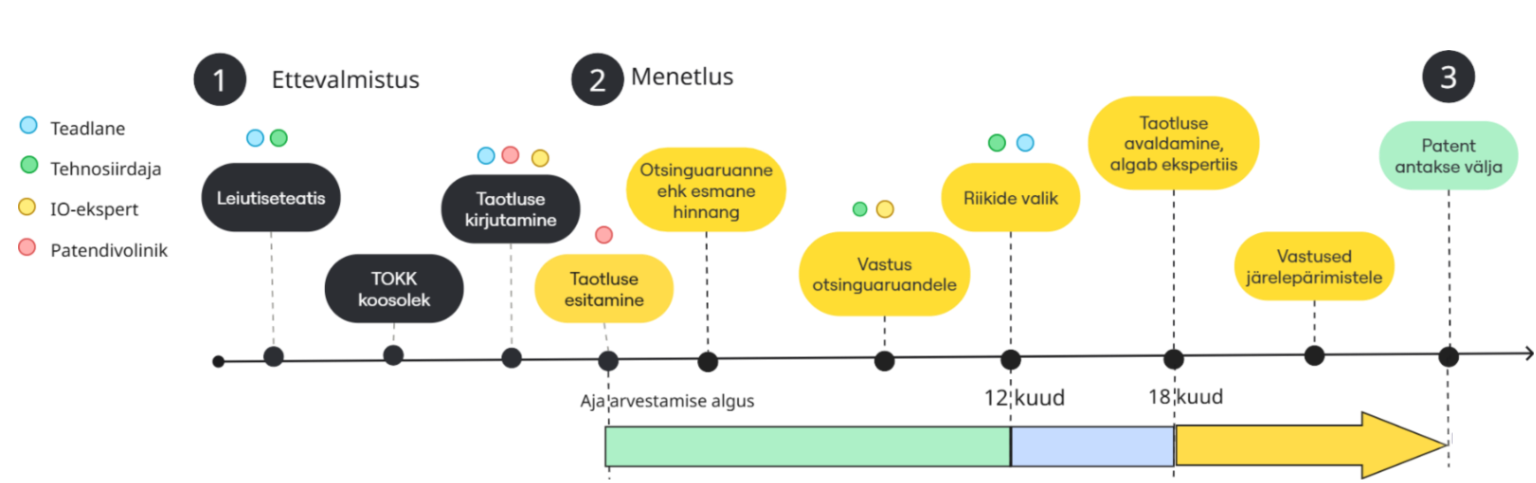
If commercial potential and inventive step are confirmed, the university will file a patent application.
This is followed by active commercialization in collaboration with the technology transfer officer and the inventors, based on a commercialization plan.
Revenue from intellectual property is distributed according to the following principles:
- In the case of industrial property, the inventors receive at least 40% of the revenue and the university at least 20%. The remaining 40% depends on commercialization-related costs and agreements and is coordinated with the inventors.
All document templates are available on the TalTech intranet.
TalTech encourages researchers to establish spin-off companies.
When creating a spin-off, the intellectual property (IP) developed by the authors is transferred to the company. In return for the intellectual property, the university receives a 5–10% equity stake in the spin-off at the time of its establishment.
To enter into the cooperation agreement required for founding a spin-off, please complete the “Cooperation Agreement” form and send it to [email protected]. The agreement defines the terms for transferring intellectual property and the university’s ownership share in the spin-off.
When evaluating a spin-off, TalTech considers factors similar to those assessed by investors: the university’s main contribution is intellectual property, while investors contribute capital and experience in building successful startups. To attract future investors, the competence and composition of the founding team, as well as the distribution of equity in the company, are important.
More detailed information and all document templates are available on the TalTech intranet.
Development grants for 2025 are allocated.
The 2026 call is currently in the planning stage.
More detailed information is available on the TalTech intranet.
One way to transfer knowledge and technologies is through licensing.
The Technology Transfer Office supports researchers by:
- assessing the commercial potential of an invention
- developing an intellectual property strategy
- preparing a commercialization plan
- creating technology presentation materials
- identifying licensing opportunities
The process of licensing and selling technology follows the agreed commercialization plan.
More detailed information is available on the TalTech intranet.
For companies and partners
A range of innovative technologies with strong commercialization potential is being developed at TalTech. We are actively looking for co-development partners, licensing partners, and co-founders for startup creation to bring these solutions to real market needs.
If you see potential for collaboration or find a technology of interest, explore our technology portfolio and feel free to get in touch.
