
Keynotes
We are happy to announce that the following keynote speakers will present at the IEEE PEMC 2026.
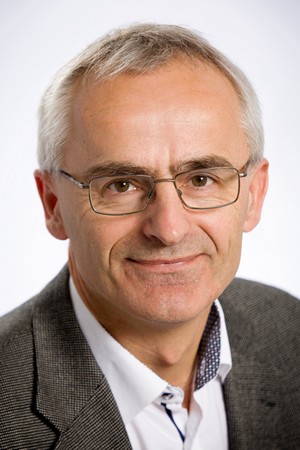
Power Electronics Technology – Trends and Applications
Abstract. The world is becoming more and more electrified combined as the consumption is steadily increasing – we expect doubling until 2050 - at the same time there is a large transition of power generation from fossil fuel to renewable energy which all together challenges the modern power system but also gives many new opportunities. We also see large steps being taken to electrify the transportation – where better environment, independency as well as higher efficiency are driving factors. One of the most important technologies to move this forward is the power electronics technology which has been emerging for decades and challenges are still seen in the technology usage. This presentation will be forward looking in some exciting research areas to further improve the technology and the systems it is used in. Following main topics will be discussed: the evolution of power devices, renewable generation, reliability in power electronics and use of AI power electronic based power system.
Bio: Frede Blaabjerg (S’86–M’88–SM’97–F’03) was with ABB-Scandia, Randers, Denmark, from 1987 to 1988. From 1988 to 1992, he got the PhD degree in Electrical Engineering at Aalborg University in 1995. He became an Assistant Professor in 1992, an Associate Professor in 1996, and a Full Professor of power electronics and drives in 1998 at AAU Energy. From 2017 he became a Villum Investigator. He is honoris causa at University Politehnica Timisoara (UPT), Romania in 2017 and Tallinn University of Technology (TTÜ), Estonia in 2018.
His current research interests include power electronics and its applications such as in wind turbines, PV systems, reliability, Power-2-X, power quality and adjustable speed drives. He has published more than 800 journal papers in the fields of power electronics and its applications. He is the co-author of ten monographs and editor of twenty books in power electronics and its applications eg. the series (4 volumes) Control of Power Electronic Converters and Systems published by Academic Press/Elsevier.
He has received 46 IEEE Prize Paper Awards, the IEEE PELS Distinguished Service Award in 2009, the EPE-PEMC Council Award in 2010, the IEEE William E. Newell Power Electronics Award 2014, the Villum Kann Rasmussen Research Award 2014, the Global Energy Prize in 2019 and the 2020 IEEE Edison Medal. He was the Editor-in-Chief of the IEEE TRANSACTIONS ON POWER ELECTRONICS from 2006 to 2012. He has been Distinguished Lecturer for the IEEE Power Electronics Society from 2005 to 2007 and for the IEEE Industry Applications Society from 2010 to 2011 as well as 2017 to 2018. In 2019-2020 he served as a President of IEEE Power Electronics Society. He has been Vice-President of the Danish Academy of Technical Sciences.
He is nominated in 2014-2021 by Thomson Reuters to be between the most 250 cited researchers in Engineering in the world.
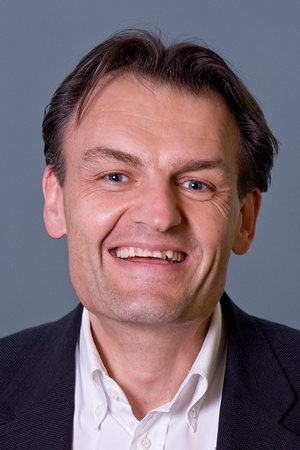
Engineering a Planetary UHVDC Grid – Energy Superabundance or Mission Impossible
Abstract. The transition toward Net-Zero 2050 is driving an unprecedented expansion of renewable electricity generation while simultaneously increasing the need for large-scale energy storage and long-distance power transmission. This presentation explores a provocative question: could a globally interconnected ultra-high-voltage DC (UHVDC) electricity grid enable continuous utilization of solar and wind resources across continents and ultimately provide a pathway toward energy superabundance? Rather than advocating a specific roadmap, the presentation applies engineering reasoning to assess whether a planetary UHVDC grid is merely visionary science fiction or a technically plausible long-term option deserving serious scientific consideration.
The talk begins by motivating the concept through the global distribution of renewable resources, the Earth's day-night cycle, and the limitations of regional energy systems. Historical visions, from Buckminster Fuller's World Grid to Soviet-American interconnection concepts and early superconducting-grid proposals, are reviewed alongside today's ambitious projects linking Australia and Singapore, Morocco and the United Kingdom, Azerbaijan and Europe, and other emerging intercontinental transmission concepts.
Building on existing UHVDC technology, the presentation examines the practical engineering challenges of realizing a planetary transmission network, including overhead lines, long-distance subsea cables, UHVDC converter stations, protection, cable manufacturing and installation, operational stability, and optimal power-flow management. The required material resources, realization costs, and resulting levelized cost of electricity are estimated and compared with global mining capacities and current expenditures for fossil energy.
Finally, the concept is contrasted with alternative visionary energy infrastructure concepts, including space-based solar power, and evaluated from engineering, economic, and geopolitical perspectives.
Bio: Johann W. Kolar received his M.Sc. and Ph.D. degrees (summa cum laude – promotio sub auspiciis praesidentis rei publicae) from the University of Technology Vienna, Austria. After spending 15 years as an international consultant and independent researcher, he was appointed Associate Professor and Head of the Power Electronic Systems Laboratory at the Swiss Federal Institute of Technology (ETH) Zurich in 2001 and was promoted to Full Professor in 2004.
Over the course of his career, he has proposed numerous novel converter concepts, including the Vienna Rectifier and the Sparse Matrix Converter, spearheaded the development of x-million-rpm motors, and pioneered fully automated, multi-objective power electronics design procedures. He has personally supervised more than 90 Ph.D. students to completion, has extensively published in IEEE Transactions, is named as inventor on numerous granted patents, and has received several prestigious awards, including the 2016 IEEE William E. Newell Power Electronics Award, the 2016 IEEE PEMC Council Award, the 2025 IEEE Medal in Power Engineering, and two ETH Zurich Golden Owl Awards for excellence in teaching.
As Professor Emeritus (since August 2024), he actively continues to pursue research in ultra-compact and highly efficient wide-bandgap (WBG) converter systems, AI and machine learning applications in power electronics, solid-state transformers, and the life cycle analysis of power electronic converter systems. He is an International Member of the U.S. National Academy of Engineering (NAE), a Fellow of the National Academy of Inventors (NAI), and an IEEE Life Fellow.
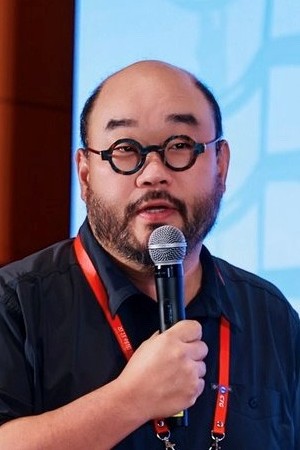
Emerging Motor Drive Technologies: Advances in Single-Inverter Dual-Motor and Open-End Winding PMSM Drive Systems
Abstract. The increasing demand for high-efficiency, compact, and cost-effective electrified systems has accelerated the evolution of motor drive technologies beyond conventional one-inverter/one-motor architectures. Among these, Single-Inverter Dual-Motor (SIDM) and Open-End Winding Permanent Magnet Synchronous Motor (OEW-PMSM) drive systems have attracted significant attention for applications including electric vehicles, railway traction, aerospace systems, and industrial automation.
This keynote presents recent advances in the design, control, and reliability enhancement of SIDM and OEW-PMSM drive systems. For SIDM drives, the presentation discusses the fundamental operating principles, dynamic stability issues caused by the strong coupling between parallel-connected motors, and advanced control strategies for improving synchronization stability and operating efficiency. Particular emphasis is placed on active damping control with systematic gain design, mathematically based transfer-function linearization, and predictive maximum torque per ampere (MTPA) control for copper-loss minimization.
The presentation further discusses OEW-PMSM drive systems, highlighting their superior DC-link voltage utilization, extended operating speed range, and fault-tolerant capability. Advanced control techniques for suppressing zero-sequence current, seamless mode transition between closed-end and open-end winding configurations, and real-time open-circuit fault diagnosis are presented together with experimental validation.
Bio: Kyo-Beum Lee is a Professor in the Department of Electrical and Computer Engineering at Ajou University, Korea, and a leading researcher in power electronics and electric drive systems. His research covers high-performance motor drives, fault diagnosis and fault-tolerant control, multi-level and multi-inverter systems, and reliability enhancement of power electronic systems.
He has conducted extensive collaborative research with major industrial partners, including LG Electronics and LS Electric, focusing on practical challenges in inverter-fed motor drive systems, industrial power converters, and reliability-critical applications. Through these collaborations, his work has contributed to the development of advanced control, diagnosis, and fault-tolerant technologies that bridge academic research and real-world industrial systems.
Professor Lee has published widely in leading international journals such as IEEE Transactions on Power Electronics and IEEE Transactions on Industrial Electronics, and has actively served the IEEE community for nearly two decades, including long-term service as an Associate Editor of major IEEE journals. He is a frequent keynote and invited speaker at international conferences.
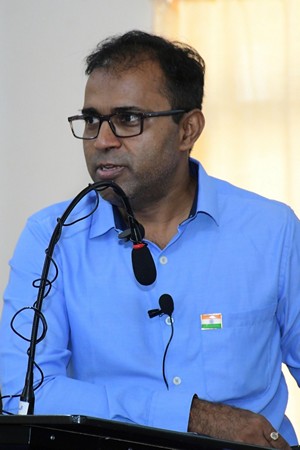
Wide Band Gap Power Electronics for Electrification and Industrial Energy Systems
Abstract. This keynote will share insights on electrification in Singapore, focusing on renewable integration and transportation electrification across all sectors. As an island city-state, Singapore has four functional microgrids and is heading towards its net-zero vision and decarbonization mission. Singapore has its energy reset and green energy plans for the next three decades. Electric mobility is an important aspect of this effort, and Singapore is focusing on land, air, and sea electrification. By 2050, all land transportation in Singapore will be electric, as will most sea vessels. Additionally, low-carbon data centres, vehicle-to-grid (V2G), and hydrogen energy are ongoing applied research activities. Power electronics is one of the key enablers and integration technology. Its reliability and efficiency relate to the life cycle cost, energy efficiency, and energy savings. Silicon semiconductor-based power electronics have hit their technical limits and wide band gap (WBG) semiconductors are the future of power electronics. This talk will share some details about ongoing research and development activities in WBG semiconductor devices and power electronics, focusing on achieving better component utilization and energy savings along with some results. The talk will discuss the associated challenges and the further scope of work.
Bio: Akshay Kumar Rathore is a Professor and Director of Power and Energy Research Area in the department of electrical and computer engineering at the National University of Singapore. His research focuses on power electronics and control of electric motor drives. He is an IEEE Fellow and a recipient of several prestigious awards, such as the IEEE IAS Andrew W Smith Outstanding Young Member Achievement Award, the Isao Takahashi Power Electronics Award, the IEEE David Irwin Early Career Award, the IEEE Bimal Bose Award for Industrial Electronics Applications in Energy Systems, the Nagamori Award, and the distinguished alumnus award (young achiever) from IIT (BHU) Varanasi, India.
Prof. Rathore has contributed to above 300 papers on soft-switching current-fed DC/DC converters, multilevel inverters, and DCM rectifiers, including about 110 IEEE Transactions. He edited a book on advanced concepts and technologies for electric transportation, published by CRC Press in 2022. He has delivered above 200 invited talks, keynotes, and tutorials in several events across the globe. Presently, he is a co-Editor-in-Chief of IEEE Transactions on Industrial Electronics, Distinguished Lecturer of the IEEE Power Electronics Society, and is serving on the committees of the IEEE Medal in Power Engineering, IEEE Nikola Tesla Award and IES Fellow Evaluation Committee. He is a member of the IEEE IAS Society Executive Board and IES Society AdCom.
Advancing Grid Flexibility with Hybrid Distribution Transformers
Abstract. The rapid growth of distributed energy resources and the increasing demand for flexibility in modern power systems create new challenges for distribution networks, particularly in maintaining high power quality and ensuring reliable operation. Among the emerging technologies addressing these challenges, Hybrid Distribution Transformers (HDTs) have attracted significant attention as an intermediate solution between conventional Distribution Transformers (DTs) and Solid-State Transformers (SSTs).
This keynote will present a comprehensive overview of the current state of HDT technology, covering their main configurations, control strategies, operational principles, and distinctive features. Particular emphasis will be placed on the concept of partial power processing, which enables HDTs to combine the proven reliability, robustness, and high short-circuit capability of conventional transformers with the advanced controllability and fast dynamic response offered by power electronic converters.
The keynote will highlight the potential of HDTs to enhance distribution grid power quality through accurate regulation of load voltages and grid currents, while supporting the integration of renewable energy sources and increasing the operational flexibility of future power systems. The presentation will also address the key technical challenges associated with the large-scale deployment of HDTs, including the development of highly efficient converter-based configurations, adaptive and reconfigurable HDT structures, and operation strategies for future converter-dominated power grids.
The keynote will provide insights into how hybrid transformer technologies can contribute to the transition toward more resilient, intelligent, and flexible distribution networks.
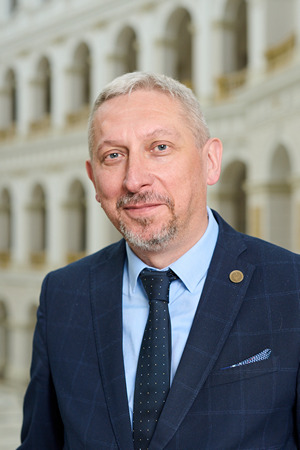
Bio: Mariusz Malinowski is a Professor at Warsaw University of Technology, Vice-Rector (Vice-President) for Research. He was a visiting professor in the following institutions: Aalborg University (Denmark), University of Nevada (Reno, USA), Technical University of Berlin (Germany), Universidad Tecnica Federico Santa Marıa (Chile), University of Cergy-Pontoise (France), ENSEEIHT - Laplace (France), and ETH Zurich (Switzerland). He has published over 200 papers and numerous books and has been granted several patents. He participated in over 30 research/industrial projects. He has been a reviewer and PhD commission member for numerous PhD theses in Germany, Spain, Denmark, Australia, India, Switzerland, the UK, and Poland. Mariusz Malinowski is a member of the Polish Academy of Science and the Polish Council of Scientific Excellence. He was awarded many national and international research awards, including the IEEE Awards. He was the IEEE IES President (2022-2023) and Chair of the IEEE Poland Section (2016-2019).
From Technical Expert to Technical Leader: Career Curves for Women in Engineering
Abstract. Women have historically been a minority in engineering. In fields such as power electronics, the journey can feel even lonelier. Why is this, and what happens when women who have built strong technical careers begin to step into leadership?
This talk explores the transition from technical expert to technical leader, drawing on personal experiences of building a career in power electronics, research, education and professional engineering leadership. It examines some of the challenges women encounter as they progress through traditionally male-dominated technical environments, but also asks a different question: what strengths can women bring to engineering leadership that can amplify the impact of an entire research team?
Communication, empathy, collaboration, mentoring, relationship-building and the ability to create inclusive environments are often dismissed as “soft skills”. Yet, in research and engineering teams, these skills can be powerful enablers of innovation, creativity and collective technical performance. Through personal reflections and practical examples, the talk considers how women can retain their technical identity while expanding their influence—and how technical leaders, regardless of gender, can create environments where diverse strengths translate into stronger engineering outcomes.
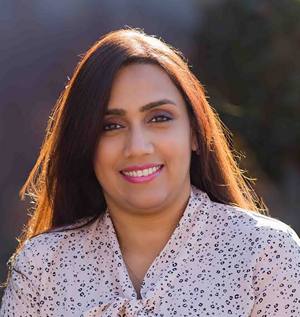
Bio: Dulsha Kularatna-Abeywardana is a Senior Lecturer in the Department of Electrical, Computer and Software Engineering at the University of Auckland, New Zealand. She received her B.E. and M.E. degrees with First Class Honours and her Ph.D. in Electrical and Electronic Engineering from the University of Auckland. Her research interests include power electronics, supercapacitor-based energy storage, renewable energy harvesting, wireless power transfer, electropermanent-magnet actuators, sensor electronics and microfluidic systems.
Her current research focuses on sustainable energy storage, conversion and delivery, particularly supercapacitor-integrated solutions for portable electronics, battery-less IoT systems, DC appliances and self-powered medical devices. She has authored or co-authored more than 30 peer-reviewed journal and conference papers.
Dr Kularatna-Abeywardana is a Senior Member of IEEE and an active advocate for STEM education and women in engineering. She has held leadership roles including Chair of IEEE Women in Engineering New Zealand North, Secretary of the IEEE New Zealand North Section, member of the IEEE Region 10 Women in Engineering Committee, and General Chair of the 2023 IEEE Women in Engineering International Leadership Summit in Auckland. She is also a co-founder of Little Engineers, an initiative that introduces children to electronics through practical, hands-on learning.