
Tutorials
The following tutorials will be included in the technical program of the IEEE PEMC 2026 conference.
Grid Interfaces and Electric Drive Systems in the Era of Monolithic GaN AC-Switches
Duration: 120 minutes
Abstract. Grid interfaces and electric drive systems have traditionally been dominated by voltage-source converter (VSC) architectures, largely due to long-standing limitations of power semiconductors to unipolar voltage blocking devices. In particular, the lack of efficient, compact, and reliable bidirectional/bipolar voltage-blocking switches has restricted the practical adoption of converter topologies such as current-DC-link/source converters. Recent advances in monolithic bidirectional GaN AC switches (MBDSs) fundamentally change this situation by enabling true bipolar voltage blocking with significantly reduced chip area and lower conduction losses. This tutorial provides a comprehensive overview of grid interfaces and electric drive systems in the era of monolithic GaN AC switches. It begins with an introduction to the structure, controllability, and performance characteristics of MBDS devices, including a comparison to conventional unipolar switch solutions. Building on this foundation, converter topologies that directly benefit from bidirectional/bipolar switching capability are revisited, including new rectifier topologies, three-level T-type converters, current-source converters (CSCs), with a focus on operating principles, performance characteristics, dynamics, and reliability aspects in comparison to state-of-the-art VSC solutions. The second part of the tutorial focuses on drive applications enabled by current-source inverters (CSIs). PMSM and reluctance motor drive systems are discussed, covering modulation strategies, control concepts, wide voltage-range operation, and emerging modular CSI architectures for sector and distributed motor drives. Particular attention is given to safety and reliability aspects, including overvoltage behavior and protection concepts inherent to current-source systems. The tutorial concludes with an outlook on future research directions and application opportunities for GaN-enabled PWM rectifiers and drive systems.
Instructors:
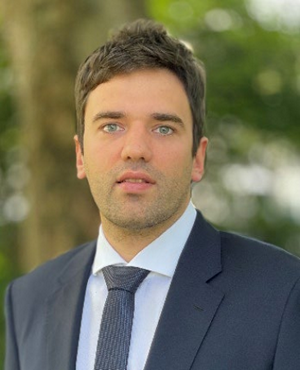
| Spasoje Mirić received his B.Sc., M.Sc., and Ph.D. degrees in Electrical Engineering from the University of Belgrade, Faculty of Electrical Engineering. In 2021, he earned a second Ph.D. at ETH Zurich in advanced mechatronic systems and subsequently worked there as a postdoctoral researcher. From 2023 to 2025, he served as an Assistant Professor for Energy and Drive Systems at the University of Innsbruck. Since January 1, 2026, he has been a Full Professor for Electromagnetic Energy Conversion and Drive Systems at TU Wien. His research focuses on novel electromagnetic energy converters, power electronics, particularly current-source inverter topologies, high-precision actuator systems, and wireless power transfer for moving systems. He has authored over 50 scientific publications, holds more than ten patents, and has received multiple IEEE Best Paper Awards. |
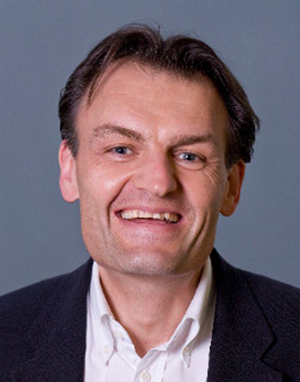
| Johann W. Kolar is Professor Emeritus of Power Electronics at ETH Zurich and former Head of its Power Electronic Systems Laboratory. He received his M.Sc. (1997) and Ph.D. (1999, summa cum laude) from the Vienna University of Technology. A pioneering figure in power electronics, he introduced breakthrough converter topologies, including the VIENNA Rectifier, Sparse Matrix Converter, and SWISS Rectifier, and advanced ultra-high-speed motor systems and automated multi-objective converter design. Since 2024, he has also been a Guest Professor at TU Wien, contributing to research and academic exchange in advanced power electronic systems. He has personally supervised 94 Ph.D. students to completion, authored over 1,000 publications, and holds more than 200 patents. His honours include the IEEE William E. Newell Power Electronics Award, the IEEE PELS R. David Middlebrook Achievement Award, the EPE Outstanding Achievement Award, and the 2025 IEEE Medal in Power Engineering. He is an IEEE Life Fellow, NAE International Member, and Fellow of the National Academy of Inventors. He has co-founded four ETH Zurich spin-offs and continues research in widebandgap converters, artificial intelligence in power electronics, and solid-state transformers. |
Solid-State Transformer Technology
Duration: 120 minutes
Abstract. Solid-State Transformers (SSTs) technology continues to excite researchers in academia and industry. Despite many promises of power-dense high-performance conversion, there are significant challenges encountered in the practical design of these highly modular, galvanically isolated power electronics converters. These stem from high power and high voltage aspects of design, insulation coordination, high-voltage magnetic components, thermal aspects, and the complexity of controller hardware and control algorithms. High modularity strongly impacts the reliability and availability of the SST as a whole and has a strong impact on the scalability in terms of voltage, current, and power ratings. Redundancy is often adopted in design, further complicating the realization of power stages. The tutorial will systematically address numerous technological aspects inside the megawatt-level SST design, present commonly used technologies, as well as some first-hand experiences and solutions used or developed at the Power Electronics Laboratory at EPFL, by the instructors. When appropriate, PLECS models and simulations will be used to support the introduced concepts and methods to the audience.
Instructors:
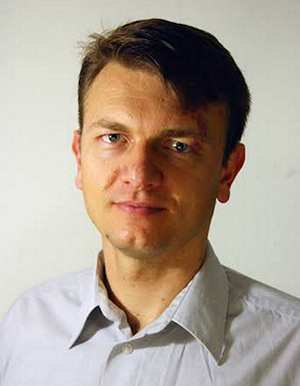
| Drazen Dujic (Fellow, IEEE) received the Dipl.Ing. and M.Sc. degrees from the University of Novi Sad, Serbia, in 2002 and 2005, respectively, and the Ph.D. degree from Liverpool John Moores University, U.K., in 2008. He is currently an Associate Professor and the Head of the Power Electronics Laboratory, École Polytechnique Fédérale de Lausanne (EPFL), Lausanne, Switzerland. His research interests are mainly in medium-voltage high-power electronics. |

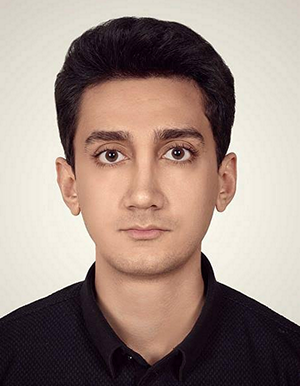
| Zhenchao Li and Amin Darvishzadeh are currently Ph.D. students at the Power Electronics Laboratory of the Swiss Federal Institute of Technology (EPFL) in Lausanne, Switzerland. Their PhD research projects are directly related to the Solid State Transformer technologies. |
|
Advanced DC Power Technologies for Mission-Critical Infrastructure Applications
Duration: 120 minutes
Abstract. DC power is increasingly attracting attention in mission-critical infrastructure, where uninterrupted operation, extremely high reliability, and fault tolerance are essential requirements. The primary motivation behind this trend is the potential for significant energy savings, achieved by eliminating losses associated with reactive power, multiple AC/DC conversion stages, and rectification processes inherent to traditional AC-based systems. As a result, DC systems can offer higher overall efficiency, simplified power architectures, improved controllability, and enhanced performance. The transition toward DC systems also closely aligns with the rapid growth of renewable energy sources and energy storage technologies. Since many distributed energy resources, such as photovoltaic (PV) systems and batteries, are inherently DC-based, DC distribution enables more direct integration, reduces the number of power conversion stages, and increases local self-consumption by allowing energy to be generated, stored, and utilized on-site. These features are particularly relevant for modern mission-critical systems that demand high flexibility, strong resilience, and sustainability, including lighting systems, IT installations such as data centers, and large-scale scientific and industrial facilities (e.g., particle accelerators). However, the widespread adoption of DC power systems also introduces new technical challenges and opportunities in power electronics and system design. These include the development of advanced DC–DC converter topologies, high-performance grid-interface converters to enable seamless interaction between AC and DC grids, and improved control, monitoring, and protection strategies. In particular, the absence of natural current zero-crossing in DC systems, combined with the requirement for fast fault detection and interruption, necessitates innovative protection solutions such as solid-state circuit breakers (SSCBs) and hybrid protection devices. This tutorial will explore the key innovations and emerging opportunities driving present and future DC power technologies for mission-critical infrastructure applications, incorporating both academic perspectives and an industrial viewpoint from Eaton Corporation, a global leader in power management solutions.
Instructors:
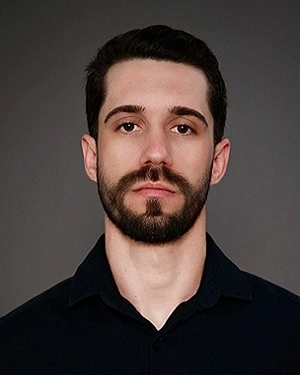
| Niwton Gabriel Feliciani dos Santos (Member, IEEE) was born in Rosário do Sul, Rio Grande do Sul, Brazil, in 1995. He received the B.S. degree (Hons.) in electrical engineering from the Federal University of Pampa, Alegrete, Brazil, in 2018, and both the M.S. and Ph.D. degrees in electrical engineering from the Federal University of Santa Maria (UFSM), Santa Maria, Brazil, in 2020 and 2024, respectively. He is currently a Postdoctoral Researcher at the Power Electronics Group of TalTech – Tallinn University of Technology, Estonia. His research interests include active and nonactive power processing, partial power converters (PPCs), EV battery chargers, photovoltaic systems, DC microgrids, and power electronics solutions for data center applications. He currently serves as the Vice Chair of the IEEE Estonia Section Young Professionals Affinity Group and has received the prestigious IES-SYPA Award to attend IECON 2026. |

| Vinod Kumar Yadav (Member, IEEE) received the Bachelor of Engineering degree in Electrical Engineering from Jabalpur Engineering College, Jabalpur, India, in 2015, the Master of Technology degree in Power Electronics and Drives from National Institute of Technology Rourkela, Rourkela, India, in 2017, and the Ph.D. degree from the Department of Electrical Engineering at Malaviya National Institute of Technology, Jaipur, India, in 2023. He is currently a Postdoctoral Researcher with the Power Electronics Group at TalTech – Tallinn University of Technology, Estonia. Previously, he worked as a Project Scientist at the Indian Institute of Technology Kanpur, Kanpur, India, and served as an Assistant Professor in the Department of Electrical Engineering at Government Engineering College Bikaner, India. His research interests include AC–DC PFC converters, LED driver circuits, high-gain boost converters, EV chargers, hydrogen fuel technologies, and power converters for particle accelerators. He is the recipient of the Best Poster Award (SEFET 2023) and Best Paper Awards at UPCON 2022, EPREC 2024, and ETMCIS 2024. |
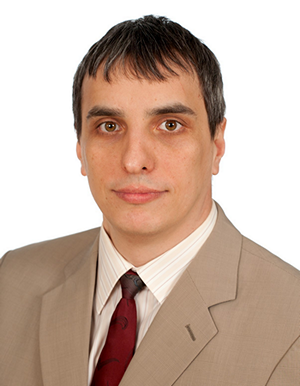
| Andrei Blinov (Senior Member, IEEE) received the M.Sc. and Ph.D. degrees in electrical drives and power electronics from Tallinn University of Technology, Tallinn, Estonia, in 2008 and 2012, respectively. His Ph.D. dissertation was devoted to the study of switching properties and performance improvement methods for high-voltage IGBT-based DC–DC converters. After completing his Ph.D., he spent two years at the KTH Royal Institute of Technology in Sweden as a Postdoctoral Researcher. He is currently a Senior Researcher with the Department of Electrical Power Engineering and Mechatronics, Tallinn University of Technology (TalTech). He has over 100 publications in areas related to power electronics and holds several patents and utility models. He is the Chair of the Estonian IEEE IES/PELS/IAS/PES Joint Chapter. His research interests include switch-mode power converters, new semiconductor technologies, and energy storage systems. |
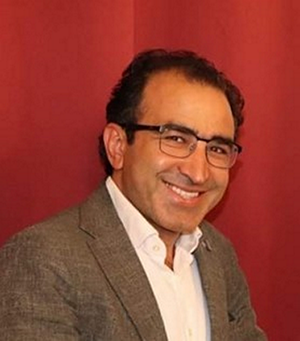
| Kenan Askan holds a master’s degree (Diplom Ingenieur) from Vienna University of Technology and a bachelor’s degree in electrical engineering from Istanbul Technical University, specializing in power electronics. Since 2014, he has worked in Eaton’s EMEA Electrical Sector advanced development department, focusing on the R&D of low-voltage, semiconductor-based circuit breakers for DC and AC smart grid applications, contributing to projects such as DC Industry, DC Industry 2, N470 DC Highway, IniGrid, DCI4Charge, Hyperride, Shift2DC, and D.gitaLE. He currently serves as Manager of AC & DC Power Electronics System Architecture. Kenan is an active member of the Open Direct Current Alliance (ODCA), the Current Operating System (COS) Foundation – leading protection working group, and IEC PT 60947-10 "Low-voltage switchgear and controlgear part Semiconductor Circuit Breakers". He has authored over 40 patents and more than 10 conference papers in the field of semiconductor circuit breakers. |
Wireless Charging of Electric Vehicles: Design for Battery Interoperability and Reliable Dynamic Charging
Duration: 120 minutes
Abstract. Wireless power transfer (WPT) technologies have been gaining interest as convenient charging solutions for future electric vehicles (EVs). As vehicle platforms, battery architectures, and charging infrastructures grow increasingly diverse, interoperability has emerged as a central challenge in wireless charging system design. This tutorial lecture provides a comprehensive overview of static and dynamic wireless charging for EVs, emphasizing design methodologies that enable interoperable operation across different vehicles and charging scenarios. The lecture begins by introducing the fundamental design choices for EV wireless charging systems, including coil and magnetic-coupler topologies, selection of compensation networks, and power-converter stages. These elements critically affect efficiency, power capability, tolerance to misalignment, and system robustness. The role of industrial standards is then examined, with particular attention to how standardization constraints shape both electromagnetic and power electronic design decisions. Static wireless charging is addressed as the most mature application. The tutorial focuses on the interface between the wireless power transfer stage and the EV battery, presenting a voltage/current doubler converter architecture as an effective solution for achieving battery interoperability across a wide voltage range while maintaining high efficiency and relatively low hardware complexity. Building on these foundations, the tutorial extends to dynamic wireless charging, in which power is transferred while the vehicle is in motion. This section addresses additional challenges related to segmented transmitter structures. The content will focus on power fluctuations and foreign object detection issues and will introduce the operating principles and the latest advances. By integrating fundamentals, standards, and advanced applications, this tutorial equips attendees with a coherent understanding of interoperable wireless charging technologies for current and future electric vehicle systems.
Instructors:

| Francesca Grazian (Member, IEEE) received her B.Sc. degree in Electrical Engineering from the University of Bologna, Italy, in 2016, followed by her M.Sc. and Ph.D. degrees in Electrical Engineering from the Delft University of Technology, The Netherlands, in 2018 and 2023, respectively. Her Ph.D. research focused on power electronics for wireless charging of electric vehicles. From 2023 to 2024, she gained experience in the railway industry as a Lead Electrical Engineer at Laser Precision Solutions in Amsterdam, the Netherlands. Since May 2024, Francesca Grazian has been an Assistant Professor at the TU/e Power Electronics Lab (PELe), the Netherlands. Her research focuses on innovative wireless power transfer systems, industrial electrification, and the environmental impact of power electronics. |

| Jianning Dong (Senior Member, IEEE) received the B.Sc. and Ph.D. degrees in electrical engineering from Southeast University, Nanjing, China, in 2010 and 2015, respectively. In 2016, he worked at the McMaster Automotive Resource Center, McMaster University, Hamilton, ON, Canada, as a Postdoctoral Researcher. Since October 2016, he has been an Assistant Professor, and then from 2025 an Associate Professor with the DC Systems, Energy Conversion and Storage (DCE&S) Group, Delft University of Technology, Delft, The Netherlands. His research interests include electromechanical energy conversion and contactless power transfer, through which he applies knowledge to applications such as transportation electrification and renewable energy generation/utilization.. |
Practical Aspects of Artificial Intelligence Applications in Fault-Tolerant Electric Drive Systems
Duration: 120 minutes
Abstract. Modern electric drive systems increasingly rely on artificial intelligence (AI) techniques to address key challenges related to control, diagnostics, optimization, and fault-tolerant operation. In particular, the growing interest in fault-tolerant control architectures imposes strict requirements on accuracy, robustness, and fast response to incipient and developed faults, making AI-based solutions highly attractive. However, despite their undeniable potential, many AI approaches reported in the literature are developed with limited consideration of practical implementation constraints, often treating AI models as black-box solutions trained on generic datasets and evaluated using selected performance metrics only. This tutorial aims to bridge the gap between theoretical AI developments and their real-world application in drive systems. The session will focus on practical aspects of selecting, designing, training, and implementing AI techniques tailored to specific tasks within electric drives, including control, process optimization, and diagnostics. The presented solutions will consider the complete drive system structure from control algorithms and measurement systems, through power electronic converters, to the target machine. Special attention will be devoted to the implementation and comparison of shallow and deep neural networks, transfer learning strategies, and neuro-fuzzy algorithms in electric drive applications. Furthermore, methods for optimizing neural network architectures and adapting model complexity to real-time and embedded constraints will be discussed. The tutorial will be supported by experimentally validated case studies, demonstrating AI-based solutions implemented and tested in laboratory-scale electric drive systems. Selected examples will be presented live via a remote connection to an external research
laboratory, allowing participants to observe real-time system behaviour under realistic operating conditions. The tutorial is intended for researchers, engineers, and practitioners interested in applying AI methods in modern electric drives, with an emphasis on transparency, interpretability, and practical deployment considerations. Supplementary materials, including presentation slides and selected implementation guidelines, will be made available to participants before or during the session.
Instructors:

| Maciej Skowron (Member, IEEE) received the M.Sc. degree in electrical engineering and the Ph.D. degree in automation, electronics, and electrical engineering from Wrocław University of Science and Technology, Wrocław, Poland, in 2018 and 2021, respectively. In 2025, he received the habilitation (D.Sc.) degree in the field of automation, electrical engineering, electronics, and space technologies. He is an Associate Professor at Wrocław University of Science and Technology, where he serves as Head of the Electromobility Laboratory and Leader of the Electric Drive, Power Electronics and Electromobility Research Team. His research interests include advanced diagnostics of electrical machines and drive systems, with particular emphasis on the application of artificial intelligence techniques, including deep learning and transfer learning. He is an active member of leading international scientific organizations, notably the Institute of Electrical and Electronics Engineers (IEEE) and the IEEE Industrial Electronics Society (IES), as well as several national professional associations. His scientific excellence has been recognized by numerous prestigious awards, including the Jan Mozrzymas Scholarship, the Best Young Author Award of the Polish IEEE Section, and multiple Best Oral Presentation Awards. Furthermore, he was listed among the TOP 2% of the world’s most highly cited researchers in 2024 and 2025. He serves as a reviewer for IEEE, IET, Elsevier, and MDPI journals, and as an Associate Editor of Power Electronics and Drives. |
Call for Tutorials - CLOSED
The PEMC organizing committee invites proposals for tutorials to be presented at IEEE PEMC 2026. The organizing committee is particularly interested in tutorials that are of value to practicing engineers and researchers with an emphasis on solutions to practical problems. Tutorials are solicited on any subject pertaining to the scope of the conference.
Tutorials should be planned for a 120-minute time slot. One-page Tutorial Proposals should include a Title, Abstract (~300 words), Content Outline, name of Lead Instructor(s), and brief Bio(s) of Instructor(s).
All attendees will have free access to all tutorials. Therefore, NO conference fee waiver will be offered to tutorial speakers.
5 tutorials will be accepted based on the motivated opinion of the Tutorial Chairs.