
Europe is facing a critical engineering talent shortage: a 2025 industry survey found that 65% of advanced manufacturing companies rate engineering skills gaps as “significant” or “very significant.” This is compounded by widening shortfalls in digital, technical, and green skills that place mounting strain on recruitment across the continent.
If you’re looking for a degree that puts you ahead of that curve, Tallinn University of Technology (TalTech) in Estonia is worth your attention. It’s the country’s leading institution for engineering, IT, and technology-focused education, with programmes spanning engineering, economics, science, and maritime fields.
Source: Tallinn University of Technology
That scope reflects a larger ambition. TalTech aims to stand among the top Nordic technical universities, and that drive shapes how it approaches higher education: real knowledge that creates real solutions. TalTech’s School of Engineering is the largest school on campus, and its graduates go on to become engineers, inventors, innovators, and business leaders who build the technologies the world will rely on next.
Thanks to this reputation, TalTech attracts students from across Europe and beyond. One of them is Jegor Vaščenko from Latvia, who is currently in his second year of the BSc Integrated Engineering programme. “For me, TalTech is special because it gives a good opportunity to gain international experience while studying engineering,” he says. “That was one of the main reasons why I chose it.”
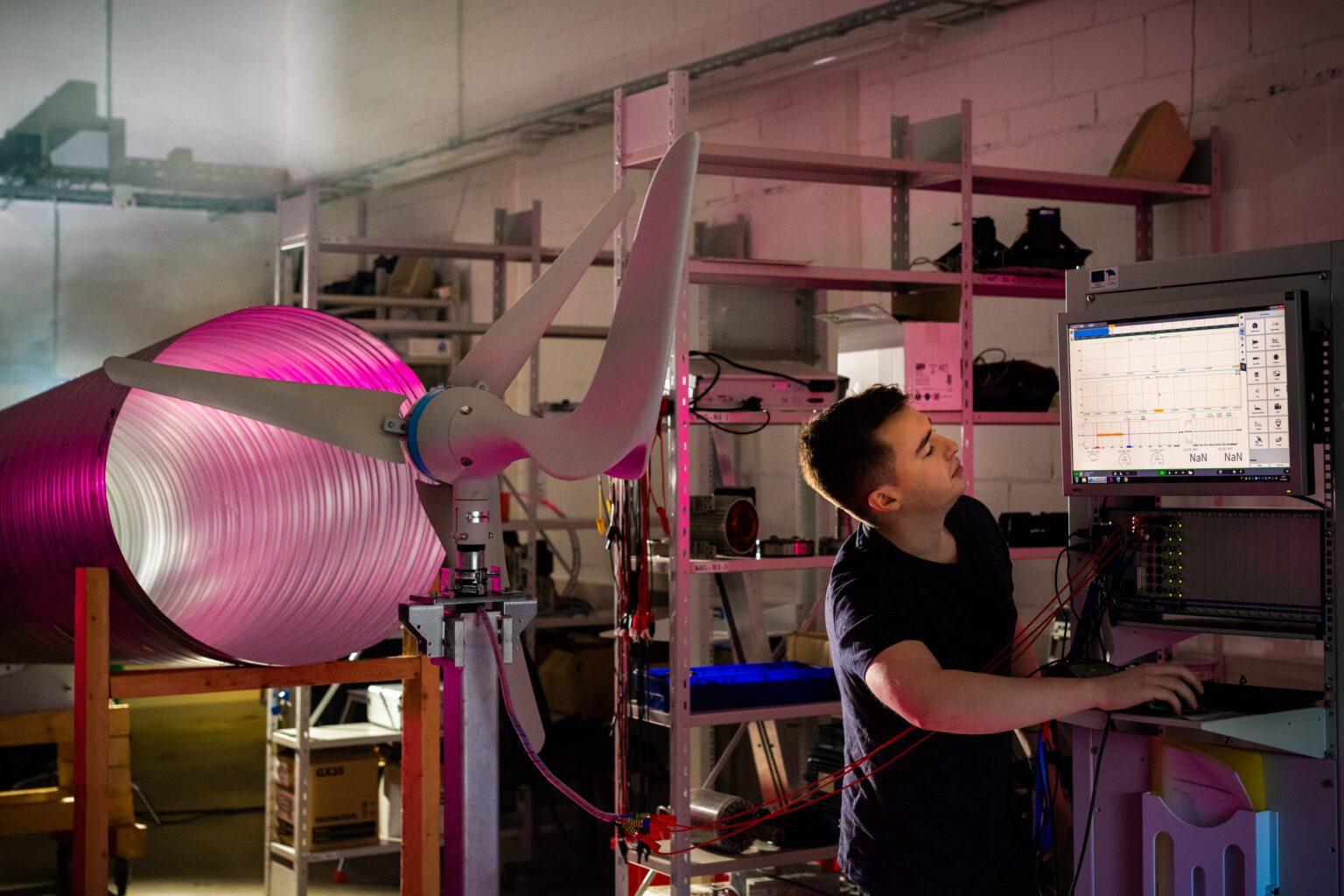
The BSc Integrated Engineering programme covers a wide range of disciplines, from high-tech materials and unmanned aerial vehicles to IT, business, and design. Students also gain hands-on experience in modern labs, including facilities for 3D printing, mechatronics, electronics, and VR/AR. As it’s an Erasmus+ programme, the BSc includes the opportunity to study abroad for a semester.
Gain knowledge and skills that truly work
What makes TalTech’s approach distinct is how seriously it takes the word “applied.” The university’s motto, “Mente et manu,” translates as “by mind and hand,” and this idea shapes how students learn. Teaching is built around challenge-based learning, where students work in teams alongside researchers and industry partners – and even across disciplines — to solve real problems.
Vaščenko and his peers apply what they learn during the semester and work towards real, practical results. “We have courses where we solve more real-life tasks,” he says. “For example, in one course called Rapid Prototyping, we had to come up with our own product idea, design it, and create a prototype that could theoretically be sold in the university shop. Many assignments are done in teams, which helps to develop collaboration skills.”
Take your engineering degree further
Source: Tallinn University of Technology
The focus on practical learning continues into postgraduate study, where each English-taught master’s programme is built to sharpen your expertise and expand what you can do in the real world. For instance, the MSc in Industrial Engineering and Management is jointly run with BALTECH, a network of Nordic and Baltic universities across Estonia, Latvia, Lithuania, and Sweden. It takes you from operational engineering to strategy and leadership, making it a good fit for those aiming to drive innovation in manufacturing or product development.
The MSc in Technology of Wood, Plastics and Textiles builds on that with a curriculum grounded in Computer-Aided Design engineering and Computer-Aided Manufacturing, core tools across the global industry. Research projects take place in partnership with companies, and you get to specialise in either Wood Technology or Plastics and Textiles, so your degree reflects exactly where you want to take your career.
For those drawn to the sea, the MSc in Marine Engineering covers small-boat construction and ship retrofitting to meet modern and future maritime demands. You study on Estonia’s Marine Tech Island at Kuressaare College in Saaremaa, and you can conduct your master’s thesis wherever best fits your research topic, giving you a versatile set of skills that opens doors across global marine industries.
For those who want to go further still, the PhD programme in Engineering Sciences lets you explore complex challenges in your field and contribute original solutions.
A community that looks out for you

Source: Tallinn University of Technology
The academic experience is only part of what makes TalTech special. The university actively supports student well-being, creating a welcoming environment. “Many professors are approachable, and the atmosphere among students is open and international,” Vaščenko says. “I was also surprised by how many events and opportunities there are for students to get involved in,” Vaščenko says.
Students can join nearly 40 clubs and communities, from astronomy to marketing, and gain hands-on experience in university laboratories. TalTech also puts real effort into helping international students settle into Estonian life, so you’re supported from day one.
If you’ve got an entrepreneurial streak, you’re in the right place. TalTech is known as the “University for Entrepreneurs,” offering mentoring and resources to help students launch startups. Top-level research feeds directly into spin-off companies, which means by studying here, you’re not just learning about innovation. You’re inside it.
Learn more about the School of Engineering.
Follow Tallinn University of Technology on Facebook, Instagram, LinkedIn, TikTok, and YouTube.
Programmes Designed for International Engineers
TalTech offers English-taught programmes across all levels of engineering education. All of these programmes are fully taught in English and structured to support international students academically and professionally.
Bachelor’s programme
This offers a broad and solid foundation in engineering and applied sciences, designed to develop analytical thinking and technical versatility.
Master’s programmes
Industrial Engineering and Management
Technology of Wood, Plastics and Textiles
Each programme deepens technical competence while strengthening systems thinking and leadership skills.
Doctoral studies
Advanced research focused on solving complex technological challenges with real societal impact.